
Free Pre-Start Checklist (Pipe Bender) Template
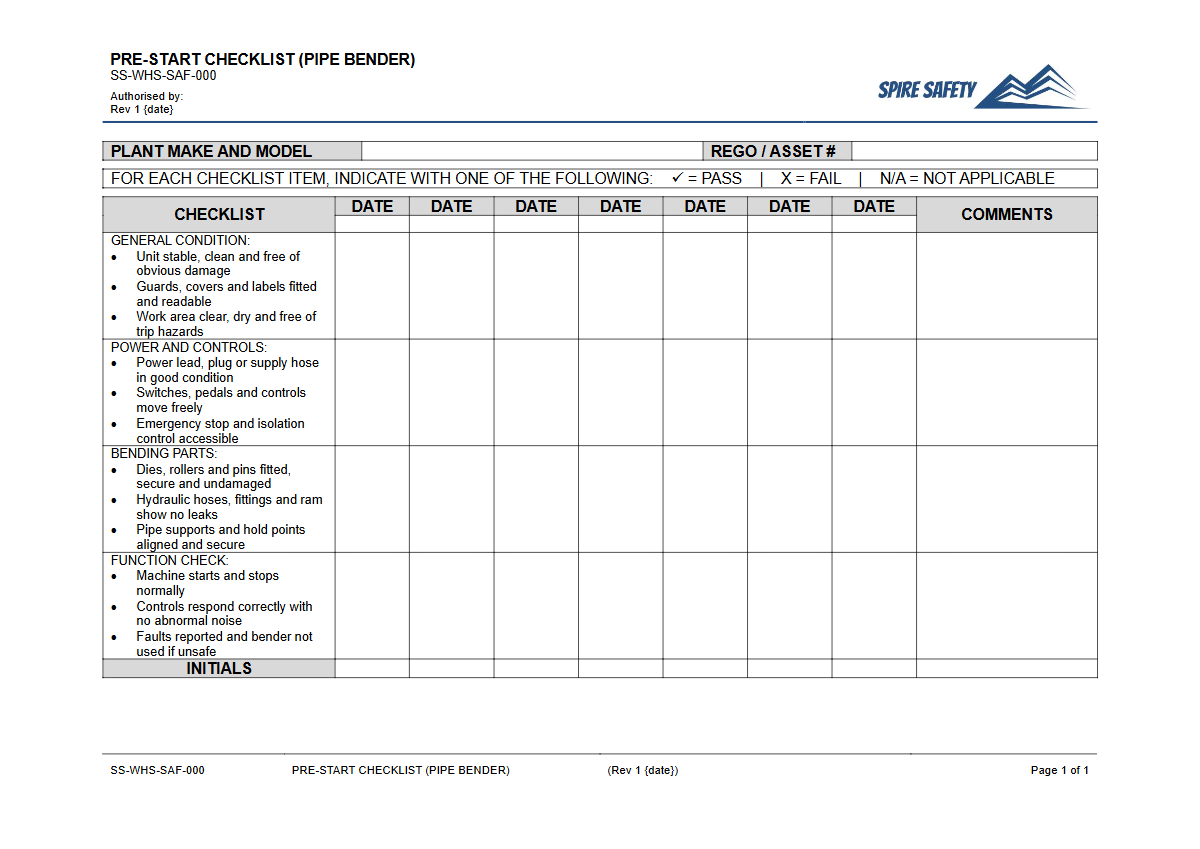
Download our free Pre-Start Checklist (Pipe Bender) Template. This structured document helps formalise daily safety inspections. Get your DOCX & PDF template.
Free Pre-Start Checklist (Pipe Bender) Template
DOCX • 125 KB + PDF
Updated Oct 2026
No signup required
Purpose of the Free Pre-Start Checklist (Pipe Bender) Template
A pipe bender, whether manual, electric, or hydraulic, is a powerful piece of equipment that presents significant workplace health and safety risks if not properly maintained and operated. Using this Free Pre-Start Checklist (Pipe Bender) Template helps formalise the process of inspecting the equipment before use, providing a structured way to identify and control hazards.
Regular, documented checks are a cornerstone of proactive safety management, helping to prevent incidents related to mechanical failure, electrical faults, or hydraulic system malfunctions. By identifying defects early, organisations can take corrective action before a minor issue becomes a major incident, protecting workers from potential injuries such as crushing, entanglement, or high-pressure fluid injection.
Implementing consistent pre-start checks demonstrates a commitment to safety and helps meet duties of care under Australian WHS laws. These checks should be integrated into your site's broader WHS management system, ensuring that plant safety is systematically addressed rather than left to chance.
This template provides a solid foundation, aligned with Australian WHS principles, for creating a safer work environment where equipment is verified as fit for purpose before every use.
Video walkthrough
How to use the Free Pre-Start Checklist (Pipe Bender) Template
This Pre-Start Checklist is provided as a downloadable DOCX and PDF file, designed to be a practical starting point for your organisation. The process is straightforward:
- Download: Choose the format that best suits your needs, DOCX for easy editing or PDF for immediate printing.
- Customise: Adapt the template to your specific workplace. This is a critical step. Add your company branding, specific site information, and, most importantly, details relevant to the make and model of your pipe bender. Checkpoints should reflect the manufacturer's instructions and the unique operational risks of your environment.
- Train: Ensure all operators and supervisors are trained not just on how to use the pipe bender, but also on how to properly complete the pre-start check. They must understand what each item means and what to do if a fault is found.
- Implement: Integrate the checklist into your daily operational procedures. Make it a non-negotiable step before any pipe bending work commences.
The principle of customising a checklist for specific equipment is universal in managing plant safety. The checks for a pipe bender will differ significantly from those needed for another workshop tool, which is why a specific pre-start checklist for a bench grinder would contain different inspection points related to grinding wheels and tool rests.
Important: This is a template document. To be effective and assist in your safety compliance, you must customise it to reflect the specific hazards and controls of your workplace and the particular make/model of equipment in use. We have provided a comprehensive starting point, but the final responsibility for a safe system of work rests with the PCBU.
When to use it
The Pre-Start Checklist for a pipe bender should be completed before the equipment is used for the first time in a shift. If the bender is used intermittently throughout the day by different operators, it is good practice for each new operator to conduct their own check before commencing their task.
This ensures continuous oversight and accountability, capturing any potential issues that may have developed between uses. Establishing this routine is as important for workshop machinery as it is for mobile plant; for instance, a similar daily discipline is required when using a pre-start checklist for a floor saw on a construction site.
Who should use it
The primary user of this checklist is the trained and competent operator assigned to the pipe bender. They are in the best position to physically inspect the equipment and assess its condition. However, other personnel have key roles:
- Supervisors: Supervisors are responsible for ensuring operators are completing the checks correctly and consistently. They should periodically review completed checklists to identify recurring faults, operator knowledge gaps, or compliance issues. These reviews can be a valuable input for regular WHS compliance audits.
- Maintenance Personnel: When a pre-start check identifies a fault or defect, maintenance staff are responsible for carrying out the necessary repairs. The completed checklist serves as the formal record to initiate a repair order and to confirm when the equipment is safe to return to service.
Common mistakes
Common mistakes to avoid
- Operator 'pencil-whipping' the form without physically inspecting the equipment.
- Using a generic plant checklist that doesn't cover specific pipe bender hazards like die condition or hydraulic pressure.
- Failing to immediately tag and remove a faulty pipe bender from service after it fails a pre-start check.
- Not training operators on the purpose of each check item and what constitutes a 'pass' or 'fail'.
Legal references
Legal considerations
The following legal requirements may be relevant to this type of work.
- Work Health and Safety Act (Harmonised) — Provides the primary duties for protecting workers and other people from work health and safety risks.
- Work Health and Safety Regulations (Harmonised) — Sets out requirements supporting the management of workplace hazards and risks.
The following codes may be relevant to this type of work.
- Managing WHS Risks Code of Practice — Provides practical guidance on identifying hazards, assessing risks and applying effective controls.
- Work Health and Safety Consultation, Cooperation and Coordination Code of Practice — Provides practical guidance on consulting workers and coordinating with other duty holders.
- Managing the Work Environment and Facilities Code of Practice — Provides practical guidance on safe work environments, workplace facilities and related controls.
Did you know
Hydraulic Power
Hydraulic pipe benders can exert tens of thousands of pounds of force to shape metal. A pinhole leak in a high-pressure hydraulic line can release fluid at a velocity capable of penetrating skin, causing severe and life-threatening injection injuries.
FAQ
Frequently asked questions
01Is a pre-start checklist for a pipe bender legally required in Australia?
02What are the main hazards to check on a pipe bender?
03How often should a pipe bender pre-start check be performed?
04Can I use a digital app for my pipe bender pre-start checks?
Share this resource
Free Pre-Start Checklist (Pipe Bender) Template
Browse Categories
How To Use It
- 1Download and open in Word or PDF.
- 2Replace the placeholders with your business details.
- 3Get it reviewed by a WHS specialist before rollout.
Need it customised?
Our WHS consultants can adapt this template to your site, run a gap analysis, or audit what you already have in place.
Book a Free Consultation WHS consulting servicesor call 1300 156 382