
Free Pre-Start Checklist (Rebar Cutter) Template
Formalise rebar cutter safety inspections with our free Pre-Start Checklist (Rebar Cutter) Template. Download this DOCX and PDF template now.
Free Pre-Start Checklist (Rebar Cutter) Template
DOCX • 125 KB + PDF
Updated Oct 2026
No signup required
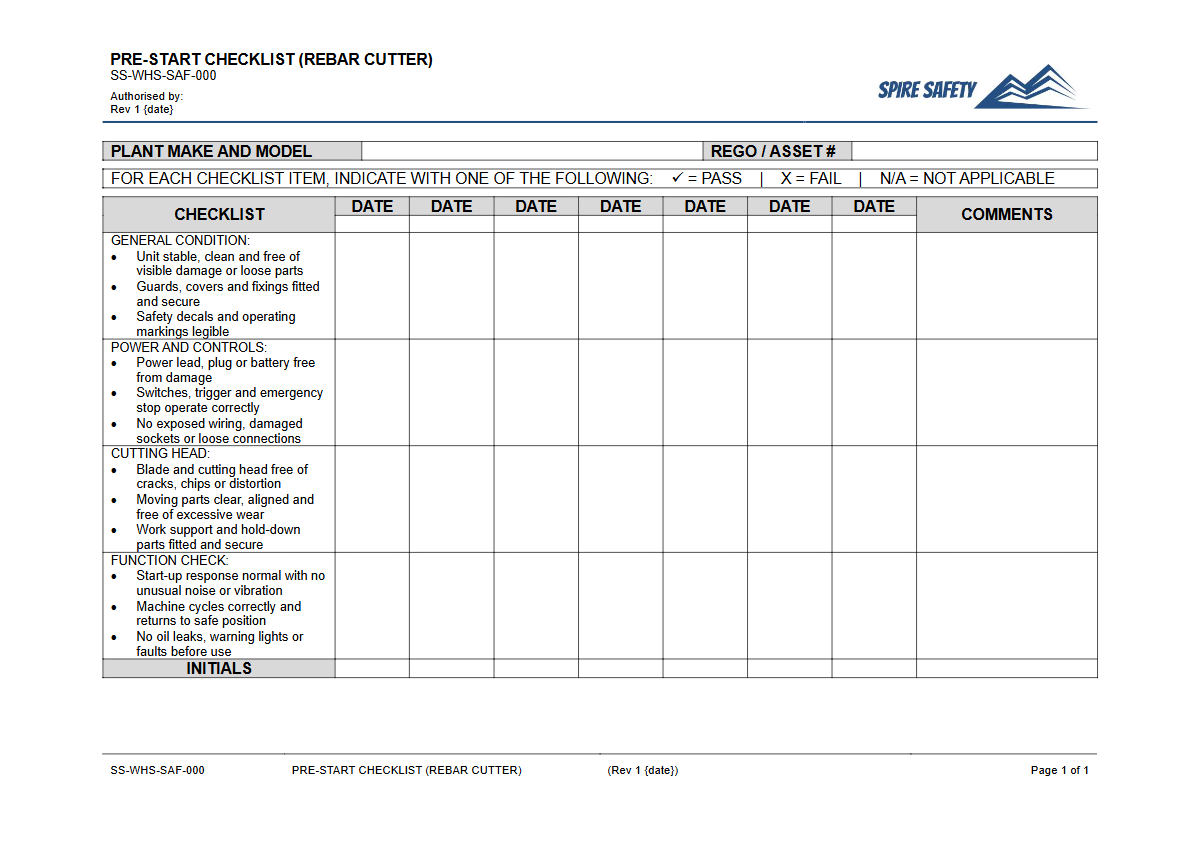
Purpose of the Free Pre-Start Checklist (Rebar Cutter) Template
Using a rebar cutter involves significant mechanical force and presents serious hazards, including amputation, laceration, and entanglement. This Free Pre-Start Checklist (Rebar Cutter) Template provides a structured framework for operators to conduct thorough, documented inspections before each use.
Its primary purpose is to systematically identify potential faults or damage—such as worn blades, hydraulic fluid leaks, malfunctioning guards, or compromised electrical cords—that could lead to equipment failure or a serious incident. Formalising this process helps ensure the machine is in a safe operating condition, promoting a proactive safety culture within your organisation.
By integrating this checklist into daily operations, you create a consistent record of equipment condition, which is a key component of managing plant safety. This methodical approach is not just for rebar cutters; similar principles apply to other cutting equipment, as seen in our pre-start checklist for floor saws. Documenting these checks demonstrates due diligence in managing workplace risks and supports compliance with Australian WHS regulations.
Video walkthrough
How to use the Free Pre-Start Checklist (Rebar Cutter) Template
This template is provided as a starting point in both DOCX and PDF formats. The DOCX file is fully editable, allowing you to tailor it to the specific make, model, and configuration of the rebar cutters used in your workplace.
A generic checklist is not sufficient; customisation is essential for effectiveness.
- Download: Choose the DOCX format for easy editing or the PDF for immediate use if the fields are suitable.
- Customise: Add your company branding. Most importantly, review and modify the checklist items to match your specific equipment. Consider manufacturer recommendations, site-specific hazards, and any unique operational requirements. You might need to add checks for specific hydraulic fittings, power sources, or control types.
- Train: Ensure all operators are trained not only on how to use the rebar cutter safely but also on how to complete the pre-start checklist thoroughly. They must understand what each item means and what constitutes a 'pass' or 'fail'.
- Implement: Integrate the checklist into your daily safe work procedures. Establish a clear process for what operators should do if they identify a fault, such as stopping work, isolating the equipment, and reporting the issue to a supervisor immediately.
Important: This document is a template and must be customised to your specific workplace, equipment, and operational context. We are not responsible for your WHS compliance; this resource is a starting point for you to build upon.
Effective safety management depends on how you adapt and implement this tool within a comprehensive safety system.
Integrating into your Safety System
A pre-start checklist is one part of a larger safety framework. To be truly effective, it should be embedded within your overall safety processes.
This ensures that findings from the checklist are acted upon, records are maintained correctly, and the system contributes to continuous improvement. For organisations looking to formalise this structure, developing robust WHS management systems provides the architecture for managing all aspects of workplace health and safety, from plant inspections to incident reporting.
Documentation and Record-Keeping
Completed checklists serve as important legal and operational records. They should be stored in a secure and accessible location for a reasonable period, as defined by your organisation's policies or state regulations.
These records can be invaluable during incident investigations or safety audits. For more tools to support your safety documentation, browse our complete free WHS resources library, which offers a wide range of templates and guides.
When to use it
A rebar cutter pre-start checklist should be completed before the first use on every shift, or before each use if the machine is operated infrequently. This frequency ensures that any damage or faults that may have occurred during previous operation, transport, or storage are identified before the equipment is put back into service. Regular checks are fundamental to preventative maintenance and are a key activity reviewed during WHS compliance audits.
Who should use it
The pre-start checklist must be completed by a worker who is deemed competent to operate the rebar cutter. Competency means the person has received the necessary information, training, instruction, and supervision to perform the task safely.
This includes understanding the machine's specific hazards and being able to accurately assess the condition of its components. Supervisors should also be familiar with the checklist so they can verify its correct completion and ensure appropriate actions are taken when faults are identified.
Just as with other workshop tools, like those covered in a bench grinder pre-start checklist, operator competency is non-negotiable.
If your team is facing challenges with plant safety or defining competency requirements, engaging specialist WHS consulting can provide clarity and help develop practical, effective solutions tailored to your operational needs.
Common mistakes
Common mistakes to avoid
- Using a generic, non-customised checklist that doesn't match the specific rebar cutter model.
- Failing to physically 'tag out' and report faulty equipment, leaving it in service for an unsuspecting colleague.
- Rushing through the checklist and ticking boxes without actually performing the visual and physical inspections.
- Operators signing off on the checklist without having received proper training on what to look for.
Legal references
Legal considerations
The following legal requirements may be relevant to this type of work.
- Work Health and Safety Act (Harmonised) — Provides the primary duties for protecting workers and other people from work health and safety risks.
- Work Health and Safety Regulations (Harmonised) — Sets out requirements supporting the management of workplace hazards and risks.
The following codes may be relevant to this type of work.
- Managing WHS Risks Code of Practice — Provides practical guidance on identifying hazards, assessing risks and applying effective controls.
- Work Health and Safety Consultation, Cooperation and Coordination Code of Practice — Provides practical guidance on consulting workers and coordinating with other duty holders.
- Managing the Work Environment and Facilities Code of Practice — Provides practical guidance on safe work environments, workplace facilities and related controls.
Did you know
Extreme Cutting Force
Hydraulic rebar cutters can generate forces exceeding 20 tonnes to shear through reinforced steel. This immense power makes functioning guards and emergency stops absolutely critical to preventing severe amputation or crushing injuries.
Projectile Hazard
When a rebar is cut, small, high-velocity metal fragments can be ejected. This is why safety glasses or a face shield are mandatory personal protective equipment (PPE) when operating or working near a rebar cutter.
FAQ
Frequently asked questions
01What should be checked on a rebar cutter before use?
02How often should a rebar cutter pre-start check be done?
03Is this rebar cutter checklist a legal document?
04What happens if a fault is found during a rebar cutter pre-start check?
Share this resource
Free Pre-Start Checklist (Rebar Cutter) Template
Browse Categories
How To Use It
- 1Download and open in Word or PDF.
- 2Replace the placeholders with your business details.
- 3Get it reviewed by a WHS specialist before rollout.
Need it customised?
Our WHS consultants can adapt this template to your site, run a gap analysis, or audit what you already have in place.
Book a Free Consultation WHS consulting servicesor call 1300 156 382