
Free Safe Operating Procedure (AHU Filter Change) Template
Download our free Safe Operating Procedure (AHU Filter Change) Template. This DOCX and PDF resource helps you outline safe work steps. Customise it today.
Free Safe Operating Procedure (AHU Filter Change) Template
DOCX • 126 KB + PDF
Updated Oct 2026
No signup required
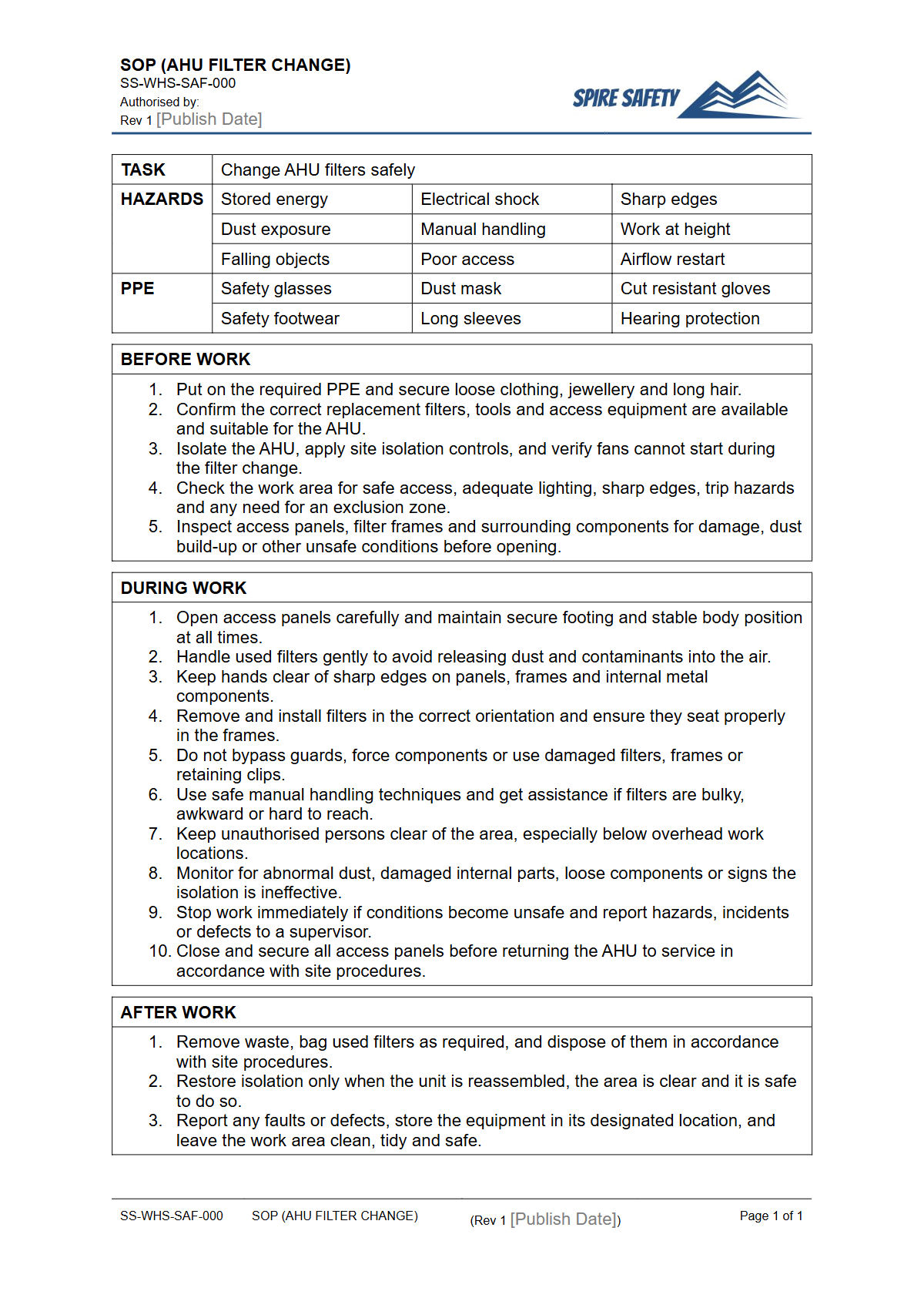
Purpose of the Free Safe Operating Procedure (AHU Filter Change) Template
Changing filters in an Air Handling Unit (AHU) is a routine maintenance task, but it carries significant risks if not managed correctly. This Safe Operating Procedure (SOP) template provides a structured framework for documenting the required steps to perform the task safely.
It helps organisations meet their duty of care by establishing and communicating a consistent, low-risk method for the job. Key hazards addressed include electrical energy, hazardous manual tasks, exposure to airborne contaminants like dust and mould, and potential falls from height.
A documented procedure ensures that all workers, regardless of experience level, follow a pre-approved, safe sequence of actions. It formalises critical safety checks like energy isolation and the selection of correct Personal Protective Equipment (PPE).
This is a fundamental part of managing risks associated with plant maintenance. While this SOP is for an AHU, the principles of documenting safe work methods apply to other equipment, as shown in our free Air Compressor SOP template.
What is a Safe Operating Procedure?
A Safe Operating Procedure is a written document that provides step-by-step instructions on how to safely perform a specific task. It identifies the potential hazards associated with that task and outlines the control measures required to eliminate or minimise the risk of injury or illness.
An effective SOP is a practical tool used for training and for day-to-day operational guidance, ensuring work is performed consistently and safely every time.
Video walkthrough
How to use the Free Safe Operating Procedure (AHU Filter Change) Template
This document is a template, not a finished procedure. To be effective, it must be customised to reflect the specific equipment and conditions at your workplace.
Download the DOCX file and adapt it by including details such as the specific make and model of the AHU, exact locations of isolation points, required PPE, and emergency procedures relevant to your site. Consultation with the workers who perform the task is a critical step in this process, as they have direct knowledge of the hazards and practical challenges.
We strongly recommend that you conduct a site-specific risk assessment before finalising the procedure. The SOP should document the controls identified through that assessment.
Integrating customised SOPs into your broader safety framework is a key function of effective WHS management systems, ensuring procedures are not just written but are also implemented, monitored, and reviewed.
When to use it
This Safe Operating Procedure should be used every time an AHU filter is changed, whether as part of a scheduled preventative maintenance program or during an unscheduled breakdown. It serves as a critical pre-start checklist for experienced technicians and as an essential training guide for new or less experienced personnel.
The SOP should be readily accessible to workers in the areas where the work is performed. Regular reviews of the procedure, especially after an incident or when a new type of AHU is introduced, are essential to ensure it remains current and effective.
Furthermore, this procedure can be a key piece of evidence during safety reviews. Consistent use and record-keeping help demonstrate that an organisation has a systematic approach to managing operational risks.
This can be verified during internal or external safety reviews, such as those conducted as part of a WHS compliance auditing program, to confirm that safe work practices are being followed as intended.
Who should use it
This SOP is intended for use by competent personnel authorised to perform maintenance on HVAC systems. This typically includes HVAC technicians, maintenance fitters, and facilities management staff.
It is also a valuable resource for supervisors and WHS managers responsible for overseeing this work. Before any worker undertakes the task, they must receive training on the contents of the finalised SOP and demonstrate their understanding and ability to follow it safely.
If a ladder is required to access the AHU, workers must also be trained in its safe use. A procedure like our FREE Step Ladder SOP Template can be used to document these specific steps.
For organisations needing support in developing and implementing comprehensive safety procedures, engaging external expertise through WHS consulting can provide valuable guidance and ensure your systems are robust. You can explore our complete free WHS resources library for more templates to support your safety management system.
Common mistakes
Common mistakes to avoid
- Forgetting to verify electrical isolation (lock-out, tag-out) before commencing work.
- Using the incorrect type, size, or rating of replacement filter for the specific unit.
- Failing to wear appropriate PPE, especially P2-rated respiratory protection and gloves.
- Not correctly bagging and disposing of old, contaminated filters as per site waste management procedures.
Legal references
Legal considerations
The following legal requirements may be relevant to this type of work.
- Work Health and Safety Act (Harmonised) — Provides the primary duties for protecting workers and other people from work health and safety risks.
- Work Health and Safety Regulations (Harmonised) — Sets out requirements supporting the management of workplace hazards and risks.
The following codes may be relevant to this type of work.
- Managing WHS Risks Code of Practice — Provides practical guidance on identifying hazards, assessing risks and applying effective controls.
- Work Health and Safety Consultation, Cooperation and Coordination Code of Practice — Provides practical guidance on consulting workers and coordinating with other duty holders.
- Managing the Work Environment and Facilities Code of Practice — Provides practical guidance on safe work environments, workplace facilities and related controls.
Did you know
Indoor Air Quality
Poorly maintained AHU filters can significantly degrade indoor air quality by circulating dust, mould spores, and other contaminants, which can contribute to respiratory irritation and illness among building occupants.
Energy Efficiency
Clogged filters force an AHU's fan motor to work harder, increasing energy consumption by up to 15%. Regular filter changes not only improve air quality but also save energy costs and reduce the system's carbon footprint.
FAQ
Frequently asked questions
01What are the main hazards when changing an AHU filter?
02Do I need a separate risk assessment if I use this SOP template?
03How often should AHU filters be changed?
04Is this template enough for WHS compliance?
Share this resource
Free Safe Operating Procedure (AHU Filter Change) Template
Browse Categories
How To Use It
- 1Download and open in Word or PDF.
- 2Replace the placeholders with your business details.
- 3Get it reviewed by a WHS specialist before rollout.
Need it customised?
Our WHS consultants can adapt this template to your site, run a gap analysis, or audit what you already have in place.
Book a Free Consultation WHS consulting servicesor call 1300 156 382
Related templates
- Free Safe Operating Procedure (Air Blow Gun) Template
- Free Safe Operating Procedure (Air Chisel) Template
- Free Safe Operating Procedure (Air Curtain Cleaning) Template
- Free Safe Operating Procedure (Air Curtain Operation) Template
- Free Safe Operating Procedure (Air Die Grinder) Template
- Free Safe Operating Procedure (Air Diffuser Cleaning) Template