
Free Safe Operating Procedure (Aircraft Chocking) Template
Download our free Safe Operating Procedure (Aircraft Chocking) template.
Free Safe Operating Procedure (Aircraft Chocking) Template
DOCX • 126 KB + PDF
Updated Oct 2026
No signup required
Purpose of the Free Safe Operating Procedure (Aircraft Chocking) Template
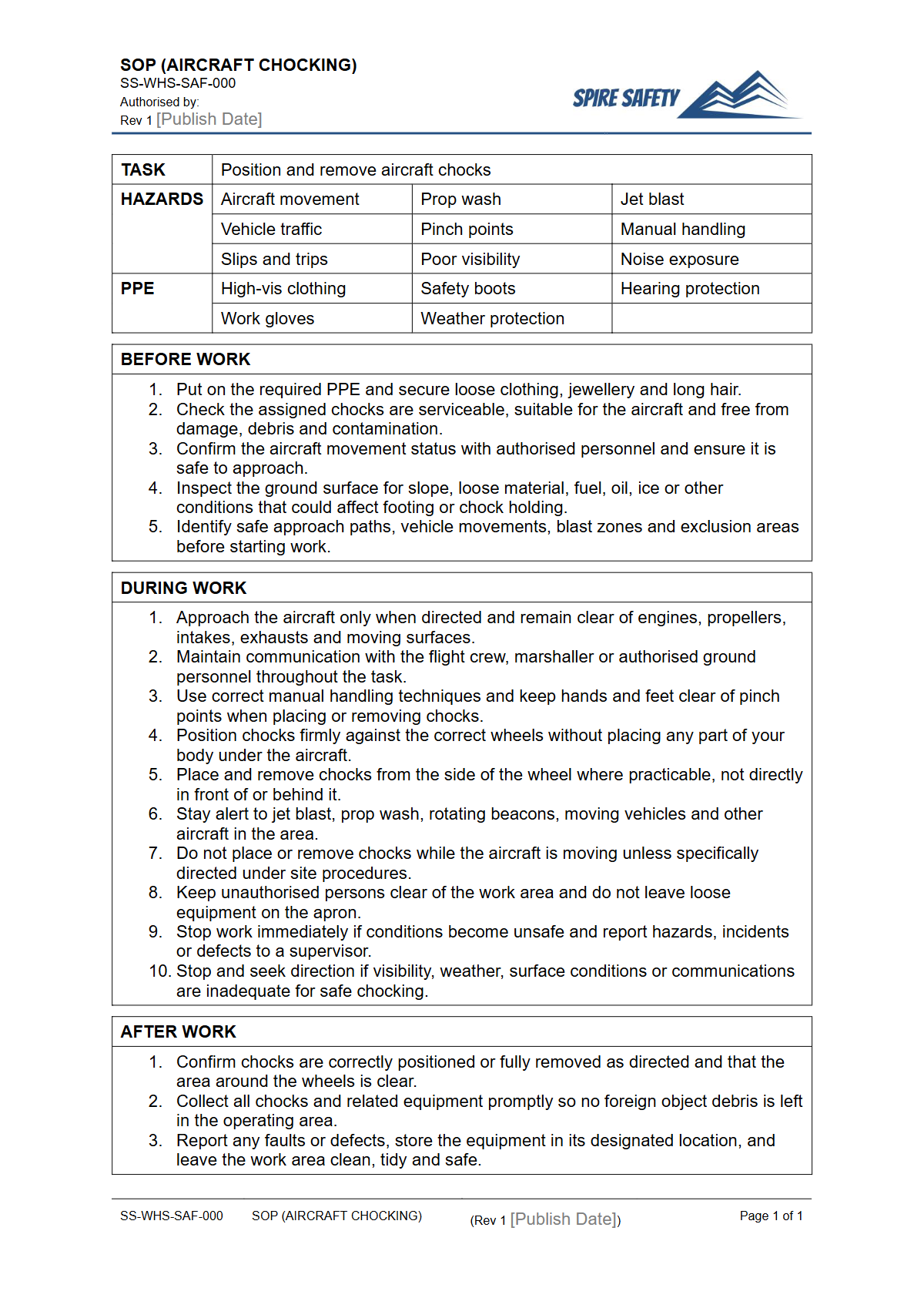
This Safe Operating Procedure for aircraft chocking provides a structured framework for outlining the required steps to secure an aircraft safely on the ground. Its primary purpose is to control the risk of unintended aircraft movement, which can lead to catastrophic damage to equipment, infrastructure, and personnel.
By establishing a clear, documented process, organisations can ensure consistency in operations, simplify training for ground crew and maintenance engineers, and demonstrate a commitment to workplace health and safety. A well-defined SOP is a fundamental component of a comprehensive WHS management system, helping to standardise safe work practices across all teams.
Video walkthrough
How to use the Free Safe Operating Procedure (Aircraft Chocking) Template
This downloadable template is provided in both DOCX and PDF formats for your convenience. It is designed as a starting point, pre-filled with common sections relevant to aircraft chocking, including pre-operational checks, step-by-step procedures, and emergency responses.
To make it effective for your workplace, you must add specific details about your aircraft fleet, ground support equipment (GSE), and airport or aerodrome environment. A generic procedure is not sufficient; a robust SOP must reflect the unique risks and operational realities of your site.
The process of customising this document is a valuable opportunity to engage in consultation with your workers, ensuring the final procedure is practical and understood by those who will use it. While this template serves as a guide, you can also develop other critical documents, such as a Safe Operating Procedure for a telehandler, to cover all high-risk tasks in your operation.
Important Note on Customisation
This is a template and not a complete Safe Operating Procedure. It is essential that you customise this document to reflect the specific aircraft, equipment, personnel, and environmental conditions of your workplace.
We are not responsible for the outcomes of any actions taken based on the use of this template. You must consult with your team and conduct a thorough risk assessment to ensure the final SOP is suitable and effective for your site.
When is a Safe Operating Procedure for Aircraft Chocking Used?
An SOP for aircraft chocking should be applied every time an aircraft is parked and needs to be secured against movement. This includes several key operational phases:
- On Arrival: Immediately after the aircraft has come to a complete stop at the gate, bay, or parking stand, and before engines are shut down or passengers disembark.
- During Turnaround: While the aircraft is being serviced, loaded, or unloaded. The chocks provide primary protection against movement if the parking brake system fails or is inadvertently released.
- For Maintenance: When an aircraft is parked in a hangar or on the tarmac for scheduled or unscheduled maintenance. Tasks like engine testing or landing gear maintenance can create forces that require robust chocking. Using related procedures, such as a step ladder SOP for access, should also be standard practice during maintenance.
- Long-Term Parking: For aircraft stored for extended periods, where brake pressure may gradually be lost.
Regular reviews and updates to the SOP are necessary, especially after an incident, a change in fleet, or as part of scheduled WHS compliance auditing.
Who Should Use This SOP?
This Safe Operating Procedure is intended for all personnel involved in the movement and ground handling of aircraft. The primary users include:
- Ground Handling Crew: Staff responsible for marshalling, parking, and servicing the aircraft on the ramp.
- Aircraft Maintenance Engineers (AMEs): Technicians and mechanics who work on the aircraft while it is on the ground.
- Flight Crew: Pilots and co-pilots need to be aware of the chocking procedures to ensure safe coordination with ground staff.
- Supervisors and Team Leaders: Individuals responsible for overseeing ground operations and ensuring procedures are followed correctly.
- WHS Managers and Safety Officers: Professionals who develop, implement, and review safety management systems.
For organisations that need assistance integrating this SOP into their broader safety framework, accessing professional WHS consulting services can provide expert guidance and support. You can explore our complete free WHS resources library for more templates and guides to support your safety management efforts.
Common mistakes
Common mistakes to avoid
- Using damaged, cracked, or incorrect-sized chocks for the aircraft type and weight.
- Placing chocks incorrectly, such as not being centred and squared against the tyre tread.
- Removing chocks before receiving explicit clearance from the flight crew or ground controller.
- Failing to conduct a risk assessment for non-standard conditions like sloped surfaces or poor weather.
Legal references
Legal considerations
The following legal requirements may be relevant to this type of work.
- Work Health and Safety Act (Harmonised) — Provides the primary duties for protecting workers and other people from work health and safety risks.
- Work Health and Safety Regulations (Harmonised) — Sets out requirements supporting the management of workplace hazards and risks.
The following codes may be relevant to this type of work.
- Managing WHS Risks Code of Practice — Provides practical guidance on identifying hazards, assessing risks and applying effective controls.
- Work Health and Safety Consultation, Cooperation and Coordination Code of Practice — Provides practical guidance on consulting workers and coordinating with other duty holders.
- Managing the Work Environment and Facilities Code of Practice — Provides practical guidance on safe work environments, workplace facilities and related controls.
Did you know
Material Matters
Aircraft chocks are often made from durable urethane or rubber and can be triangular or curved to fit different tyre sizes. The material choice impacts grip, durability, and resistance to aviation fluids like hydraulic fluid and fuel.
Communication is Key
Procedures require clear visual signals (e.g., thumbs-up) or verbal confirmation that chocks are in place before other ground operations commence. This 'challenge and response' system prevents miscommunication and accidents.
FAQ
Frequently asked questions
01What is the primary purpose of chocking an aircraft?
02Are there different types of chocks for different aircraft?
03Who is responsible for ensuring an aircraft is chocked correctly?
04How does an aircraft chocking SOP help with WHS compliance?
Share this resource
Free Safe Operating Procedure (Aircraft Chocking) Template
Browse Categories
How To Use It
- 1Download and open in Word or PDF.
- 2Replace the placeholders with your business details.
- 3Get it reviewed by a WHS specialist before rollout.
Need it customised?
Our WHS consultants can adapt this template to your site, run a gap analysis, or audit what you already have in place.
Book a Free Consultation WHS consulting servicesor call 1300 156 382
Related templates
- Free Safe Operating Procedure (Aircraft Deicing Prep) Template
- Free Safe Operating Procedure (Aircraft Door Check) Template
- Free Safe Operating Procedure (Aircraft Galley Cleaning) Template
- Free Safe Operating Procedure (Aircraft Interior Clean) Template
- Free Safe Operating Procedure (Aircraft Jacking) Template
- Free Safe Operating Procedure (Aircraft Lavatory Clean) Template