
Free Safe Operating Procedure (Aircraft Galley Cleaning) Template
Download our free Safe Operating Procedure (Aircraft Galley Cleaning) Template. This DOCX & PDF resource helps define safe work steps for aviation ground crews.
Free Safe Operating Procedure (Aircraft Galley Cleaning) Template
DOCX • 126 KB + PDF
Updated Oct 2026
No signup required
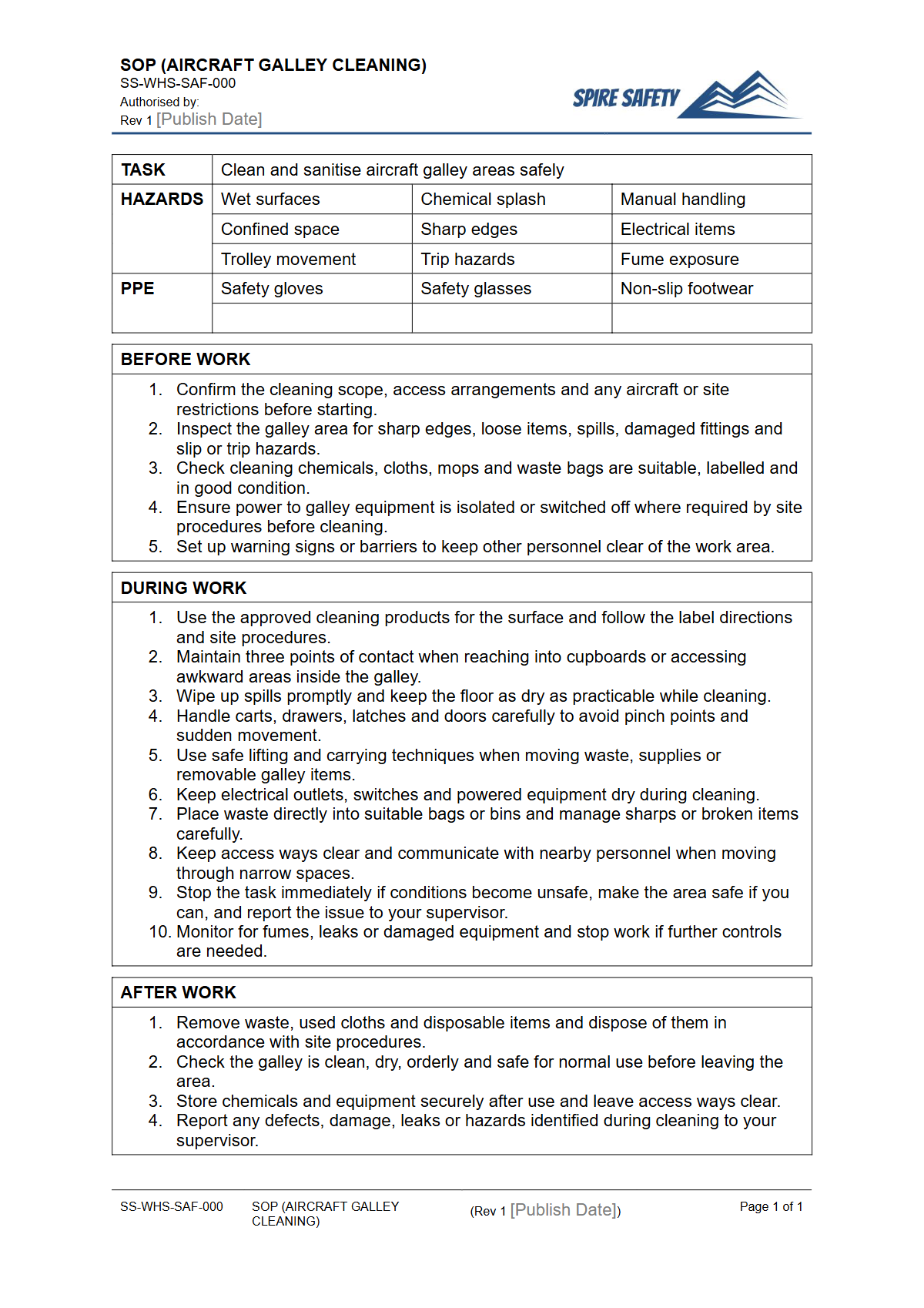
Purpose of the Free Safe Operating Procedure (Aircraft Galley Cleaning) Template
This Safe Operating Procedure (SOP) template for aircraft galley cleaning provides a structured framework for documenting the safest, most efficient way to perform this essential task. Standardising your cleaning process helps minimise risks to ground crew, ensuring everyone follows a consistent, pre-approved method.
A well-drafted SOP is a critical tool for worker induction, training, and ongoing competency management. It formally outlines the step-by-step process, required Personal Protective Equipment (PPE), and specific hazards associated with the job, such as chemical exposure, slip and trip hazards, and manual tasks.
By clearly defining a safe system of work, you create an accountable and predictable operational environment. This document serves as a key component within broader WHS management systems, demonstrating a commitment to proactive risk management.
It helps your organisation meet its duty of care to provide a safe workplace by controlling known risks associated with aviation ground handling and servicing operations.
Video walkthrough
How to use the Free Safe Operating Procedure (Aircraft Galley Cleaning) Template
This resource is provided as a fully editable DOCX file, allowing you to tailor it precisely to your airline's or contractor's specific aircraft, equipment, and cleaning agents. To use the template, download the file and open it in Microsoft Word or a compatible program.
Go through each section and replace the placeholder text with information relevant to your worksite and operational context.
Key sections to customise include:
- Required PPE: Specify the exact gloves, safety glasses, footwear, and any other protective equipment needed.
- Hazard Identification: List the specific risks present in your environment, such as particular chemicals used or the configuration of the galleys you service.
- Step-by-Step Procedure: Detail every action from pre-start checks (e.g., ensuring the aircraft is secured) to waste disposal and final inspection. Be clear and unambiguous.
- Emergency Procedures: Outline the steps to take in case of a chemical spill, injury, or other incident.
Important: This template is a starting point. We are not your workplace and have no knowledge of your specific operational risks.
It is your responsibility to ensure the final document is comprehensive, accurate, and reflects the unique conditions of your work environment. Regular reviews are also crucial, often forming part of internal and external WHS compliance auditing.
Key Hazards in Aircraft Galley Cleaning
While seemingly routine, cleaning aircraft galleys presents several significant WHS risks that must be managed. The confined and compact nature of a galley exacerbates many of these hazards.
Identified Risks Include:
- Chemical Exposure: Industrial-strength cleaning agents can cause skin irritation, respiratory issues, or eye damage if handled incorrectly. The SOP must specify safe handling, dilution, and required PPE.
- Slips, Trips, and Falls: Wet floors are an obvious and serious risk. The procedure should include controls like using non-slip footwear, displaying warning signs, and managing spills immediately.
- Manual Tasks: Removing heavy rubbish bags, lifting catering trolleys, and restocking supplies can lead to musculoskeletal injuries. The SOP should encourage correct lifting techniques and identify mechanical aids where possible.
- Confined Spaces & Awkward Postures: Working in tight spaces requires bending, kneeling, and reaching, increasing the risk of strains and sprains.
- Working at Heights: Even minor heights, such as using a small platform to reach high cupboards, introduce fall risks. If ladders or platforms are used, a separate procedure may be required, like our FREE Step Ladder SOP Template.
When to Use This Safe Operating Procedure
An SOP for aircraft galley cleaning should be used as a primary reference document for the task. It is essential during the induction and training of new cleaning staff to ensure they understand the approved safe work method from day one.
It should also be readily accessible in the workplace for workers to reference before starting a job. Furthermore, supervisors should use the SOP as a benchmark when conducting safety observations or performance reviews to ensure procedures are being followed correctly.
It is also a critical document to review and update following any incident or near miss.
Who Should Use This Safe Operating Procedure
This document is intended for use by multiple roles within an aviation or contract cleaning organisation.
- Ground Crew and Cleaning Staff are the primary end-users, following the procedure to perform their work safely.
- Supervisors and Team Leaders use it to train staff, monitor compliance, and conduct pre-start briefings.
- WHS Managers and Safety Officers use it as a formal risk control measure, a tool for incident investigation, and a key piece of evidence in the overall safety management system.
- Operations Managers rely on it to ensure operational consistency and safety standards are maintained across all shifts and teams.
Integrating With Other Procedures
Aircraft galley cleaning is just one of many tasks performed on the tarmac and around an aircraft. A robust safety system integrates multiple SOPs to cover all activities.
For instance, your galley cleaning SOP might reference procedures for other ground support equipment, such as a FREE Telehandler SOP Template used for catering replenishment. Similarly, if specific tools like high-pressure washers or air blowers are used, you may need additional documentation like a Free Air Compressor SOP Template. Developing a complete suite of documents for complex operations can be challenging, and engaging WHS consulting services can provide expert guidance to ensure all risks are addressed. For more templates and safety documents, explore our complete free WHS resources library.
Common mistakes
Common mistakes to avoid
- Using the generic template without customising it for specific aircraft types and cleaning products.
- Failing to adequately train all relevant workers on the contents of the finalised SOP.
- Not making the SOP easily accessible to staff in their work area.
- Forgetting to review and update the document after an incident or when procedures change.
Legal references
Legal considerations
The following legal requirements may be relevant to this type of work.
- Work Health and Safety Act (Harmonised) — Provides the primary duties for protecting workers and other people from work health and safety risks.
- Work Health and Safety Regulations (Harmonised) — Sets out requirements supporting the management of workplace hazards and risks.
The following codes may be relevant to this type of work.
- Managing WHS Risks Code of Practice — Provides practical guidance on identifying hazards, assessing risks and applying effective controls.
- Work Health and Safety Consultation, Cooperation and Coordination Code of Practice — Provides practical guidance on consulting workers and coordinating with other duty holders.
- Managing the Work Environment and Facilities Code of Practice — Provides practical guidance on safe work environments, workplace facilities and related controls.
Did you know
Ergonomic Design
Modern aircraft galleys are complex ergonomic puzzles, designed to maximise storage and functionality in an extremely limited space, which directly impacts the physical demands placed on cleaning and catering crews.
Slips, Trips, and Falls
According to Safe Work Australia, slips, trips, and falls are a leading cause of workplace injury, making procedural controls for wet and cluttered surfaces in areas like galleys critically important.
FAQ
Frequently asked questions
01What are the main hazards when cleaning an aircraft galley?
02Is a Safe Operating Procedure a legal requirement for galley cleaning in Australia?
03How often should an SOP for aircraft galley cleaning be reviewed?
04What's the difference between an SOP and a Safe Work Method Statement (SWMS)?
Share this resource
Free Safe Operating Procedure (Aircraft Galley Cleaning) Template
Browse Categories
How To Use It
- 1Download and open in Word or PDF.
- 2Replace the placeholders with your business details.
- 3Get it reviewed by a WHS specialist before rollout.
Need it customised?
Our WHS consultants can adapt this template to your site, run a gap analysis, or audit what you already have in place.
Book a Free Consultation WHS consulting servicesor call 1300 156 382
Related templates
- Free Safe Operating Procedure (Aircraft Interior Clean) Template
- Free Safe Operating Procedure (Aircraft Jacking) Template
- Free Safe Operating Procedure (Aircraft Lavatory Clean) Template
- Free Safe Operating Procedure (Aircraft Marshalling) Template
- Free Safe Operating Procedure (Aircraft Refuelling) Template
- Free Safe Operating Procedure (Aircraft Seat Cleaning) Template