
Free Safe Operating Procedure (Athletics Track Care) Template
Download our Free Safe Operating Procedure (Athletics Track Care) Template. This user-friendly DOCX and PDF resource helps outline safe systems of work.
Free Safe Operating Procedure (Athletics Track Care) Template
DOCX • 126 KB + PDF
Updated Oct 2026
No signup required
Purpose of the Free Safe Operating Procedure (Athletics Track Care) Template
Maintaining an athletics track involves a range of specialised tasks, equipment, and potential hazards. A documented Safe Operating Procedure (SOP) is essential for ensuring these activities are performed safely and consistently, protecting both your workers and the valuable track surface.
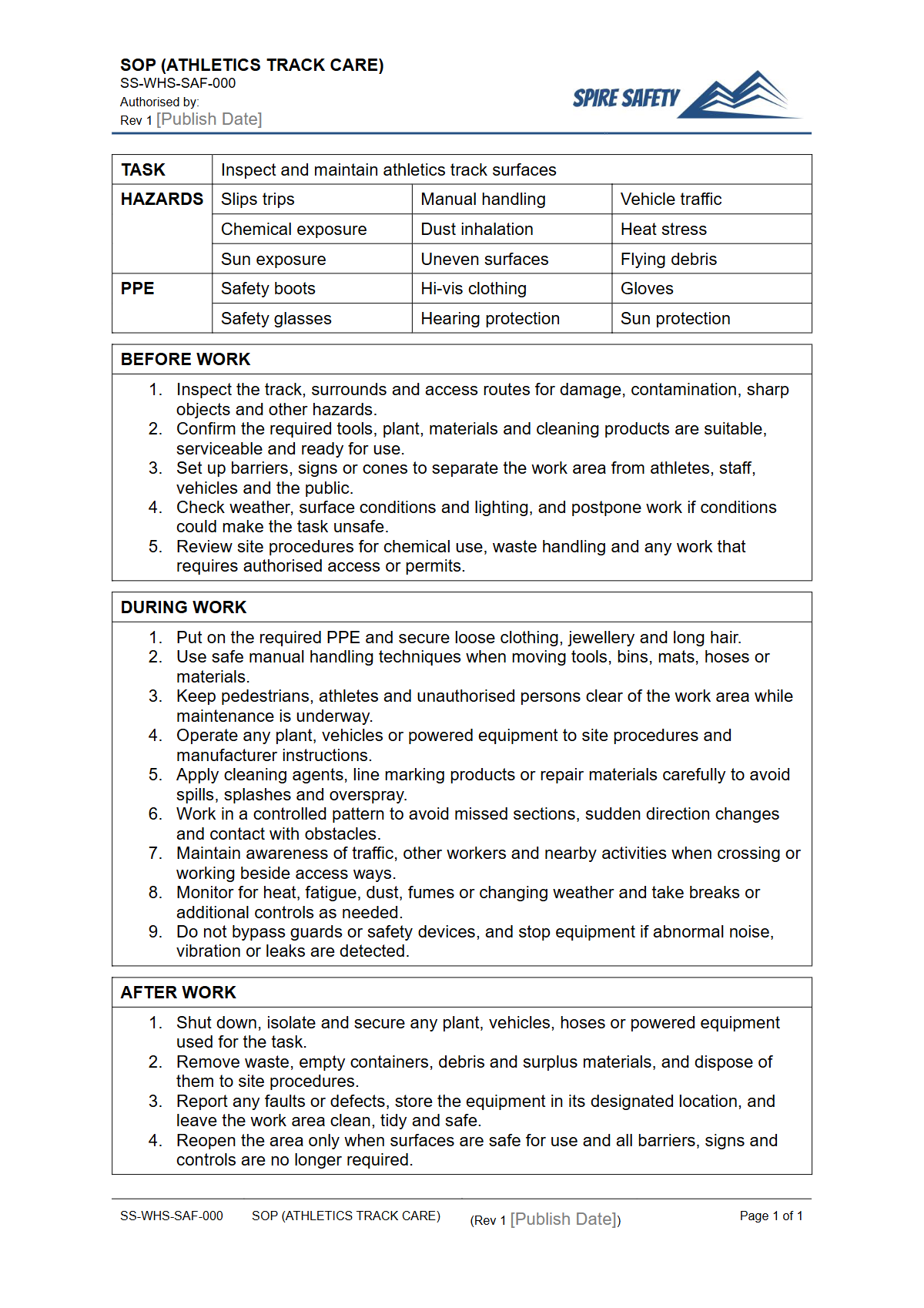
This Free Safe Operating Procedure (Athletics Track Care) Template provides a structured framework for outlining the required safety measures for tasks like line marking, surface cleaning, debris removal, and minor repairs.
Using this template helps you systematically address risks such as manual handling of equipment, exposure to cleaning chemicals or marking paint, interaction with small plant or vehicles, and slip, trip, and fall hazards. Formalising your procedures demonstrates a commitment to health and safety, forming a key part of your overall safety management system.
It also serves as a critical training tool for new and existing groundskeeping staff.
Video walkthrough
How to use the Free Safe Operating Procedure (Athletics Track Care) Template
This resource is available as a fully editable DOCX file, with a PDF version also provided for easy distribution. To use it effectively, download the template and integrate the specific details of your facility's operations.
This includes listing the exact personal protective equipment (PPE) required, the specific types of machinery used, the emergency procedures relevant to your site, and the step-by-step instructions for each maintenance task.
Important: This document is a template and must be customised to your workplace. We are not familiar with your specific site, equipment, or personnel.
You must consult with your workers and other stakeholders to ensure the final SOP is comprehensive, accurate, and reflects the unique risks of your environment. For certain high-risk activities, a separate risk assessment or Safe Work Method Statement (SWMS) may also be required.
When to use it
An SOP for athletics track care should be a core document within your operational framework. It should be used as a primary reference before, during, and after all maintenance activities are performed on or around the track.
Its main applications include inducting new groundskeeping staff, conducting refresher training for experienced employees, and as a reference for supervisors overseeing the work.
Integrating this procedure is a fundamental step in building robust comprehensive WHS management systems. It should also be reviewed regularly—typically on an annual basis or whenever there is a change in equipment, chemicals, personnel, or after an incident occurs. Regular reviews ensure the document remains relevant and effective in controlling risks.
Who should use it
This Safe Operating Procedure is intended for use by all personnel involved in the maintenance and upkeep of athletics facilities. This primarily includes:
- Groundskeepers and Maintenance Staff: As a direct guide for performing their daily tasks safely.
- Facility Managers: To ensure consistent and safe work practices are established and followed across their teams.
- WHS/OHS Officers and Managers: As a tool for risk management, training, and incident investigation.
- Supervisors and Team Leaders: To assist in monitoring work, delivering toolbox talks, and enforcing safety standards on site.
Each person has a responsibility to understand and adhere to the procedures outlined. For complex sites or if you require assistance integrating SOPs into your safety framework, our professional WHS consulting services can provide expert guidance.
Developing SOPs for Specific Equipment
While this template covers the general task of track care, the specific equipment used requires its own detailed procedures. For example, if pressurised air is used for cleaning debris, a specific air compressor SOP should be developed and referenced. Likewise, if maintenance involves minor repairs at height, a step ladder SOP is essential for outlining safe setup and use. For deliveries of materials like sand or repair compounds, procedures for managing vehicle movements are critical, which might be detailed in a body truck SOP. Always ensure workers are trained on the procedures for every piece of plant and equipment they operate. You can explore our full free WHS resources library for more templates to support your safety system.
Common mistakes
Common mistakes to avoid
- Using incorrect cleaning chemicals that can degrade or damage the synthetic track surface.
- Failing to properly cordon off the work area, creating a risk for both workers and facility users.
- Not performing pre-start checks on equipment like line markers, blowers, or sweepers.
- Neglecting to provide specific training on the safe handling and decanting of paints and solvents.
Legal references
Legal considerations
The following legal requirements may be relevant to this type of work.
- Work Health and Safety Act (Harmonised) — Provides the primary duties for protecting workers and other people from work health and safety risks.
- Work Health and Safety Regulations (Harmonised) — Sets out requirements supporting the management of workplace hazards and risks.
The following codes may be relevant to this type of work.
- Managing WHS Risks Code of Practice — Provides practical guidance on identifying hazards, assessing risks and applying effective controls.
- Work Health and Safety Consultation, Cooperation and Coordination Code of Practice — Provides practical guidance on consulting workers and coordinating with other duty holders.
- Managing the Work Environment and Facilities Code of Practice — Provides practical guidance on safe work environments, workplace facilities and related controls.
Did you know
Surface Temperature
The surface of a synthetic athletics track can reach temperatures over 65°C on a hot day, posing a significant heat stress risk for maintenance workers.
Manual Handling Risk
Groundskeeping and maintenance work has one of the highest rates of manual handling injuries, making documented procedures for lifting and moving equipment critically important.
FAQ
Frequently asked questions
01What hazards are typically involved in athletics track maintenance?
02Is a Safe Work Method Statement (SWMS) required for track care?
03How often should an SOP for athletics track care be reviewed?
04Who is responsible for training workers on this SOP?
Share this resource
Free Safe Operating Procedure (Athletics Track Care) Template
Browse Categories
How To Use It
- 1Download and open in Word or PDF.
- 2Replace the placeholders with your business details.
- 3Get it reviewed by a WHS specialist before rollout.
Need it customised?
Our WHS consultants can adapt this template to your site, run a gap analysis, or audit what you already have in place.
Book a Free Consultation WHS consulting servicesor call 1300 156 382
Related templates
- Free Safe Operating Procedure (Auger Operation) Template
- Free Safe Operating Procedure (Autoclave) Template
- Free Safe Operating Procedure (Automated Guided Vehicle) Template
- Free Safe Operating Procedure (Automatic Door Reset) Template
- Free Safe Operating Procedure (Automatic Door Service) Template
- Free Safe Operating Procedure (Automatic Gate Reset) Template