
Free Safe Operating Procedure (Backflow Device Check) Template
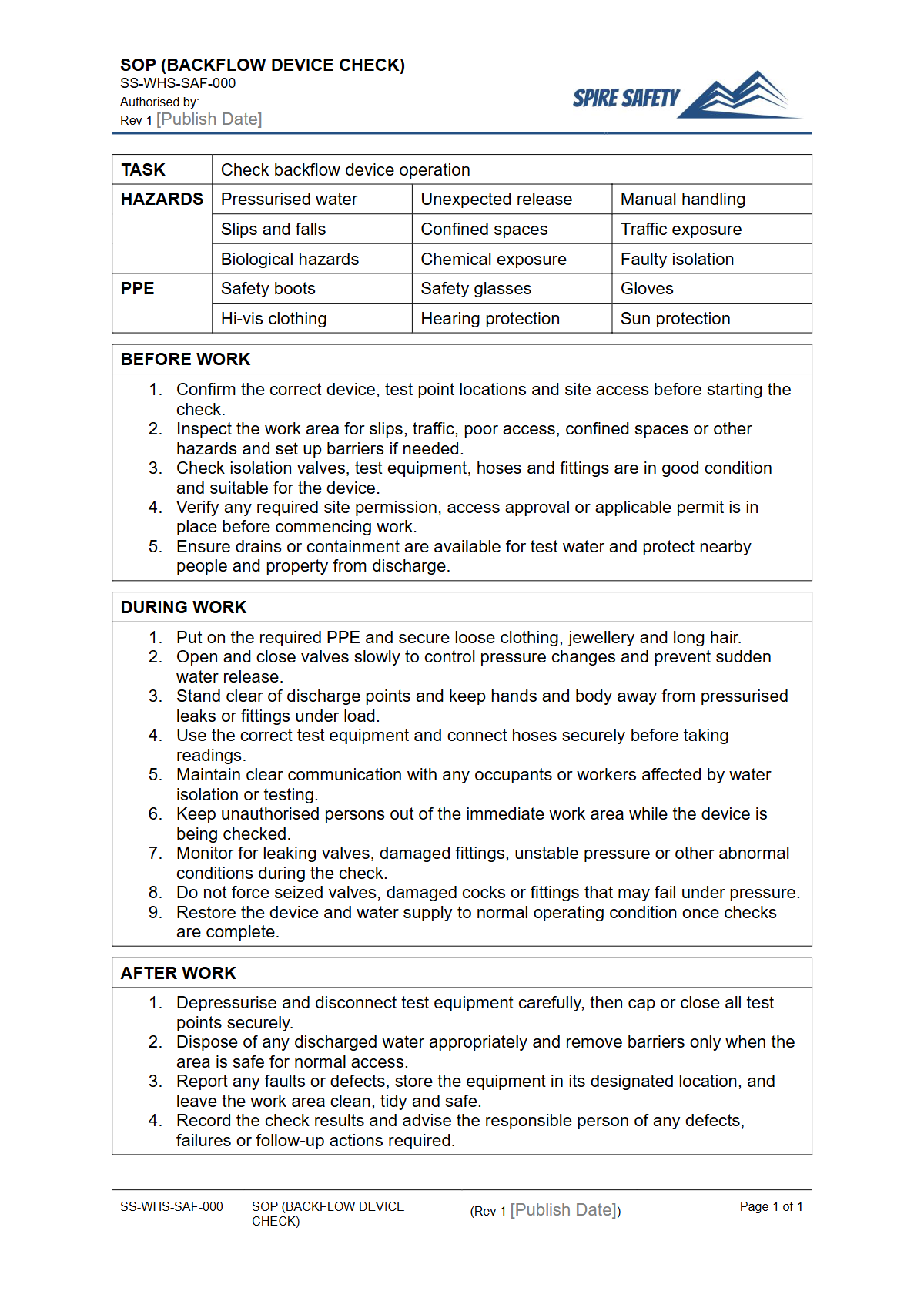
Download our Free Safe Operating Procedure (Backflow Device Check) Template. This user-friendly DOCX and PDF resource helps you outline safe work steps.
Free Safe Operating Procedure (Backflow Device Check) Template
DOCX • 126 KB + PDF
Updated Oct 2026
No signup required
Purpose of the Free Safe Operating Procedure (Backflow Device Check) Template
Effectively managing water safety is a critical responsibility. A key part of this is preventing cross-contamination, where non-potable water enters the clean water supply.
This Free Safe Operating Procedure (Backflow Device Check) Template provides a structured framework for documenting the steps required to test and maintain these essential devices safely and consistently. By formalising this process, you create a clear, repeatable guide for competent personnel, helping to manage risks associated with water systems, pressure, and potential exposure to contaminants.
This SOP is a foundational document for training, operational guidance, and demonstrating due diligence in your safety management practices.
A well-drafted SOP for backflow device checks ensures that every test is performed using the same safe, methodical approach. It outlines the necessary personal protective equipment (PPE), pre-start checks, step-by-step instructions for the test itself, and procedures for handling malfunctions or emergencies.
This level of detail helps minimise the risk of injury to workers and damage to equipment, while also ensuring the integrity of your site’s water supply. Integrating this procedure into your broader safety framework demonstrates a commitment to proactive risk management.
For businesses looking to formalise their entire safety framework, implementing comprehensive WHS management systems is a crucial next step.
Video walkthrough
How to use the Free Safe Operating Procedure (Backflow Device Check) Template
This template is provided in both DOCX and PDF formats to suit your needs. The DOCX file is fully editable, allowing you to tailor the content to the specific backflow prevention devices, equipment, and unique environmental conditions at your workplace.
The PDF version can be used as a quick reference or for distribution once your customisations are complete.
Important: This document is a template, not a finished procedure. To be effective, you must customise it.
We recommend a competent person reviews and adapts the content, incorporating your site-specific hazard assessments, control measures, emergency contacts, and the make and model of the devices being tested. Ensure the final document is read and understood by all workers tasked with performing backflow device checks.
For organisations that handle numerous types of equipment, maintaining a consistent format across all procedures is beneficial. You can use this document as a model for other tasks, such as developing procedures with our Free Air Compressor SOP (Safe Operating Procedure) Template, ensuring a standardised approach to safety documentation.
When to use this Safe Operating Procedure
This Safe Operating Procedure should be used whenever a backflow prevention device requires testing. This typically occurs during:
- Annual Testing: Most jurisdictions in Australia mandate annual testing by a licensed professional to ensure the device is functioning correctly.
- After Installation: A new device must be tested immediately after it is installed to confirm it is working as intended.
- Following Repairs or Maintenance: If the device or the adjacent plumbing has been repaired or altered, it must be re-tested to verify its integrity.
- As part of Audits: Regular checks ensure processes align with documented procedures. This SOP serves as the benchmark during internal reviews or external WHS compliance auditing.
- Training and Competency: The SOP is an essential tool for training new employees or refreshing the skills of existing staff, ensuring they are familiar with the approved, safe method for conducting checks.
Who should use this Safe Operating Procedure
This SOP is intended for use by individuals who are competent and legally authorised to perform backflow device testing. In Australia, this is strictly regulated. The primary users are:
- Licensed Plumbers with Backflow Endorsement: The person conducting the test must hold a current plumbing licence and have the specific accreditation or endorsement for testing backflow prevention devices.
- Maintenance Personnel (under supervision): Other maintenance workers may use the SOP to assist with preparatory work, such as isolating the area or gathering tools, but they cannot perform the test itself unless they are fully accredited.
- Supervisors and WHS Managers: Managers should use this document to understand the process, verify that safety controls are adequate, and ensure only competent, licensed individuals are assigned the task.
If accessing the device requires working at height, even on a small ladder, additional precautions are necessary. Ensure workers are trained in safe access by consulting resources like our FREE Step Ladder SOP (Safe Operating Procedure) Template. For complex situations or clarification on your WHS duties, engaging professional WHS consulting can provide tailored advice.
You can also explore our complete free WHS resources library for more templates and guides.
Common mistakes
Common mistakes to avoid
- Using an unlicensed or non-accredited person to perform the test.
- Failing to record test results accurately or not submitting them to the local water authority as required.
- Not fully isolating the water supply before commencing the test, risking inaccurate readings or water damage.
- Using uncalibrated, damaged, or incorrect testing equipment (differential pressure gauge kit).
Legal references
Legal considerations
The following legal requirements may be relevant to this type of work.
- Work Health and Safety Act (Harmonised) — Provides the primary duties for protecting workers and other people from work health and safety risks.
- Work Health and Safety Regulations (Harmonised) — Sets out requirements supporting the management of workplace hazards and risks.
The following codes may be relevant to this type of work.
- Managing WHS Risks Code of Practice — Provides practical guidance on identifying hazards, assessing risks and applying effective controls.
- Work Health and Safety Consultation, Cooperation and Coordination Code of Practice — Provides practical guidance on consulting workers and coordinating with other duty holders.
- Managing the Work Environment and Facilities Code of Practice — Provides practical guidance on safe work environments, workplace facilities and related controls.
Did you know
Cross-Contamination Risk
A single backflow incident can contaminate the drinking water for an entire building or neighbourhood, potentially causing widespread illness from bacteria, chemicals, or other pollutants.
Regulatory Requirement
The installation and mandatory annual testing of backflow prevention devices are legal requirements under the Plumbing Code of Australia and state/territory regulations.
FAQ
Frequently asked questions
01What is a backflow prevention device?
02How often should backflow devices be tested in Australia?
03Is this SOP template enough for WHS compliance?
04Who is competent to test a backflow device?
Share this resource
Free Safe Operating Procedure (Backflow Device Check) Template
Browse Categories
How To Use It
- 1Download and open in Word or PDF.
- 2Replace the placeholders with your business details.
- 3Get it reviewed by a WHS specialist before rollout.
Need it customised?
Our WHS consultants can adapt this template to your site, run a gap analysis, or audit what you already have in place.
Book a Free Consultation WHS consulting servicesor call 1300 156 382
Related templates
- Free Safe Operating Procedure (Bag Dump Station) Template
- Free Safe Operating Procedure (Baggage Belt Cleanup) Template
- Free Safe Operating Procedure (Baggage Cart Loading) Template
- Free Safe Operating Procedure (Baggage Handling) Template
- Free Safe Operating Procedure (Baggage Reconciliation) Template
- Free Safe Operating Procedure (Baggage Transfer) Template