
Free Safe Operating Procedure (Bar Glass Handling) Template
Download our Free Safe Operating Procedure (Bar Glass Handling) Template to manage risks from broken glass.
Free Safe Operating Procedure (Bar Glass Handling) Template
DOCX • 126 KB + PDF
Updated Oct 2026
No signup required
Purpose of the Free Safe Operating Procedure (Bar Glass Handling) Template
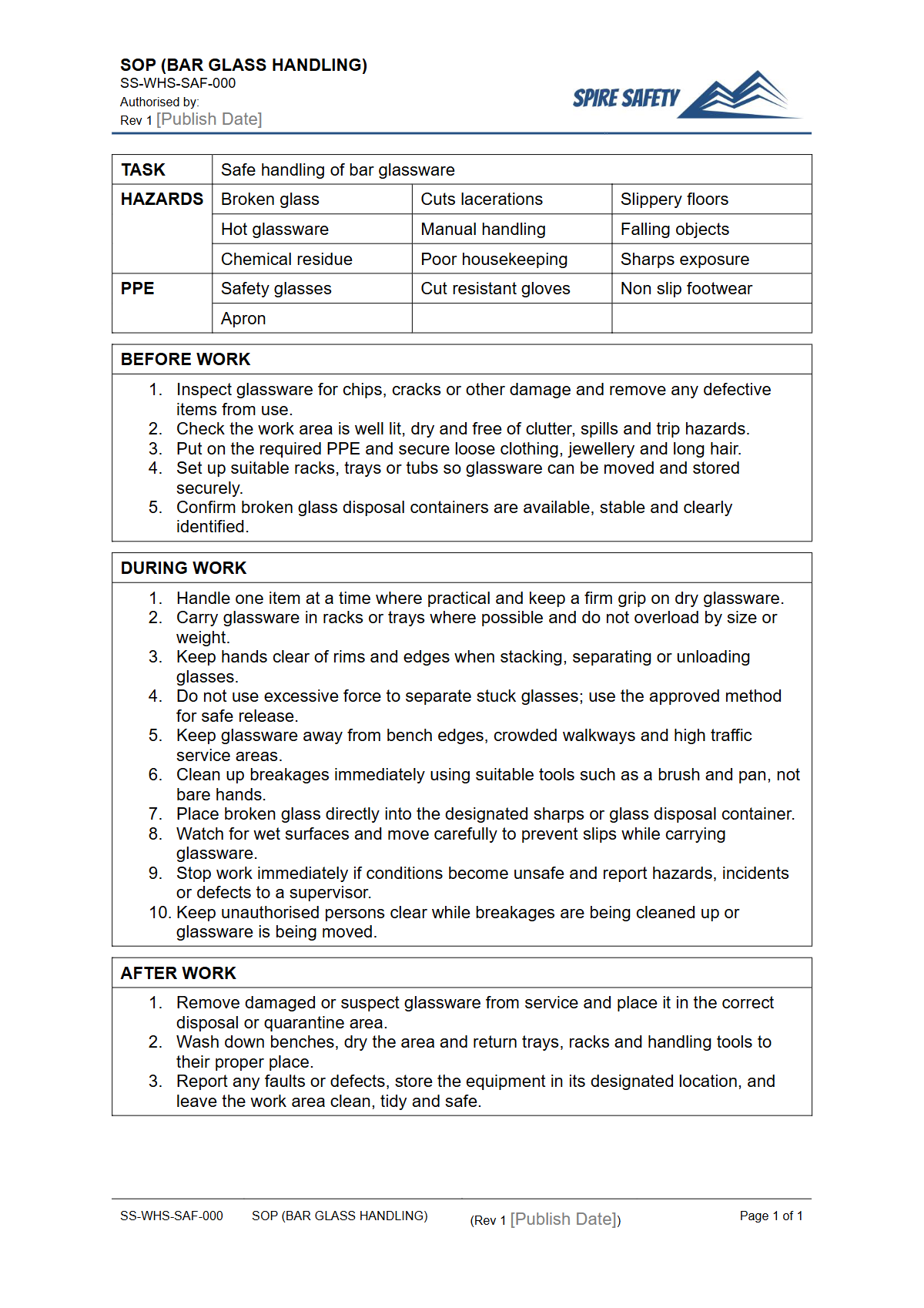
Handling glassware is a constant, high-frequency task in any hospitality venue. This Free Safe Operating Procedure (Bar Glass Handling) Template provides a structured framework for documenting the safest method to perform tasks involving bar glasses.
Its purpose is to minimise the risk of injury, primarily lacerations from broken glass, and to ensure correct hygiene standards are met. A detailed Safe Operating Procedure (SOP) is a fundamental tool for worker training, consistency in practice, and demonstrating a commitment to health and safety.
This document serves as a customisable starting point for integrating task-specific safety instructions into your overall safety framework.
Using this template helps you formally outline step-by-step instructions, required Personal Protective Equipment (PPE), and emergency responses. This formalisation is a key component in a robust safety system. Developing and implementing a suite of SOPs is a practical way to manage risks and is a core element of comprehensive WHS management systems.
Video walkthrough
How to use the Free Safe Operating Procedure (Bar Glass Handling) Template
After downloading the template in your preferred format (DOCX for easy editing or PDF), you must systematically review and customise each section. The document is designed as a guide and must be adapted to reflect the specific context of your venue.
This includes detailing the exact types of glassware used, the model of your glasswasher, the specific cleaning chemicals on site, and the physical layout of your bar and storage areas. The final document should be a practical tool that a new staff member could follow to perform the task safely and correctly.
Important: This template provides a base structure. We cannot know the specifics of your site.
You must adapt this document by adding, removing, and modifying information to ensure it is entirely relevant to your workplace, equipment, and processes. A generic procedure is not sufficient; customisation is essential for effectiveness.
Key Sections to Customise
- Personal Protective Equipment (PPE): Specify if cut-resistant gloves, enclosed non-slip footwear, or other PPE is required.
- Procedure Steps: Detail every step for collecting, washing, polishing, and storing glasses. Include instructions for handling breakages safely.
- Equipment Used: Name the specific glasswashers, polishers, and cleaning agents used in your venue.
- Emergency Procedures: Outline the exact steps to take in case of a cut or other injury, including the location of first aid kits and designated first aid officers.
Safe storage of glassware often involves placing it on high shelves. This task introduces risks related to working at heights, even low ones. Ensure your procedure for storing clean glasses includes instructions for safe access, such as using appropriate equipment detailed in a FREE Step Ladder SOP Template.
When to use a Safe Operating Procedure for Bar Glass Handling
A Safe Operating Procedure for this task should be used as the primary training document for all new and existing staff who handle glassware. It should be readily available in the work area for reference at any time.
The SOP is particularly important during staff inductions, refresher training, and after any incident or near-miss involving glassware. It provides a consistent, approved benchmark for performance, ensuring every worker understands the expected safety standards for tasks such as collecting glasses from tables, loading and unloading the glasswasher, and dealing with broken glass in the ice well or on the floor.
The principles of documenting safe work methods extend beyond just handling glass. All hazardous tasks in a hospitality environment require clear instruction. For example, tasks like cleaning beer lines might involve pressurised equipment, creating a need for a specific procedure like our Free Air Compressor SOP Template.
Who should use this template
This template is designed for use by Persons Conducting a Business or Undertaking (PCBUs), venue managers, and workplace supervisors in the hospitality industry. These individuals are responsible for ensuring a safe work environment and providing the necessary information and training to workers.
They should lead the process of customising the template, consulting with staff who perform the task daily to ensure the procedure is practical and reflects actual work conditions. The final, approved SOP is then used by all workers who handle bar glass as part of their duties.
If you're a small business owner struggling to find the time or expertise to develop a full suite of safety documents, engaging external support can be a practical solution. Professional WHS consulting services can help you tailor documents and implement effective safety systems.
Developing a comprehensive library of SOPs is a best-practice approach to safety management. While this document covers glass handling, you should consider all tasks and equipment at your site.
A venue might also have maintenance tasks that require procedures, such as those covered by our FREE Circular Saw SOP Template, demonstrating the breadth of activities that benefit from formalised safety instructions.
This resource is one of many tools designed to help Australian businesses improve their safety practices. You can explore a wide range of checklists, templates, and guides in our complete free WHS resources library.
Common mistakes
Common mistakes to avoid
- Using a glass to scoop ice from the ice well, which can cause the rim to chip or break.
- Stacking wet glasses inside each other, creating a vacuum that makes them difficult to separate and prone to breakage.
- Carrying too many glasses at once ('over-carrying') to save time, increasing the risk of dropping them.
- Placing cutlery or other metal objects into glasses, which can cause scratches that weaken the glass over time.
Legal references
Legal considerations
The following legal requirements may be relevant to this type of work.
- Work Health and Safety Act (Harmonised) — Provides the primary duties for protecting workers and other people from work health and safety risks.
- Work Health and Safety Regulations (Harmonised) — Sets out requirements supporting the management of workplace hazards and risks.
The following codes may be relevant to this type of work.
- Managing WHS Risks Code of Practice — Provides practical guidance on identifying hazards, assessing risks and applying effective controls.
- Work Health and Safety Consultation, Cooperation and Coordination Code of Practice — Provides practical guidance on consulting workers and coordinating with other duty holders.
- Managing the Work Environment and Facilities Code of Practice — Provides practical guidance on safe work environments, workplace facilities and related controls.
Did you know
A Shock to the System
Thermal shock is a primary cause of 'spontaneous' glass breakage. Placing a hot glass straight from the dishwasher into an ice-filled drink, or vice versa, can cause it to shatter.
Hospitality Hazards
Lacerations are one of the most common injuries in the hospitality industry, often resulting from broken glassware, faulty equipment, or incorrect knife handling.
FAQ
Frequently asked questions
01What is a Safe Operating Procedure for handling bar glass?
02Why are SOPs important in a bar or hotel?
03Who is responsible for writing a glass handling SOP?
04How do I properly dispose of broken glass in a bar?
Share this resource
Free Safe Operating Procedure (Bar Glass Handling) Template
Browse Categories
How To Use It
- 1Download and open in Word or PDF.
- 2Replace the placeholders with your business details.
- 3Get it reviewed by a WHS specialist before rollout.
Need it customised?
Our WHS consultants can adapt this template to your site, run a gap analysis, or audit what you already have in place.
Book a Free Consultation WHS consulting servicesor call 1300 156 382
Related templates
- Free Safe Operating Procedure (Bar Ice Well Cleaning) Template
- Free Safe Operating Procedure (Bar Keg Changeover) Template
- Free Safe Operating Procedure (Barber Chair Cleaning) Template
- Free Safe Operating Procedure (Bare Root Planting) Template
- Free Safe Operating Procedure (Barrel Handling) Template
- Free Safe Operating Procedure (Basement Cleaning) Template