
Free Safe Operating Procedure (BBQ Area Cleanup) Template
Download our free Safe Operating Procedure (BBQ Area Cleanup) Template.
Free Safe Operating Procedure (BBQ Area Cleanup) Template
DOCX • 126 KB + PDF
Updated Oct 2026
No signup required
Purpose of the Free Safe Operating Procedure (BBQ Area Cleanup) Template
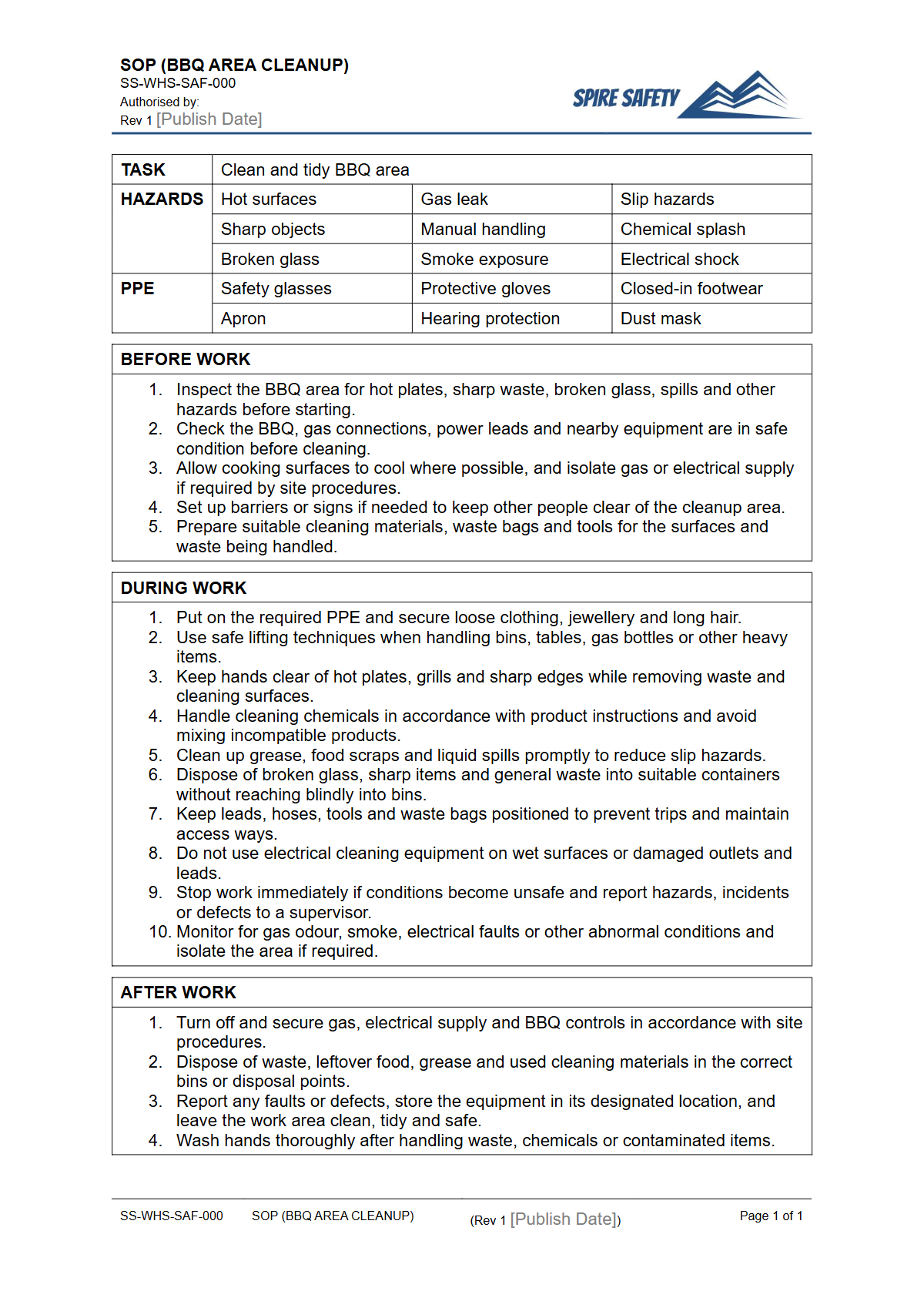
Ensuring a safe and hygienic environment extends to all areas of the workplace, including communal and recreational facilities. This free Safe Operating Procedure (BBQ Area Cleanup) Template provides a structured framework for documenting the steps and controls necessary for safely cleaning a barbecue area.
By outlining potential hazards like burns from hot surfaces, exposure to cleaning chemicals, manual handling risks, and potential fire hazards, this SOP helps standardise the cleanup process. A documented procedure is a key tool for worker training and for demonstrating due diligence in managing workplace health and safety risks.
A well-defined SOP ensures that every person responsible for the task performs it consistently and safely, minimising the likelihood of injuries, illness, or property damage. It acts as a clear reference point, especially for new employees or those who perform the task infrequently. Implementing this procedure contributes to a positive safety culture and the overall effectiveness of your organisation's broader WHS management systems.
Video walkthrough
How to use the Free Safe Operating Procedure (BBQ Area Cleanup) Template
This template is designed as a comprehensive starting point. It covers common steps and hazards associated with cleaning gas and electric barbecues, including pre-operational checks, the cleaning process itself, and post-cleanup actions.
Download the DOCX file to edit and adapt the content to your specific circumstances, or use the PDF as a reference. Key sections you will need to customise include the required Personal Protective Equipment (PPE), the specific cleaning chemicals approved for use, and the emergency procedures relevant to your site.
Important: This document is a template and must be customised to suit the specific equipment, chemicals, environment, and organisational procedures of your workplace. It is essential to conduct your own risk assessment for the task.
We are not liable for any incidents that may arise from the use of this document. For expert assistance in tailoring safety documentation, consider engaging with a WHS consulting professional.
When to use a BBQ Area Cleanup SOP
A Safe Operating Procedure for BBQ cleanup should be used whenever the task is performed. It is particularly important in workplaces where the barbecue is used frequently, such as for regular staff lunches, events, or in hospitality settings.
The SOP should be referenced during worker induction and refresher training. It also serves as a critical guide after long periods of non-use, ensuring that safety checks, such as inspecting gas lines and connections, are not overlooked before and after cleaning.
The procedure should be reviewed periodically and updated whenever the equipment, cleaning agents, or process changes.
Regularly reviewing your procedures is a cornerstone of effective safety management. This can be formalised through scheduled safety reviews or as part of a comprehensive WHS compliance auditing program to verify that documented procedures are being followed correctly in practice.
Who should use this Safe Operating Procedure
This SOP should be used by all personnel tasked with cleaning the barbecue area. This may include facilities management staff, maintenance workers, kitchen hands, or designated team members in an office environment.
Supervisors and managers should also be familiar with the procedure to ensure they can oversee the task, confirm it is being performed safely, and provide adequate training. It is the responsibility of the Person Conducting a Business or Undertaking (PCBU) to ensure workers are deemed competent and have received appropriate instruction before carrying out the task.
Developing Task-Specific Procedures
While cleaning a BBQ seems straightforward, the principles of risk management are universal. Documenting the process is just as important as it is for complex industrial tasks.
Just as you might use a Free Air Compressor SOP Template to manage risks associated with pressurised air, this SOP manages risks like burns and chemical exposure. Ensuring all tasks have a corresponding procedure reduces ambiguity and improves safety outcomes across the board.
In some cases, the cleanup process may involve accessing high shelves for cleaning supplies or storing equipment. If a portable ladder is required, workers must follow safe work practices for its use, which should be outlined in a specific procedure like a Step Ladder SOP to prevent falls.
If you need other templates for different tasks or equipment, you can browse our complete free WHS resources library for a wide range of downloadable documents.
Common mistakes
Common mistakes to avoid
- Attempting to clean the barbecue while it is still too hot, creating a significant burn risk.
- Using inappropriate or overly harsh chemicals that can damage surfaces or leave harmful residues.
- Failing to disconnect the gas cylinder or power supply before commencing a deep clean.
- Neglecting to clean surrounding floor areas, leading to slip hazards from grease and cleaning solution overspray.
Legal references
Legal considerations
The following legal requirements may be relevant to this type of work.
- Work Health and Safety Act (Harmonised) — Provides the primary duties for protecting workers and other people from work health and safety risks.
- Work Health and Safety Regulations (Harmonised) — Sets out requirements supporting the management of workplace hazards and risks.
The following codes may be relevant to this type of work.
- Managing WHS Risks Code of Practice — Provides practical guidance on identifying hazards, assessing risks and applying effective controls.
- Work Health and Safety Consultation, Cooperation and Coordination Code of Practice — Provides practical guidance on consulting workers and coordinating with other duty holders.
- Managing the Work Environment and Facilities Code of Practice — Provides practical guidance on safe work environments, workplace facilities and related controls.
Did you know
Bacterial Growth
Food poisoning bacteria can multiply rapidly on dirty cooking surfaces, even after the heat is off. Regular, thorough cleaning is a critical food safety control to prevent cross-contamination and illness.
Common Injuries
Contact burns from still-hot metal grates, hot plates, and fats are among the most frequent injuries associated with barbecue use and cleanup. A clear procedure helps ensure the unit has cooled sufficiently before work begins.
FAQ
Frequently asked questions
01What hazards should a BBQ cleanup SOP address?
02How often should a workplace BBQ area be cleaned?
03Is a Safe Operating Procedure legally required for cleaning a BBQ in Australia?
04What PPE is typically needed for BBQ cleanup?
Share this resource
Free Safe Operating Procedure (BBQ Area Cleanup) Template
Browse Categories
How To Use It
- 1Download and open in Word or PDF.
- 2Replace the placeholders with your business details.
- 3Get it reviewed by a WHS specialist before rollout.
Need it customised?
Our WHS consultants can adapt this template to your site, run a gap analysis, or audit what you already have in place.
Book a Free Consultation WHS consulting servicesor call 1300 156 382
Related templates
- Free Safe Operating Procedure (Beading Machine) Template
- Free Safe Operating Procedure (Beam Clamp) Template
- Free Safe Operating Procedure (Bearing Puller) Template
- Free Safe Operating Procedure (Beauty Bed Cleaning) Template
- Free Safe Operating Procedure (Bed Alarm Setup) Template
- Free Safe Operating Procedure (Bed Rail Inspection) Template