
Free Safe Operating Procedure (Brick Splitter) Template
Download our free Safe Operating Procedure (Brick Splitter) template.
Free Safe Operating Procedure (Brick Splitter) Template
DOCX • 126 KB + PDF
Updated Oct 2026
No signup required
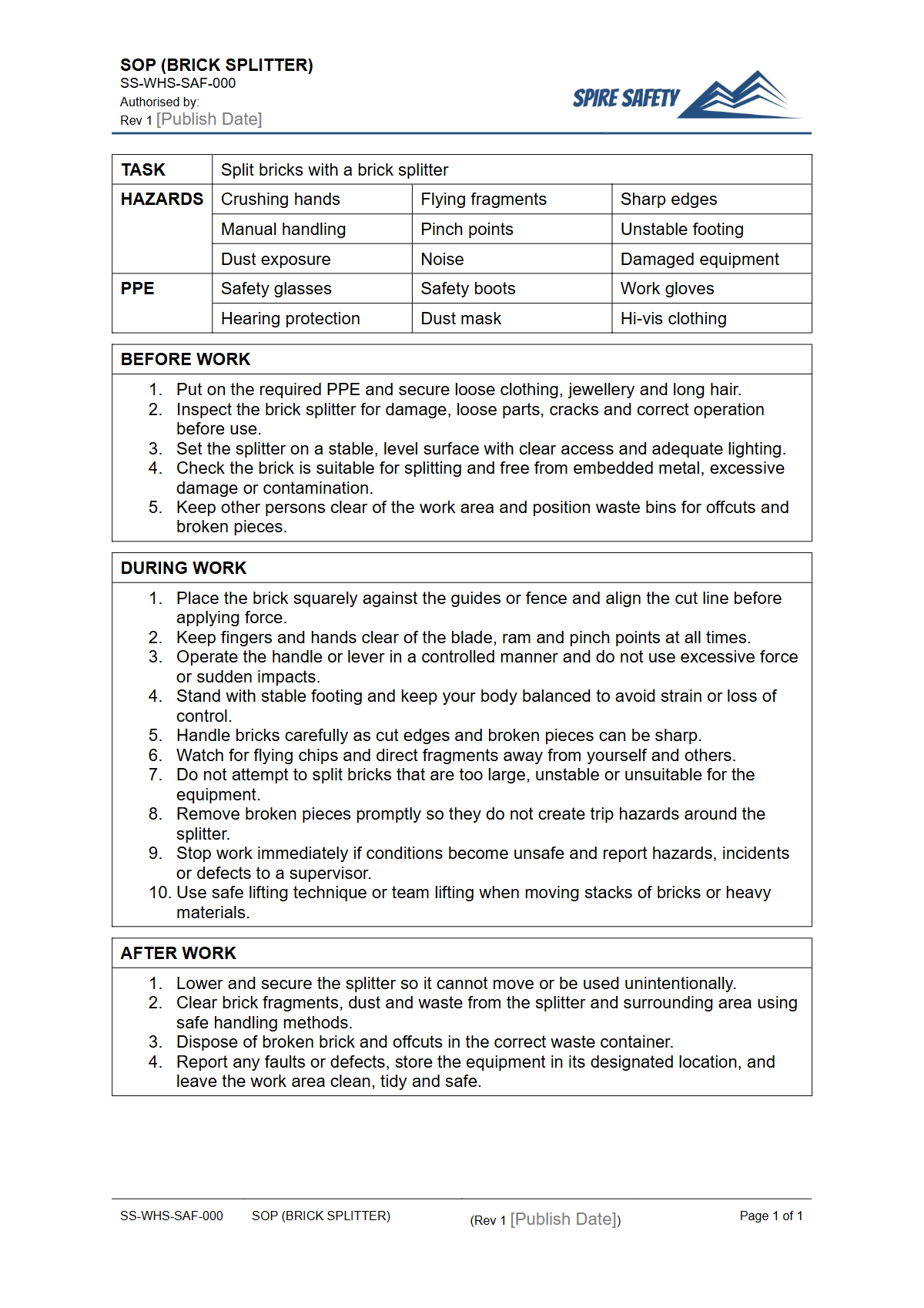
Purpose of the Free Safe Operating Procedure (Brick Splitter) Template
Operating a brick splitter, whether manual or hydraulic, presents significant workplace hazards including crush injuries, lacerations, and musculoskeletal strain. This Free Safe Operating Procedure (Brick Splitter) Template provides a structured starting point for your business to formalise the steps required to use this equipment safely.
A documented SOP is a critical tool for training workers, standardising safe work practices, and demonstrating due diligence in managing risks. By implementing a clear SOP, you establish expectations for pre-start checks, correct operational techniques, and proper shutdown procedures.
A well-defined Safe Operating Procedure is a fundamental component of effective WHS management systems. It translates your risk assessment findings into practical, actionable instructions that workers can follow every time they use the equipment. This template is designed to help you capture your site-specific controls for hazards such as flying debris, awkward postures, and mechanical failure, ensuring a consistent approach to safety.
Video walkthrough
How to use the Free Safe Operating Procedure (Brick Splitter) Template
This template is provided as a fully editable DOCX file, with a PDF version also available for easy printing and distribution. To use it, download the document and begin customising it to suit your specific workplace.
This involves adding your company branding, identifying the specific models of brick splitters in use, and detailing the unique environmental conditions of your worksite.
IMPORTANT: This is a template only. We have no way of knowing your specific site, equipment, or processes.
You MUST customise this document to reflect the actual conditions and hazards in your workplace. A generic procedure is not sufficient for compliance.
We strongly recommend you consult with the workers who operate the equipment, as well as supervisors and any health and safety representatives, during the customisation process to ensure the final SOP is practical and effective.
Just as you would detail procedures for different types of cutting equipment, such as with our circular saw SOP template, this document must be specific to the task at hand. Once finalised, it should be used as a primary training document for all operators.
When to use a Brick Splitter Safe Operating Procedure
A Safe Operating Procedure for a brick splitter should be a living document, integrated into your daily operations. Key times for its use include:
- Worker Training and Induction: Use the SOP as a checklist to ensure new or existing workers are trained on the correct, safe method of operating the equipment before they are authorised to use it.
- Pre-Task Planning: Supervisors and workers should refer to the SOP during toolbox talks or pre-start meetings to review hazards and controls before commencing work.
- Refresher Training: Periodically use the SOP for refresher training to prevent complacency and reinforce safe work habits.
- Incident Investigation: If an incident or near miss occurs involving a brick splitter, the SOP should be reviewed to determine if the procedure was followed and whether it needs to be updated.
- Audits and Inspections: The SOP serves as a benchmark during safety inspections and formal WHS compliance auditing to verify that prescribed safe work methods are being followed.
Who should use this Safe Operating Procedure
Various roles within an organisation have a responsibility related to the brick splitter SOP, forming a chain of responsibility for its implementation and enforcement:
- PCBU (Person Conducting a Business or Undertaking): The PCBU is ultimately responsible for ensuring a safe system of work exists, which includes providing and maintaining resources like this SOP.
- Supervisors and Managers: They are responsible for ensuring workers are trained on the SOP, have access to it, and are following its instructions on the job. They also play a key role in the review and update process.
- Workers/Operators: The individuals operating the brick splitter must understand and follow the steps outlined in the SOP. They have a duty to take reasonable care for their own health and safety and that of others.
- Health and Safety Representatives (HSRs): HSRs should be consulted during the development and review of the SOP to ensure it adequately addresses worker concerns and reflects shop-floor realities.
By defining procedures for all your equipment, you create a safer, more predictable work environment. You can find more templates for common construction and workshop tools in our free WHS resources library, including our FREE Step Ladder SOP Template.
Common mistakes
Common mistakes to avoid
- Using a generic template without customising it for the specific model of brick splitter and worksite conditions.
- Failing to inspect the splitter's blade and frame for cracks, wear, or damage before each use.
- Neglecting to wear appropriate Personal Protective Equipment (PPE), especially safety glasses, gloves, and steel-capped boots.
- Placing hands or fingers near the cutting mechanism during operation.
Legal references
Legal considerations
The following legal requirements may be relevant to this type of work.
- Work Health and Safety Act (Harmonised) — Provides the primary duties for protecting workers and other people from work health and safety risks.
- Work Health and Safety Regulations (Harmonised) — Sets out requirements supporting the management of workplace hazards and risks.
The following codes may be relevant to this type of work.
- Managing WHS Risks Code of Practice — Provides practical guidance on identifying hazards, assessing risks and applying effective controls.
- Work Health and Safety Consultation, Cooperation and Coordination Code of Practice — Provides practical guidance on consulting workers and coordinating with other duty holders.
- Managing the Work Environment and Facilities Code of Practice — Provides practical guidance on safe work environments, workplace facilities and related controls.
Did you know
Manual vs. Hydraulic
Manual brick splitters rely on leverage and operator force, posing a high risk of musculoskeletal injury. Hydraulic models reduce this strain but introduce new hazards related to high-pressure hydraulic fluid and mechanical components.
Silica Dust Risk
While splitters primarily fracture bricks rather than cutting abrasively, the process can still release hazardous crystalline silica dust, especially with certain types of blocks or pavers. Wetting the material before splitting can help suppress this dust.
FAQ
Frequently asked questions
01What is a Safe Operating Procedure (SOP) for a brick splitter?
02Is this brick splitter SOP template enough for WHS compliance?
03Who is responsible for creating and implementing a brick splitter SOP?
04How often should a brick splitter SOP be reviewed?
Share this resource
Free Safe Operating Procedure (Brick Splitter) Template
Browse Categories
How To Use It
- 1Download and open in Word or PDF.
- 2Replace the placeholders with your business details.
- 3Get it reviewed by a WHS specialist before rollout.
Need it customised?
Our WHS consultants can adapt this template to your site, run a gap analysis, or audit what you already have in place.
Book a Free Consultation WHS consulting servicesor call 1300 156 382
Related templates
- Free Safe Operating Procedure (Broaching Machine) Template
- Free Safe Operating Procedure (Brush Cutter Whipper Snipper Operation) Template
- Free Safe Operating Procedure (Brush Painting) Template
- Free Safe Operating Procedure (Bucket Elevator) Template
- Free Safe Operating Procedure (Buffet Packdown) Template
- Free Safe Operating Procedure (Buffet Setup) Template