
Free Safe Operating Procedure (Brush Painting) Template
Download a free Safe Operating Procedure (Brush Painting) template. This customisable DOCX and PDF resource helps you outline safe work systems. Get yours now.
Free Safe Operating Procedure (Brush Painting) Template
DOCX • 126 KB + PDF
Updated Oct 2026
No signup required
Purpose of the Free Safe Operating Procedure (Brush Painting) Template
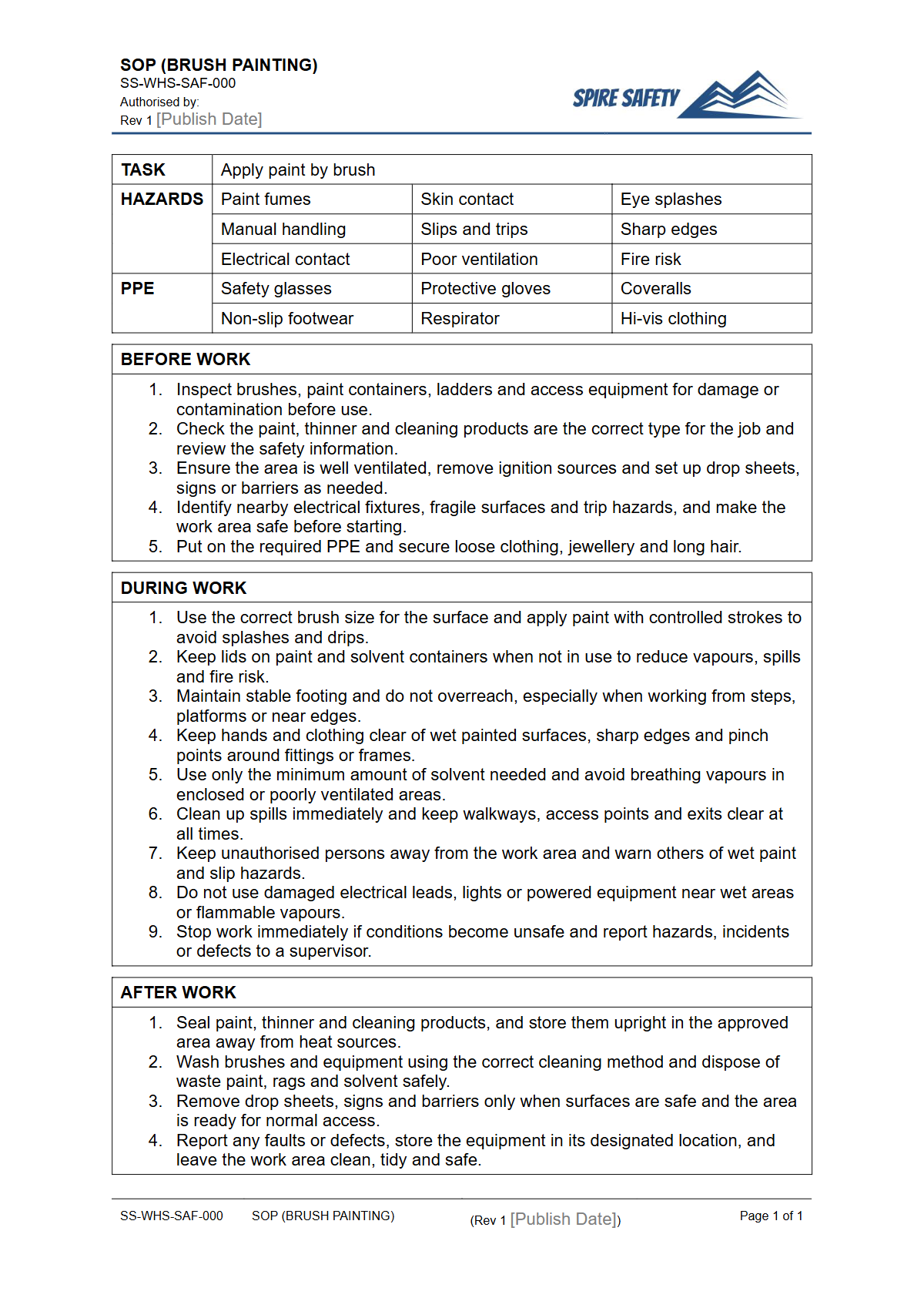
This Free Safe Operating Procedure (Brush Painting) Template provides a structured framework for documenting the safest way to perform painting tasks using brushes and rollers. Its primary purpose is to help Persons Conducting a Business or Undertaking (PCBUs) identify and control hazards associated with manual painting, ensuring workers are protected and processes are standardised.
Implementing documented procedures is a critical component of effective WHS management systems, helping to meet legislative duties and promote a strong safety culture.
A comprehensive SOP for brush painting addresses key risks such as exposure to hazardous chemicals (paints, primers, solvents), musculoskeletal injuries from repetitive motions or awkward postures, slips and trips from spills, and falls from height. By systematically outlining pre-operational checks, step-by-step instructions, and emergency procedures, the document serves as an essential tool for training, supervision, and risk management. For tasks that require working above ground level, it's crucial to have specific controls in place, often detailed in a separate step ladder SOP.
Video walkthrough
How to use the Free Safe Operating Procedure (Brush Painting) Template
To get started, simply download the template in your preferred format (DOCX for easy editing or PDF). The document is structured with sections for you to complete, including required PPE, potential hazards, risk control measures, and a sequential guide to performing the task safely.
This guide covers preparation, application, and clean-up phases.
Important: This template provides a solid foundation, but it is not a complete solution. We have developed it as a starting point, and you MUST customise it to reflect the specific paints, equipment, environment, and workers at your site.
Your final SOP should account for the Safety Data Sheets (SDS) of the products being used, the type of surfaces being painted, and the tools involved in surface preparation, for which you may need a separate air compressor SOP if using one for cleaning.
Review and Improvement
Once customised, the SOP should be reviewed and approved by a competent person. It should then be used to train workers before they undertake any brush painting tasks.
It is not a 'set and forget' document; it must be regularly reviewed, especially after an incident or when new paints, equipment, or processes are introduced. A formal review cycle, often verified through WHS compliance auditing, ensures the procedure remains relevant and effective.
When to use a Safe Operating Procedure
An SOP for brush painting should be used in several key situations. It is an essential part of the induction and training process for new employees or for workers assigned to painting tasks for the first time.
It should also be readily available at the work area as a reference guide before and during the task. Supervisors can use the SOP as a checklist to monitor work and ensure safety protocols are being followed.
Furthermore, it serves as a critical document during incident investigations to understand if procedural deviations contributed to the event.
Who should use it
This Safe Operating Procedure is intended for use by a range of personnel within an organisation:
- Workers and Apprentices: To understand and follow the safe steps required for brush painting.
- Supervisors and Team Leaders: To train their teams, conduct pre-start meetings, and verify that work is being performed safely and in accordance with the documented procedure.
- WHS Managers and Advisors: To develop and integrate into the organisation's overall safety management system, and as a tool for risk assessments and audits.
For organisations needing specialised guidance on adapting this template for complex environments, such as those with significant chemical hazards or unique access challenges, engaging expert assistance is recommended. Professional WHS consulting can help ensure your documentation is robust and fit-for-purpose. You can find more templates and checklists like this one in our free WHS resources library.
Common mistakes
Common mistakes to avoid
- Failing to read the Safety Data Sheet (SDS) for the specific paint being used.
- Using the SOP as a generic document without customising it for the site's unique risks.
- Neglecting proper ventilation, especially when working in enclosed or poorly aired spaces.
- Forgetting to include procedures for safe clean-up and disposal of waste materials.
Legal references
Legal considerations
The following legal requirements may be relevant to this type of work.
- Work Health and Safety Act (Harmonised) — Provides the primary duties for protecting workers and other people from work health and safety risks.
- Work Health and Safety Regulations (Harmonised) — Sets out requirements supporting the management of workplace hazards and risks.
The following codes may be relevant to this type of work.
- Managing WHS Risks Code of Practice — Provides practical guidance on identifying hazards, assessing risks and applying effective controls.
- Work Health and Safety Consultation, Cooperation and Coordination Code of Practice — Provides practical guidance on consulting workers and coordinating with other duty holders.
- Managing the Work Environment and Facilities Code of Practice — Provides practical guidance on safe work environments, workplace facilities and related controls.
Did you know
VOCs in Paint
Many common paints contain Volatile Organic Compounds (VOCs) that evaporate at room temperature. Inhaling these can cause health issues, making proper ventilation and respiratory protection critical safety controls.
Lead Paint Legacy
In Australia, paint containing high levels of lead was common in homes built before 1970. Sanding or scraping these surfaces without proper controls can create hazardous lead dust, a significant health risk.
FAQ
Frequently asked questions
01What is a Safe Operating Procedure (SOP) for brush painting?
02Why do I need to customise this painting SOP template?
03What hazards should be included in a brush painting SOP?
04How often should a Safe Operating Procedure for painting be reviewed?
Share this resource
Free Safe Operating Procedure (Brush Painting) Template
Browse Categories
How To Use It
- 1Download and open in Word or PDF.
- 2Replace the placeholders with your business details.
- 3Get it reviewed by a WHS specialist before rollout.
Need it customised?
Our WHS consultants can adapt this template to your site, run a gap analysis, or audit what you already have in place.
Book a Free Consultation WHS consulting servicesor call 1300 156 382
Related templates
- Free Safe Operating Procedure (Bucket Elevator) Template
- Free Safe Operating Procedure (Buffet Packdown) Template
- Free Safe Operating Procedure (Buffet Setup) Template
- Free Safe Operating Procedure (Buffing Machine) Template
- Free Safe Operating Procedure (Building Access Control) Template
- Free Safe Operating Procedure (Building Entry Clean) Template