
Free Safe Operating Procedure (Building Access Control) Template
Control who enters your workplace and manage safety risks. Our Free Safe Operating Procedure for Building Access Control provides a structured starting point.
Free Safe Operating Procedure (Building Access Control) Template
DOCX • 126 KB + PDF
Updated Oct 2026
No signup required
Purpose of the Free Safe Operating Procedure (Building Access Control) Template
Effectively managing who can enter and move within your premises is a cornerstone of workplace safety and security. Uncontrolled access can lead to theft, property damage, and, most importantly, expose workers and visitors to unacceptable health and safety risks.
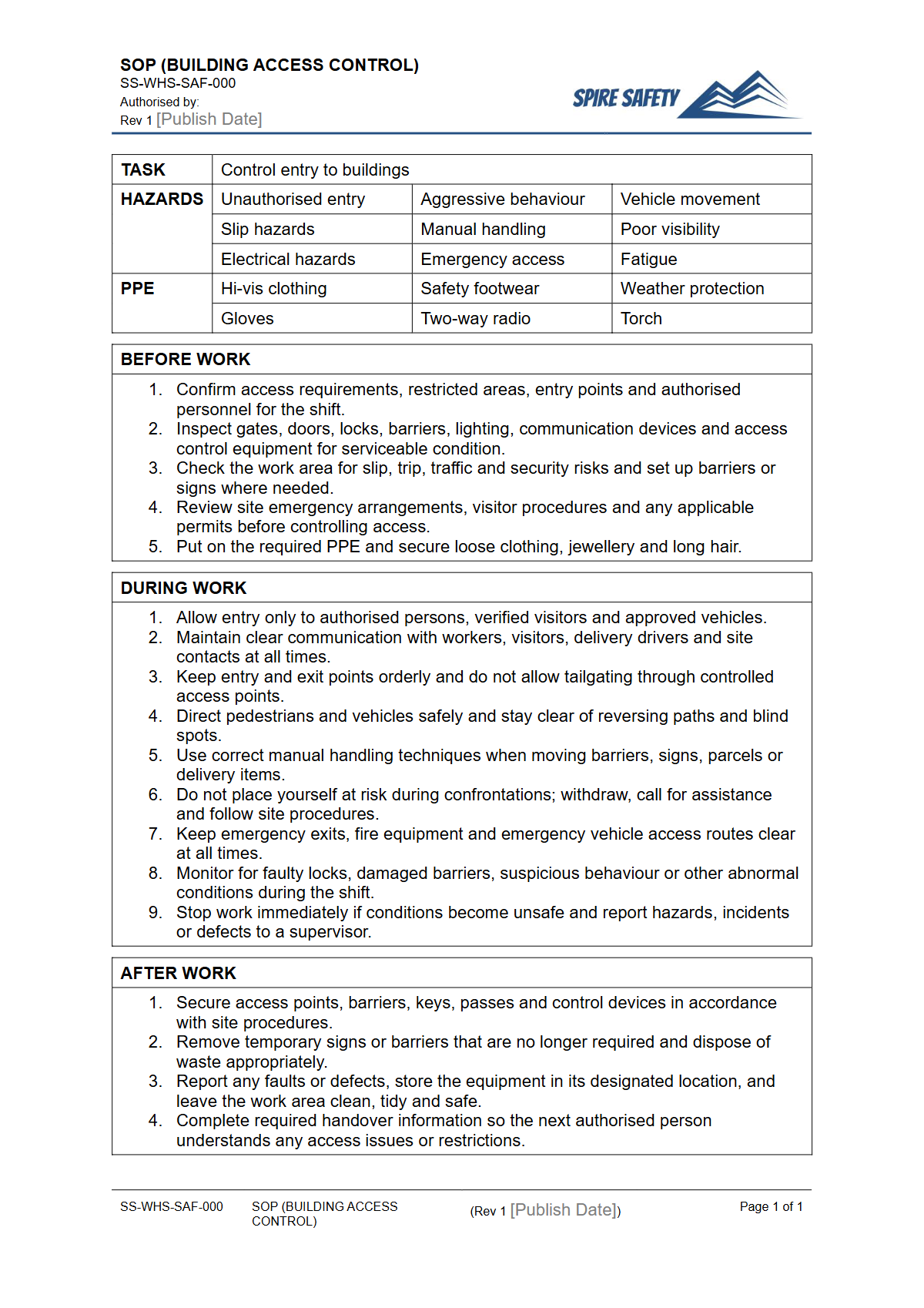
This Free Safe Operating Procedure (Building Access Control) Template provides a structured framework for documenting the formal process your organisation uses to grant, manage, and revoke access to your buildings, facilities, or specific secure areas.
A documented Safe Operating Procedure (SOP) formalises your access control measures, moving them from informal practice to a clear, auditable system. It outlines the specific steps for issuing keys, swipe cards, or access codes, and defines the responsibilities of personnel in maintaining a secure environment.
Implementing a clear procedure helps you meet your duty of care by preventing unauthorised individuals from entering hazardous areas. This SOP should be integrated into your organisation's broader WHS management systems to ensure a cohesive approach to safety.
Video walkthrough
How to use the Free Safe Operating Procedure (Building Access Control) Template
This template is provided in both DOCX and PDF formats to serve as a comprehensive starting point. It is designed to be adapted to the unique layout, risks, and operational requirements of your workplace.
You can edit the Word document to detail your specific access points, types of credentials used (e.g., keys, fobs, biometric data), and the different access levels assigned to various roles within the organisation.
Important: To be effective, this document must be customised to reflect your specific workplace. We have provided a structured guide, but you need to fill in the details that are unique to your site, including emergency contact information, site maps, and the specific duties of your personnel.
A generic procedure is not sufficient for demonstrating compliance. Regularly reviewing its effectiveness is also crucial, which can be supported by periodic WHS compliance auditing.
When to use an Access Control SOP
This Safe Operating Procedure should be implemented in any workplace where restricting entry is necessary to ensure safety, security, or operational integrity. This applies to entire buildings, specific floors, server rooms, laboratories, and storage areas for hazardous substances or high-value equipment.
It is particularly critical for facilities with multiple tenants, high staff turnover, or those that receive a large number of visitors, contractors, and deliveries.
It is also a vital tool for managing after-hours access and emergency situations. The SOP should detail procedures for lockdown, evacuation, and granting access to emergency services, ensuring a controlled and predictable response during a crisis.
For complex sites, developing robust safety documentation can be challenging; engaging with WHS consulting professionals can help streamline the process and ensure all risks are considered.
Who should use this SOP?
This procedure is intended for use by anyone with responsibility for site safety and security. This typically includes:
- Persons Conducting a Business or Undertaking (PCBUs)
- Facility Managers and Building Managers
- Security Managers and Personnel
- WHS/OHS Managers and Advisors
- Department Heads and Team Leaders
It should also be used as a reference and training document for all workers, so they understand their responsibilities regarding workplace security, such as not holding doors open for others, reporting lost credentials immediately, and following visitor sign-in protocols. Workers must also be trained in the specific procedures for areas they access, such as a workshop where a plasma cutter SOP would apply.
The access control procedure acts as the first line of defence, ensuring only authorised and trained personnel enter such zones.
Furthermore, it’s essential for managing contractor access. The procedure ensures that contractors are properly inducted and are only given access to the areas relevant to their work.
This prevents them from unknowingly entering high-risk zones, such as areas with mobile plant where a specific telehandler SOP is in force. Likewise, if maintenance requires access to elevated areas, the access protocol should ensure they are inducted on relevant risks and procedures, such as those covered in a step ladder SOP. For a wider selection of safety documents, you can browse our complete free WHS resources library.
Common mistakes
Common mistakes to avoid
- Failing to immediately revoke access for departing employees, leaving a significant security gap.
- Not having a clear, documented process for reporting and replacing lost or stolen keys, fobs, or access cards.
- Allowing 'tailgating', where unauthorised individuals follow an authorised person through a secure door.
- Neglecting to train all staff on their security responsibilities, including visitor management and emergency procedures.
Legal references
Legal considerations
The following legal requirements may be relevant to this type of work.
- Work Health and Safety Act (Harmonised) — Provides the primary duties for protecting workers and other people from work health and safety risks.
- Work Health and Safety Regulations (Harmonised) — Sets out requirements supporting the management of workplace hazards and risks.
The following codes may be relevant to this type of work.
- Managing WHS Risks Code of Practice — Provides practical guidance on identifying hazards, assessing risks and applying effective controls.
- Work Health and Safety Consultation, Cooperation and Coordination Code of Practice — Provides practical guidance on consulting workers and coordinating with other duty holders.
- Managing the Work Environment and Facilities Code of Practice — Provides practical guidance on safe work environments, workplace facilities and related controls.
Did you know
A Layered Approach
Security experts recommend a 'layered' approach to physical security. This means combining different types of controls, such as perimeter fencing, door locks, alarm systems, and formal access procedures, rather than relying on a single method.
FAQ
Frequently asked questions
01What is a Safe Operating Procedure for building access control?
02Why is an access control SOP important for WHS?
03Who is responsible for enforcing a building access control SOP?
04How often should a building access control SOP be reviewed?
Share this resource
Free Safe Operating Procedure (Building Access Control) Template
Browse Categories
How To Use It
- 1Download and open in Word or PDF.
- 2Replace the placeholders with your business details.
- 3Get it reviewed by a WHS specialist before rollout.
Need it customised?
Our WHS consultants can adapt this template to your site, run a gap analysis, or audit what you already have in place.
Book a Free Consultation WHS consulting servicesor call 1300 156 382
Related templates
- Free Safe Operating Procedure (Building Entry Clean) Template
- Free Safe Operating Procedure (Building Washdown) Template
- Free Safe Operating Procedure (Bulb Planting) Template
- Free Safe Operating Procedure (Bulk Bag Lifting) Template
- Free Safe Operating Procedure (Bulk Bag Unloading) Template
- Free Safe Operating Procedure (Bulk Food Handling) Template