
Free Safe Operating Procedure (Ceiling Tile Cleaning) Template
Download our free Safe Operating Procedure (Ceiling Tile Cleaning) template. This DOCX and PDF resource helps you outline safe work practices.
Free Safe Operating Procedure (Ceiling Tile Cleaning) Template
DOCX • 126 KB + PDF
Updated Oct 2026
No signup required
Purpose of the Free Safe Operating Procedure (Ceiling Tile Cleaning) Template
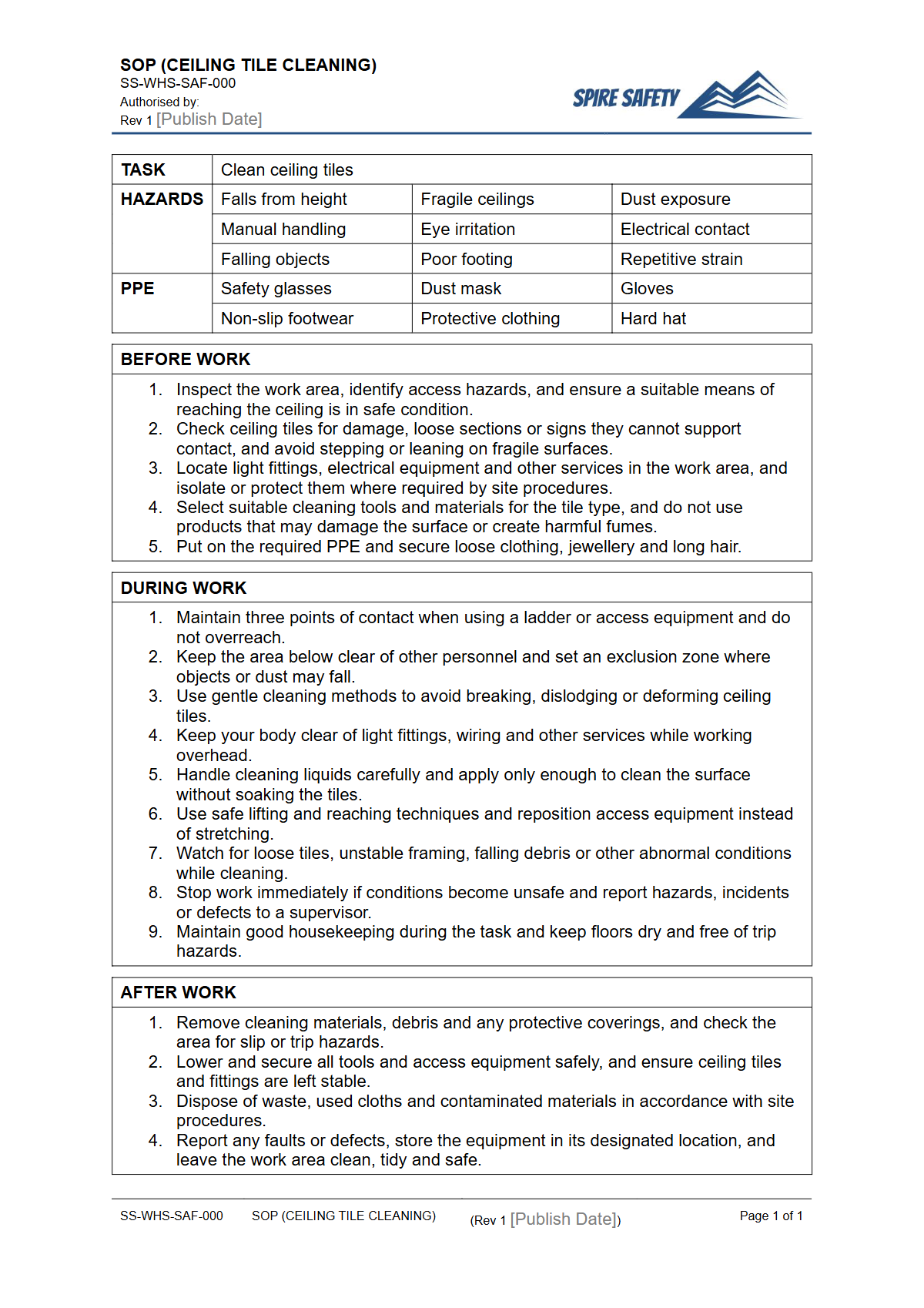
This free Safe Operating Procedure (Ceiling Tile Cleaning) template provides a structured framework for documenting the steps required to perform ceiling cleaning tasks safely. The process of cleaning ceiling tiles, whether for aesthetic reasons or hygiene, introduces several workplace hazards.
These include risks associated with working at heights, manual handling of equipment, potential exposure to cleaning chemicals, and electrical hazards from lighting fixtures and wiring. Using a detailed Safe Operating Procedure (SOP) is a critical step in managing these risks effectively and demonstrating a commitment to workplace safety.
A well-defined SOP forms a vital part of your overall safety management documentation. It helps standardise procedures, ensuring that all workers follow the same safe steps every time the task is performed.
Integrating task-specific SOPs like this one is a fundamental practice within robust WHS management systems, helping to meet your legal duty of care.
Video walkthrough
How to use the Free Safe Operating Procedure (Ceiling Tile Cleaning) Template
To use this resource, simply download the template in your preferred format (DOCX for easy editing or PDF). The document is organised into logical sections, including required PPE, pre-operational checks, step-by-step procedures, and emergency protocols.
Your primary task is to adapt this content to your specific operational environment. This includes listing the exact equipment used, the specific cleaning chemicals approved for use, and the unique hazards of your site.
Important: This is a template, not a finished document. We have developed it as a starting point, but you must customise it to reflect the specific hazards, equipment, chemicals, and control measures present in your workplace.
Always consult with your workers and supervisors during the customisation process to ensure the SOP is practical and effective. For tasks involving ladders, it's beneficial to have a specific procedure for that equipment, which can be developed using our free Step Ladder SOP template.
When to use it
The Safe Operating Procedure for ceiling tile cleaning should be developed and approved before any such work commences. It serves multiple functions throughout the safety lifecycle.
It's an essential tool for training new employees or contractors and for conducting refresher training for existing staff. The SOP should be made readily available at or near the work area for easy reference during the task.
Furthermore, this document serves as a benchmark for performance and compliance. It can be used by supervisors to conduct safety observations or as a key piece of evidence during internal or external safety audits. Regular reviews of SOPs are a core activity in continuous improvement and help ensure your safety practices remain current, a process often verified through WHS compliance auditing.
Who should use it
This SOP is intended for use by all personnel involved in the task of cleaning ceiling tiles. This includes maintenance workers, cleaning staff, and contractors.
Supervisors should also use the document to oversee the work and ensure it aligns with the prescribed safe methods. WHS managers and Persons Conducting a Business or Undertaking (PCBUs) will find the template useful for establishing and documenting formal safety processes across the organisation.
Ultimately, the SOP is a communication tool to ensure everyone understands the risks and the agreed-upon controls. Competency to perform the task safely is not just about skill, but also about understanding and adhering to the documented procedure.
It is also crucial that procedures for emergencies are clearly documented and accessible, such as what to do in a medical emergency which may be supported by having a defibrillator operation template readily available.
Key Hazards and Controls to Consider
When customising your SOP, pay close attention to the following common hazards:
- Working at Heights: Falls from ladders, trestles, or mobile scaffolds are a primary risk. Controls include selecting the right equipment for the height, ensuring it is in good condition, and training workers on safe use, such as maintaining three points of contact.
- Hazardous Chemicals: Some cleaning agents can cause skin irritation, respiratory issues, or eye damage. Controls involve selecting the least hazardous chemical possible, ensuring adequate ventilation, providing the correct Personal Protective Equipment (PPE) as specified on the Safety Data Sheet (SDS), and training workers on safe handling.
- Electrical Hazards: Ceiling spaces contain wiring, light fittings, and other electrical components. Accidental contact or water ingress can lead to electric shock. Controls must include procedures for identifying and isolating electrical services before work begins.
- Manual Tasks: Working overhead for extended periods can cause musculoskeletal injuries. Controls include job rotation, frequent breaks, and using lightweight equipment with ergonomic designs.
Implementing robust controls for these varied hazards requires a systematic approach. If your organisation lacks the internal expertise to conduct a thorough risk assessment for this or other tasks, seeking guidance from professional WHS consulting services can provide clarity and help ensure a safer workplace. For more document templates covering a wide range of tasks and equipment, you can also browse our complete free WHS resources library.
Common mistakes
Common mistakes to avoid
- Using unstable platforms like chairs or desks instead of appropriate ladders or scaffolds.
- Failing to check the Safety Data Sheet (SDS) for cleaning chemicals, leading to incorrect PPE use.
- Neglecting to isolate electrical services like lighting before applying water-based cleaning solutions.
- Underestimating the weight or fragility of ceiling tiles, leading to breakages or manual handling injuries.
Legal references
Legal considerations
The following legal requirements may be relevant to this type of work.
- Work Health and Safety Act (Harmonised) — Provides the primary duties for protecting workers and other people from work health and safety risks.
- Work Health and Safety Regulations (Harmonised) — Sets out requirements supporting the management of workplace hazards and risks.
The following codes may be relevant to this type of work.
- Managing WHS Risks Code of Practice — Provides practical guidance on identifying hazards, assessing risks and applying effective controls.
- Work Health and Safety Consultation, Cooperation and Coordination Code of Practice — Provides practical guidance on consulting workers and coordinating with other duty holders.
- Managing the Work Environment and Facilities Code of Practice — Provides practical guidance on safe work environments, workplace facilities and related controls.
Did you know
Indoor Air Quality
Clean ceiling tiles can contribute to better indoor air quality. Over time, tiles can accumulate dust, allergens, and other particulates that may be circulated by HVAC systems.
Working at Height Risks
Even falls from a relatively low height can cause serious injury. A significant portion of fall-related incidents in Australian workplaces occur at a height of less than two metres.
FAQ
Frequently asked questions
01What should be included in a ceiling tile cleaning SOP?
02Is a Safe Work Method Statement (SWMS) required for cleaning ceiling tiles?
03How often should ceiling tile cleaning SOPs be reviewed?
04Can this template be used for mould removal from ceiling tiles?
Share this resource
Free Safe Operating Procedure (Ceiling Tile Cleaning) Template
Browse Categories
How To Use It
- 1Download and open in Word or PDF.
- 2Replace the placeholders with your business details.
- 3Get it reviewed by a WHS specialist before rollout.
Need it customised?
Our WHS consultants can adapt this template to your site, run a gap analysis, or audit what you already have in place.
Book a Free Consultation WHS consulting servicesor call 1300 156 382
Related templates
- Free Safe Operating Procedure (Ceiling Track Check) Template
- Free Safe Operating Procedure (Cellar Cleaning) Template
- Free Safe Operating Procedure (Cellar Stock Handling) Template
- Free Safe Operating Procedure (Cemetery Grounds Care) Template
- Free Safe Operating Procedure (Centrifugal Pump) Template
- Free Safe Operating Procedure (Centrifuge) Template