
Free Safe Operating Procedure (Cinema Screen Cleaning) Template
Download our free Safe Operating Procedure (Cinema Screen Cleaning) template.
Free Safe Operating Procedure (Cinema Screen Cleaning) Template
DOCX • 126 KB + PDF
Updated Oct 2026
No signup required
Purpose of the Free Safe Operating Procedure (Cinema Screen Cleaning) Template
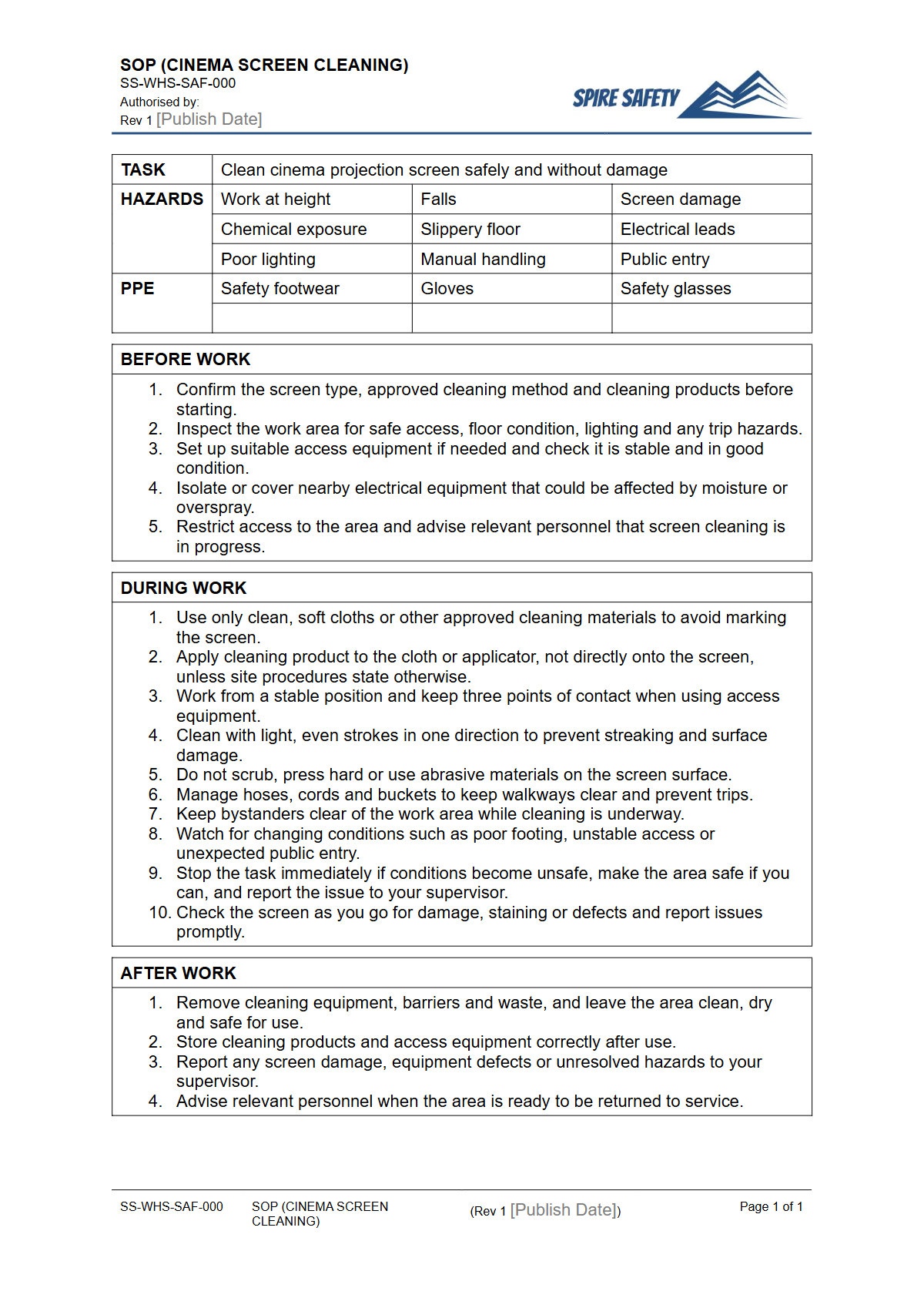
This Safe Operating Procedure (SOP) for cinema screen cleaning provides a structured framework for businesses to ensure the task is performed safely and consistently. Cleaning large, delicate, and often elevated cinema screens introduces specific workplace hazards, including working at height, manual handling of equipment, potential exposure to cleaning chemicals, and electrical risks.
By using this free Safe Operating Procedure (Cinema Screen Cleaning) template, you can formally document the risks and control measures, helping to meet your duty of care under Australian WHS laws.
A documented procedure is a critical tool for training staff, standardising work methods, and demonstrating proactive risk management. It outlines the required personal protective equipment (PPE), pre-operational checks for equipment, and a step-by-step guide to the cleaning process itself.
Formalising these steps helps prevent both injuries to workers and costly damage to expensive screen surfaces. This process is a fundamental part of building robust comprehensive WHS management systems within your organisation.
Video walkthrough
How to use the Free Safe Operating Procedure (Cinema Screen Cleaning) Template
This document is a template designed as a starting point. To make it effective, you must conduct a site-specific risk assessment and adapt the content to reflect your unique operational environment, equipment, and cleaning agents.
After downloading the DOCX or PDF file, work through each section and add detail relevant to your cinema's specific needs.
Key sections to customise include:
- Required PPE: Specify the exact gloves, safety glasses, and non-slip footwear required.
- Hazard Identification: Add any hazards unique to your venue, such as specific trip hazards or lighting conditions.
- Pre-Operational Checks: Detail the inspection process for your specific access equipment, whether you use A-frame ladders, mobile scaffolds, or other platforms. For tasks involving ladders, consulting a specific step ladder SOP can provide additional detail.
- Step-by-Step Procedure: Write clear, unambiguous steps for your team to follow. This includes preparing the area, mixing and applying cleaning solutions as per the Safety Data Sheet (SDS), the cleaning motion required, and post-cleaning checks.
- Emergency Procedures: Outline steps for handling chemical spills, falls, or other potential incidents. Consider including the location of first aid kits and emergency contacts.
Important: This is a template and not a complete document. We are not familiar with your specific tools, screen type, chemicals, or workplace conditions.
You MUST customise this Safe Operating Procedure to align with your own risk assessments and operational context.
When to use a Cinema Screen Cleaning SOP
A Safe Operating Procedure for this task should be used as a primary reference document in several situations. It is essential during the induction and training of new employees responsible for cleaning duties, ensuring they understand the approved, safe method from day one.
The SOP should also be reviewed during regular toolbox talks or safety meetings to refresh knowledge and discuss any near misses or incidents.
Furthermore, it should be readily accessible in the work area for reference before and during the cleaning task. Using the SOP as a checklist can help ensure no critical safety steps are missed, particularly for tasks that are performed infrequently.
Regular reviews of the SOP are also crucial, especially after any process changes or as part of periodic WHS compliance auditing to ensure its continued relevance and effectiveness.
Who should use this Safe Operating Procedure
This SOP is intended for use by multiple roles within a cinema or entertainment venue. Venue Managers and WHS Officers are responsible for developing, implementing, and reviewing the SOP as part of their overall safety management duties.
They must ensure it is tailored to the site and that all relevant staff are trained in its use.
Team Leaders or Supervisors should use the SOP to directly instruct and oversee employees, ensuring the documented procedures are followed correctly during every cleaning cycle. Cleaning and Maintenance Staff are the primary end-users; they must understand and follow the procedure to ensure their own safety and the safety of others. In a public venue, it's also wise to ensure staff are trained on emergency equipment, which can be documented in a Safe Operating Procedure for Defibrillator Operation.
By involving all levels of personnel in the use and refinement of the SOP, an organisation can foster a stronger safety culture. For more templates and safety documents, browse our complete free WHS resources library.
Common mistakes
Common mistakes to avoid
- Using unapproved household cleaning agents that can damage the screen surface.
- Failing to conduct and document pre-use inspections of ladders or mobile scaffolds.
- Not effectively cordoning off the work area, creating a trip hazard for other staff.
- Providing inadequate training, assuming the task is 'simple' without covering specific hazards.
Legal references
Legal considerations
The following legal requirements may be relevant to this type of work.
- Work Health and Safety Act (Harmonised) — Provides the primary duties for protecting workers and other people from work health and safety risks.
- Work Health and Safety Regulations (Harmonised) — Sets out requirements supporting the management of workplace hazards and risks.
The following codes may be relevant to this type of work.
- Managing WHS Risks Code of Practice — Provides practical guidance on identifying hazards, assessing risks and applying effective controls.
- Work Health and Safety Consultation, Cooperation and Coordination Code of Practice — Provides practical guidance on consulting workers and coordinating with other duty holders.
- Managing the Work Environment and Facilities Code of Practice — Provides practical guidance on safe work environments, workplace facilities and related controls.
Did you know
A Delicate Surface
Modern cinema screens, particularly silver screens used for 3D projection, have highly delicate surfaces. Using the wrong chemicals or abrasive materials can permanently damage the screen, affecting picture quality and costing thousands to replace.
The Cost of a Fall
According to Safe Work Australia, slips, trips, and falls are a leading cause of serious injury in Australian workplaces. Even a fall from a low height, such as from the first few steps of a ladder, can result in significant harm.
FAQ
Frequently asked questions
01What are the main hazards of cleaning a cinema screen?
02Does this SOP template specify which cleaning chemicals to use?
03Is an SOP a legal requirement for cleaning cinema screens in Australia?
04How often should our Cinema Screen Cleaning SOP be reviewed?
Share this resource
Free Safe Operating Procedure (Cinema Screen Cleaning) Template
Browse Categories
How To Use It
- 1Download and open in Word or PDF.
- 2Replace the placeholders with your business details.
- 3Get it reviewed by a WHS specialist before rollout.
Need it customised?
Our WHS consultants can adapt this template to your site, run a gap analysis, or audit what you already have in place.
Book a Free Consultation WHS consulting servicesor call 1300 156 382
Related templates
- Free Safe Operating Procedure (Cinema Seat Cleaning) Template
- Free Safe Operating Procedure (Cinema Spill Cleanup) Template
- Free Safe Operating Procedure (Circuit Breaker Test) Template
- Free Safe Operating Procedure (Clean Linen Trolley) Template
- Free Safe Operating Procedure (Clean Load Inspection) Template
- Free Safe Operating Procedure (Clean Utility Room) Template