
Free Safe Operating Procedure (Cinema Seat Cleaning) Template
Download our free Safe Operating Procedure (Cinema Seat Cleaning) Template.
Free Safe Operating Procedure (Cinema Seat Cleaning) Template
DOCX • 126 KB + PDF
Updated Oct 2026
No signup required
Purpose of the Free Safe Operating Procedure (Cinema Seat Cleaning) Template
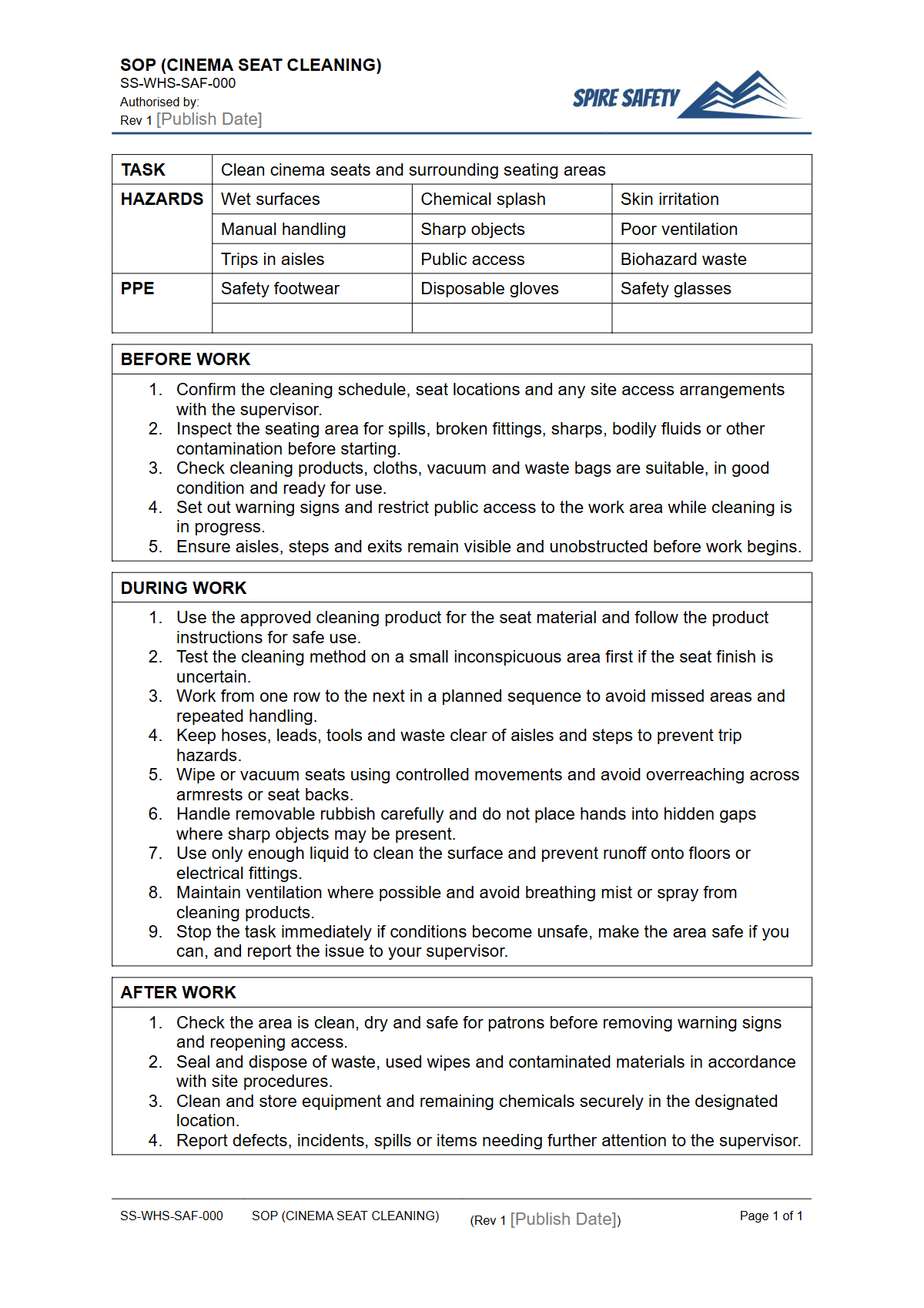
This Free Safe Operating Procedure (Cinema Seat Cleaning) Template provides a structured framework for documenting the safe and efficient cleaning of cinema seating. A Safe Operating Procedure (SOP), also known as a Safe Work Procedure (SWP), outlines a logical sequence of steps to perform a routine task safely.
For cinema operations, this ensures that every team member understands the established process for cleaning, minimising risks and maximising hygiene standards between sessions.
The primary purpose of this SOP is to manage key health and safety risks associated with the task. These include manual handling hazards from repetitive movements and awkward postures, potential exposure to cleaning chemicals, and slip or trip risks from spills or equipment.
By standardising the procedure, you can ensure consistent training, predictable outcomes, and a clear reference point for staff. This document forms a vital part of your overall safety management, demonstrating a commitment to proactive risk control and fitting into broader comprehensive WHS management systems.
Implementing a clear SOP also helps in maintaining general venue safety, which can include preparedness for emergencies. For instance, ensuring staff are aware of procedures for other common equipment in a public space, like using the Safe Operating Procedure (Defibrillator Operation) template, contributes to a safer environment for both staff and patrons.
Video walkthrough
How to use the Free Safe Operating Procedure (Cinema Seat Cleaning) Template
This downloadable template is provided in both DOCX and PDF formats for your convenience. The DOCX file is fully editable, allowing you to tailor it precisely to your cinema's unique environment. To use it effectively, follow these steps:
- Download: Choose your preferred format and save the file.
- Customise: Add your company name, logo, and specific site details. Review each section and modify the content to reflect the actual cleaning products, equipment (e.g., types of cloths, vacuums), and Personal Protective Equipment (PPE) used at your venue.
- Consult: Involve your cleaning staff and supervisors in the review process. They perform the task daily and can provide valuable insights into potential hazards and practical control measures that may have been overlooked.
- Approve and Train: Once finalised, have the SOP approved by management. Ensure all relevant staff are trained on the procedure, understand the risks, and know the control measures. Document this training for your records.
IMPORTANT: This document is a template only. We have provided a structured starting point, but you must customise it to reflect the specific hazards, equipment, chemicals, and control measures relevant to your workplace and state/territory legislation.
If you need assistance with this process, consider engaging expert WHS consulting to ensure your documentation is robust and practical.
When to use it
An SOP for cinema seat cleaning should be a living document, used actively within your operational framework. It is most critical during:
- Initial Training: Use the SOP as the foundation for training new employees, ensuring they learn the correct, safe method from day one.
- Refresher Training: Conduct periodic refresher sessions with existing staff to reinforce safe work habits and communicate any updates to the procedure.
- Task Assignment: Supervisors can use it as a pre-work checklist to remind staff of key safety steps before a cleaning shift begins.
- Incident Investigation: If an injury or near-miss occurs during cleaning, the SOP should be a key document reviewed to determine if the procedure was followed and if it needs improvement.
- Audits and Reviews: The procedure serves as evidence of your risk management process during internal or external safety audits. The process of updating it is a key part of regular WHS compliance auditing.
Who should use it
This Safe Operating Procedure is designed for use by several key roles within a cinema or entertainment venue:
- PCBU/Business Owner: To fulfil their primary duty of care by providing and maintaining a safe system of work.
- Venue and Operations Managers: For implementing, monitoring, and enforcing safety standards across their teams.
- Supervisors and Team Leaders: As a tool for direct supervision, training, and ensuring day-to-day compliance.
- Cleaning Staff / Ushers: The end-users of the document, who must follow the procedure to ensure their own safety and the safety of their colleagues.
- WHS/OHS Representatives: For developing, reviewing, and integrating safety documentation within the organisation's WHS framework. This might include referencing other relevant procedures, like the free Step Ladder SOP Template for tasks requiring work at height.
Explore this and other templates in our free WHS resources library to build out your safety documentation.
Common mistakes
Common mistakes to avoid
- Using a generic procedure without customising it for specific cinema layouts or cleaning products.
- Failing to provide or mandate the correct Personal Protective Equipment (PPE) listed in the SOP.
- Not training staff on the finalised SOP and verifying their understanding of the procedures.
- Storing the SOP in an office instead of making it easily accessible to cleaning staff at the point of work.
Legal references
Legal considerations
The following legal requirements may be relevant to this type of work.
- Work Health and Safety Act (Harmonised) — Provides the primary duties for protecting workers and other people from work health and safety risks.
- Work Health and Safety Regulations (Harmonised) — Sets out requirements supporting the management of workplace hazards and risks.
The following codes may be relevant to this type of work.
- Managing WHS Risks Code of Practice — Provides practical guidance on identifying hazards, assessing risks and applying effective controls.
- Work Health and Safety Consultation, Cooperation and Coordination Code of Practice — Provides practical guidance on consulting workers and coordinating with other duty holders.
- Managing the Work Environment and Facilities Code of Practice — Provides practical guidance on safe work environments, workplace facilities and related controls.
Did you know
Ergonomic Risk
Repetitive tasks like wiping down hundreds of seats can contribute to musculoskeletal disorders (MSDs). Varying tasks and ensuring proper posture are key controls.
Chemical Safety
Always ensure Safety Data Sheets (SDSs) for all cleaning chemicals are readily accessible to workers, as required by WHS regulations in Australia.
FAQ
Frequently asked questions
01What hazards are involved in cinema seat cleaning?
02Does this SOP cover COVID-19 cleaning protocols?
03How often should a Safe Operating Procedure be reviewed?
04What is the difference between an SOP and a SWMS?
Share this resource
Free Safe Operating Procedure (Cinema Seat Cleaning) Template
Browse Categories
How To Use It
- 1Download and open in Word or PDF.
- 2Replace the placeholders with your business details.
- 3Get it reviewed by a WHS specialist before rollout.
Need it customised?
Our WHS consultants can adapt this template to your site, run a gap analysis, or audit what you already have in place.
Book a Free Consultation WHS consulting servicesor call 1300 156 382
Related templates
- Free Safe Operating Procedure (Cinema Spill Cleanup) Template
- Free Safe Operating Procedure (Circuit Breaker Test) Template
- Free Safe Operating Procedure (Clean Linen Trolley) Template
- Free Safe Operating Procedure (Clean Load Inspection) Template
- Free Safe Operating Procedure (Clean Utility Room) Template
- Free Safe Operating Procedure (Cleaners Room Cleaning) Template