
Free Safe Operating Procedure (Clean Linen Trolley) Template
Download our free Safe Operating Procedure (Clean Linen Trolley) Template. This customisable DOCX & PDF helps you document safe work practices.
Free Safe Operating Procedure (Clean Linen Trolley) Template
DOCX • 126 KB + PDF
Updated Oct 2026
No signup required
Purpose of the Free Safe Operating Procedure (Clean Linen Trolley) Template
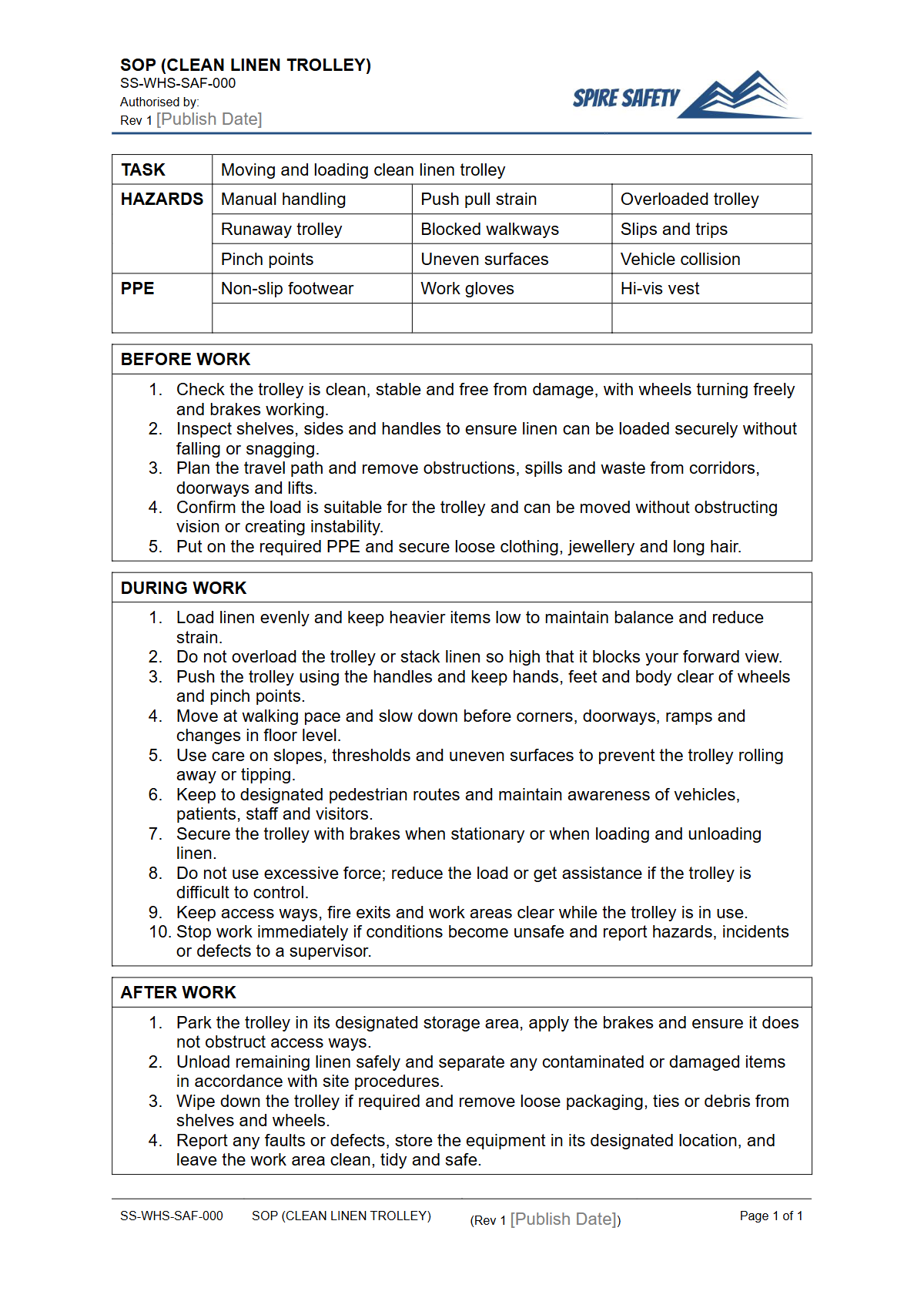
Even seemingly simple tasks carry risks. This Free Safe Operating Procedure (Clean Linen Trolley) Template provides a structured starting point for organisations to document the required steps for safely moving clean linen.
Using a standardised procedure helps control hazards associated with manual tasks, reducing the risk of musculoskeletal injuries like strains and sprains for workers in hospitality, healthcare, and commercial laundries. An effective SOP ensures every worker understands the expected safe work method, promoting a consistent approach to safety across the organisation.
This document is designed to be adapted into your broader safety framework. Integrating specific SOPs is a key component of robust WHS management systems, demonstrating a commitment to proactive risk management for all workplace activities, regardless of their perceived complexity.
Video walkthrough
How to use the Free Safe Operating Procedure (Clean Linen Trolley) Template
To implement this Safe Operating Procedure, download the DOCX file and begin customising it to reflect your specific operational environment. It is crucial that the procedure is not used 'as is'. You must adapt it with site-specific information, including:
- The specific types and models of linen trolleys used.
- Layouts of your facility, noting specific hazards like ramps, tight corners, lifts, and automatic doors.
- Designated routes for trolley movement to avoid high-traffic areas.
- Specific load limits and loading procedures for your trolleys.
- Procedures for reporting faults or damage to equipment.
Consultation is a mandatory part of this process. Involve the workers who use the trolleys every day.
Their feedback is invaluable for creating a practical and effective procedure that accurately reflects the realities of the task. Once customised, the SOP should be used for training and competency assessments.
When to use a Clean Linen Trolley SOP
A Safe Operating Procedure for a clean linen trolley is a critical document throughout the employment lifecycle. It should be used during the induction of new employees to establish safe behaviour from day one.
It also serves as a valuable tool for regular refresher training to reinforce correct procedures and address any bad habits that may have formed. The SOP should be readily accessible in the work area for quick reference.
Furthermore, it is an essential document to review and consult following any incident or near-miss involving a trolley, helping to identify gaps in the process and prevent recurrence.
Who should use this Safe Operating Procedure
This SOP is intended for a range of personnel within an organisation. WHS managers and supervisors are responsible for customising, implementing, and reviewing the procedure.
They use it to train staff and monitor compliance. Most importantly, the end-users are the frontline workers who perform the task, such as cleaners, housekeeping staff, laundry operators, and hospital orderlies.
They must be trained on the SOP and follow it diligently to ensure their own safety and the safety of others in the workplace.
Key Hazards and Risk Controls
Moving linen trolleys presents several hazards, primarily related to manual tasks. These include musculoskeletal disorders from overexertion, awkward postures, or repetitive movements.
Specific risk controls outlined in the template include pre-operational checks of wheels and brakes, enforcing weight limits to prevent overloading, and mandating correct pushing techniques (pushing is generally safer than pulling). The SOP also addresses environmental hazards like navigating cluttered corridors and managing potential slips from wet floors.
While different from the acute risks of tasks like step ladder use, the cumulative strain from poor trolley handling can lead to serious, long-term injuries.
Integrating with Emergency Plans
Your SOP should include clear instructions for emergency situations. This might involve procedures for managing a runaway trolley, dealing with a large spill of contents that creates a trip hazard, or responding if a worker is injured.
Linking operational procedures to broader emergency plans ensures a coordinated response. This level of preparedness is just as vital for manual handling tasks as it is for medical emergencies requiring defibrillator operation.
Review and Continuous Improvement
A Safe Operating Procedure is a living document. It should be reviewed regularly—typically annually, or whenever there is a change in equipment, environment, or process.
An incident, near-miss, or new hazard identification should also trigger an immediate review. A formal process, such as periodic WHS compliance auditing, can help ensure that your SOPs remain current and effective.
This continuous improvement cycle is fundamental to maintaining a safe system of work.
Documenting procedures for all types of equipment, from simple manual aids to complex machinery, is a hallmark of a mature safety culture. Whether creating this trolley procedure or a detailed plasma cutter SOP, the principles of risk assessment, consultation, and clear instruction remain the same. You can find more templates to support your safety system in our free WHS resources library.
Common mistakes
Common mistakes to avoid
- Overloading the trolley beyond its safe weight capacity.
- Failing to perform pre-use checks on wheels, brakes, and handles.
- Using incorrect technique, such as pulling the trolley with a twisted posture.
- Leaving the trolley unattended in a walkway or on a slope without engaging brakes.
Legal references
Legal considerations
The following legal requirements may be relevant to this type of work.
- Work Health and Safety Act (Harmonised) — Provides the primary duties for protecting workers and other people from work health and safety risks.
- Work Health and Safety Regulations (Harmonised) — Sets out requirements supporting the management of workplace hazards and risks.
The following codes may be relevant to this type of work.
- Managing WHS Risks Code of Practice — Provides practical guidance on identifying hazards, assessing risks and applying effective controls.
- Work Health and Safety Consultation, Cooperation and Coordination Code of Practice — Provides practical guidance on consulting workers and coordinating with other duty holders.
- Managing the Work Environment and Facilities Code of Practice — Provides practical guidance on safe work environments, workplace facilities and related controls.
Did you know
The Cost of Strains
According to Safe Work Australia, body stressing, which includes hazardous manual tasks like pushing trolleys, accounts for the highest proportion of serious workers' compensation claims.
Push vs. Pull
Pushing a trolley generally allows for better visibility and a more neutral body posture, reducing the risk of back and shoulder injuries compared to pulling.
FAQ
Frequently asked questions
01What are the main hazards of using a clean linen trolley?
02How often should a Safe Operating Procedure for a linen trolley be reviewed?
03Who is responsible for training workers on this SOP?
04Can this template be used in both healthcare and hospitality settings?
Share this resource
Free Safe Operating Procedure (Clean Linen Trolley) Template
Browse Categories
How To Use It
- 1Download and open in Word or PDF.
- 2Replace the placeholders with your business details.
- 3Get it reviewed by a WHS specialist before rollout.
Need it customised?
Our WHS consultants can adapt this template to your site, run a gap analysis, or audit what you already have in place.
Book a Free Consultation WHS consulting servicesor call 1300 156 382
Related templates
- Free Safe Operating Procedure (Clean Load Inspection) Template
- Free Safe Operating Procedure (Clean Utility Room) Template
- Free Safe Operating Procedure (Cleaners Room Cleaning) Template
- Free Safe Operating Procedure (Clegg Hammer) Template
- Free Safe Operating Procedure (Clinic Couch Cleaning) Template
- Free Safe Operating Procedure (Clinical Waste Handling) Template