
Free Safe Operating Procedure (Commode Brake Check) Template
Download our free Safe Operating Procedure (Commode Brake Check) template. This customisable DOCX & PDF helps standardise brake checks for commodes.
Free Safe Operating Procedure (Commode Brake Check) Template
DOCX • 126 KB + PDF
Updated Oct 2026
No signup required
Purpose of the Free Safe Operating Procedure (Commode Brake Check) Template
This Free Safe Operating Procedure (Commode Brake Check) Template provides a structured framework for ensuring mobile commodes, shower chairs, and similar patient-handling aids are safe for use. Regular, documented brake checks are critical for preventing accidents, particularly slips, trips, and falls involving vulnerable individuals in aged care, healthcare, and disability support settings.
Implementing a clear SOP helps an organisation meet its primary duty of care by managing the risks associated with faulty or poorly maintained equipment. It establishes a consistent, step-by-step process for staff to follow, ensuring that brake functionality is verified, and any defects are identified and rectified promptly.
By standardising this routine but vital task, you create a clear record of due diligence, which is a fundamental component of effective health and safety management. Integrating this SOP into your broader safety framework supports the development of robust WHS management systems, demonstrating a proactive approach to risk control.
This procedure promotes a culture of safety where equipment integrity is prioritised, protecting both the people being cared for and the workers providing that care.
What's included in the template?
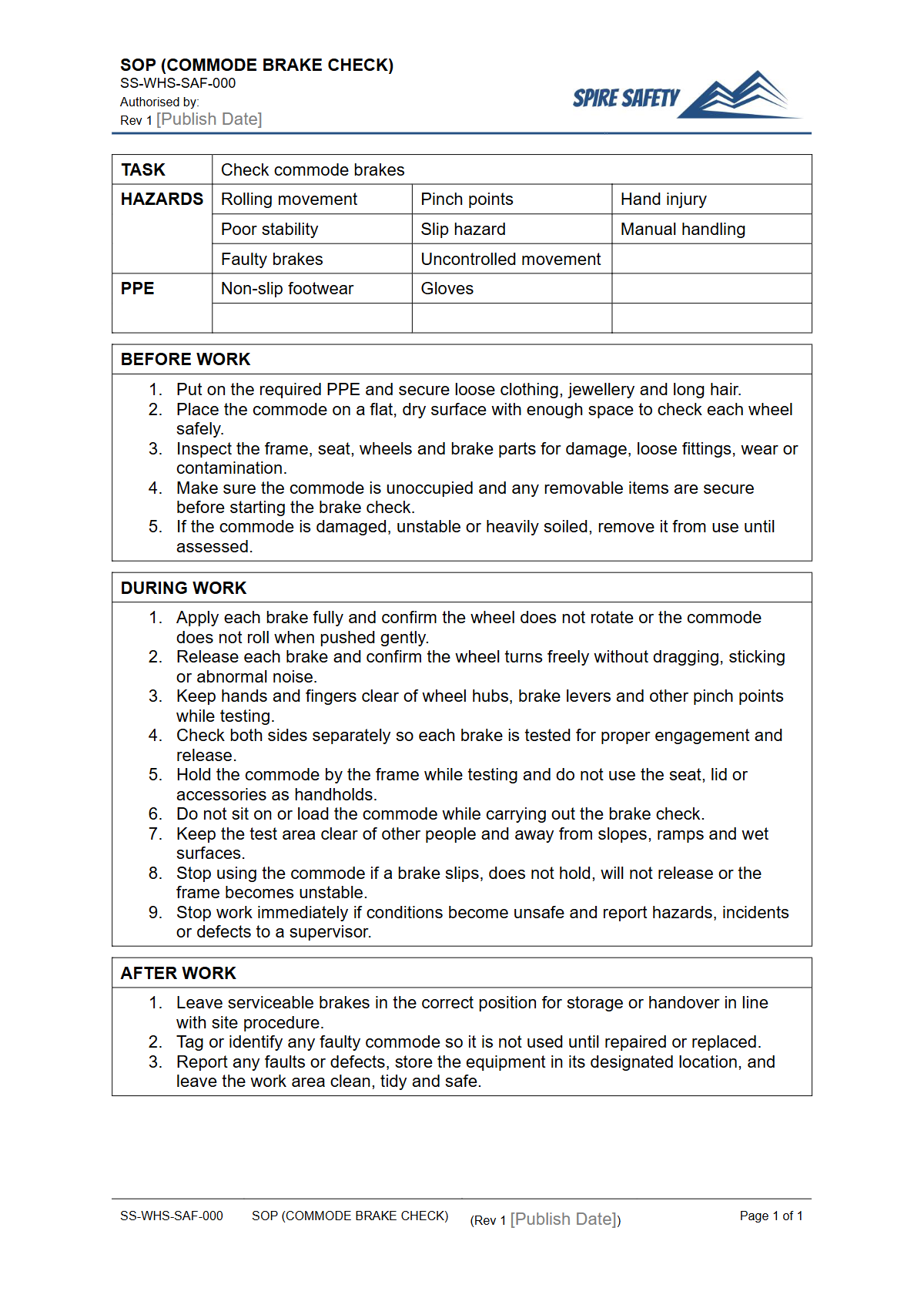
Our template is provided as a fully editable DOCX file, with a PDF version for easy printing and distribution. It includes sections for:
- Defining the scope and purpose of the procedure.
- Identifying potential hazards and required Personal Protective Equipment (PPE).
- A step-by-step guide to performing the brake check.
- Criteria for pass/fail results.
- Actions to be taken if the equipment fails the check (e.g., tag-out procedures).
- A log for recording check dates, personnel, and outcomes.
Video walkthrough
How to use the Free Safe Operating Procedure (Commode Brake Check) Template
This template is a starting point designed for customisation. Download the DOCX file and adapt it to the specific types of commodes used in your facility, your operational context, and your organisation's existing safety protocols.
You should consult with workers and health and safety representatives during this process to ensure the procedure is practical and effective.
Important: You must customise this document to your specific workplace. We are not liable for any incidents or compliance issues arising from its use.
Ensure all details, including equipment models, responsible persons, and reporting channels, are accurate and reflect your site's requirements. This principle of site-specific customisation applies to all safety documents, from equipment checks to emergency response plans like our Safe Operating Procedure for defibrillator operation.
Customisation Steps:
- Review and Edit: Go through each section and modify the content to align with your equipment and workplace procedures. Add brand names or model numbers if necessary.
- Consultation: Share the draft with carers, nurses, and maintenance staff who will use the procedure. Their feedback is invaluable for ensuring it is clear and workable.
- Approval: Finalise the document and have it approved by the relevant manager or PCBU (Person Conducting a Business or Undertaking).
- Training: Train all relevant personnel on the finalised SOP. Ensure they understand how to perform the check, what to look for, and how to report faults. Keep records of this training.
- Implementation: Make the SOP readily accessible to staff, either in digital format or as a hard copy near equipment storage areas.
When to use it
This Safe Operating Procedure should be integrated into your regular equipment maintenance and safety schedule. The frequency of checks may depend on manufacturer recommendations, the level of equipment use, and your own risk assessment. Common practice includes:
- Before first use: After purchasing a new commode.
- Pre-use checks: A quick visual and functional check by staff before each use.
- Scheduled checks: A more formal, documented check performed daily, weekly, or monthly, as determined by your risk assessment.
- After maintenance or repair: To verify the equipment is safe to return to service.
Regularly reviewing the effectiveness of your procedures is also crucial. This can be done as part of routine safety meetings or through more formal WHS compliance auditing to identify any gaps or areas for improvement.
Who should use it
This SOP is designed for any person responsible for the safety and maintenance of patient-handling equipment. This typically includes:
- Care Staff and Nurses: As part of their daily responsibilities before assisting a client or patient.
- Maintenance Personnel: As part of a scheduled preventative maintenance program.
- Work Health and Safety (WHS) Officers: For developing and overseeing safety protocols.
- Facility Managers: To supports your compliance efforts and resource allocation for safe equipment.
Proper training is essential for anyone assigned to perform these checks. Workers must be competent in identifying wear, damage, or malfunction.
Just as you wouldn't expect someone to use a step ladder without knowing how to check its stability, you shouldn't expect staff to manage commodes without proper instruction. You can find guidance on other common equipment checks, like our free Step Ladder SOP template, in our resources library.
If you require assistance in developing or implementing robust safety procedures tailored to the specific risks in your healthcare or aged care facility, consider seeking expert guidance. Our WHS consulting services can help you build practical and effective safety management systems from the ground up.
You can also explore our complete free WHS resources library for more templates and guides.
Common mistakes
Common mistakes to avoid
- Failing to customise the generic template to specific equipment models and workplace procedures.
- Not providing adequate training to staff on how to perform the check and what constitutes a 'fail'.
- Poor record-keeping, making it impossible to track equipment history or prove due diligence.
- Ignoring a failed brake check and allowing faulty equipment to remain in service without being tagged out and repaired.
Legal references
Legal considerations
The following legal requirements may be relevant to this type of work.
- Work Health and Safety Act (Harmonised) — Provides the primary duties for protecting workers and other people from work health and safety risks.
- Work Health and Safety Regulations (Harmonised) — Sets out requirements supporting the management of workplace hazards and risks.
The following codes may be relevant to this type of work.
- Managing WHS Risks Code of Practice — Provides practical guidance on identifying hazards, assessing risks and applying effective controls.
- Work Health and Safety Consultation, Cooperation and Coordination Code of Practice — Provides practical guidance on consulting workers and coordinating with other duty holders.
- Managing the Work Environment and Facilities Code of Practice — Provides practical guidance on safe work environments, workplace facilities and related controls.
Did you know
Fall Statistics
In Australia, falls are the leading cause of injury-related hospitalisation and death in people aged 65 and over. Properly maintained mobility aids are a key control measure in preventing these incidents.
FAQ
Frequently asked questions
01What is the primary purpose of a commode brake check SOP?
02How often should commode brakes be checked?
03Who is responsible for performing and documenting commode brake checks?
04Can this SOP template be used for all types of commodes and shower chairs?
Share this resource
Free Safe Operating Procedure (Commode Brake Check) Template
Browse Categories
How To Use It
- 1Download and open in Word or PDF.
- 2Replace the placeholders with your business details.
- 3Get it reviewed by a WHS specialist before rollout.
Need it customised?
Our WHS consultants can adapt this template to your site, run a gap analysis, or audit what you already have in place.
Book a Free Consultation WHS consulting servicesor call 1300 156 382
Related templates
- Free Safe Operating Procedure (Commode Chair Cleaning) Template
- Free Safe Operating Procedure (Commode Emptying) Template
- Free Safe Operating Procedure (Common Area Washdown) Template
- Free Safe Operating Procedure (Community Garden Care) Template
- Free Safe Operating Procedure (Community Hall Cleaning) Template
- Free Safe Operating Procedure (Community Outing Support) Template