
Free Safe Operating Procedure (Common Area Washdown) Template
Download our free Safe Operating Procedure (Common Area Washdown) Template. This DOCX and PDF resource helps you outline safety steps for cleaning tasks.
Free Safe Operating Procedure (Common Area Washdown) Template
DOCX • 126 KB + PDF
Updated Oct 2026
No signup required
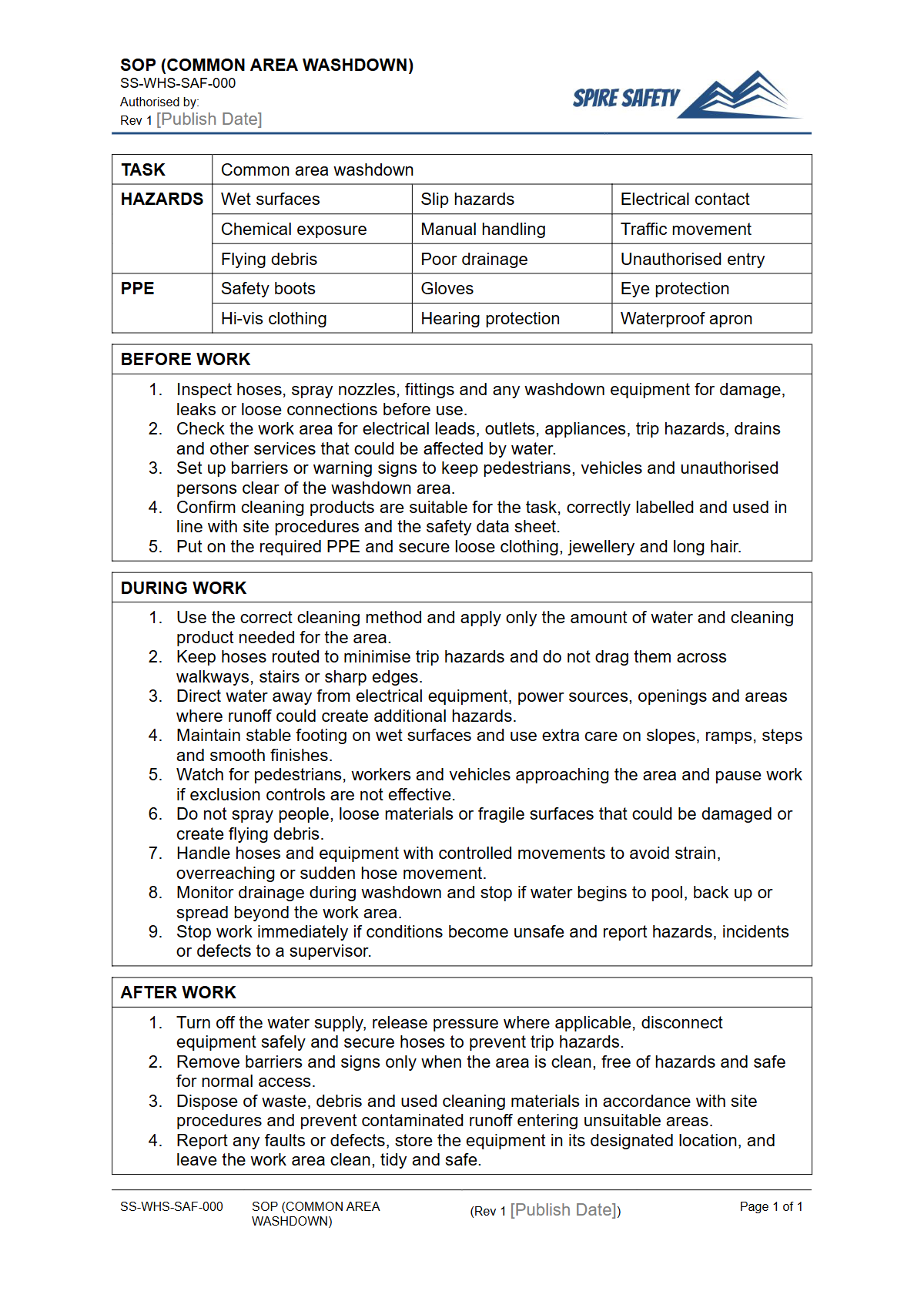
Purpose of the Free Safe Operating Procedure (Common Area Washdown) Template
Maintaining clean and hygienic common areas is essential for safety and operational efficiency. However, the process of washing down surfaces in workshops, building exteriors, or processing plants introduces significant risks.
This Free Safe Operating Procedure (Common Area Washdown) Template provides a structured framework for documenting the safe execution of these tasks. It helps businesses identify and control hazards such as slips on wet floors, chemical exposure, ergonomic injuries, and electrical risks associated with using water near power sources.
By formalising the washdown process, this SOP template assists in fulfilling your duty of care under Australian WHS regulations. It creates a clear, repeatable, and trainable set of instructions that minimises risk to workers and others.
A documented procedure is a critical component of effective WHS management systems, demonstrating a proactive approach to safety by ensuring all personnel follow a consistent, low-risk methodology for common but potentially hazardous cleaning activities.
Video walkthrough
How to use the Free Safe Operating Procedure (Common Area Washdown) Template
This template is provided in both DOCX and PDF formats for your convenience. The DOCX file is fully editable, allowing you to tailor the procedure to the specific context of your workplace.
Start by downloading the file and opening it in your preferred word processor. Systematically work through each section, replacing the placeholder text with information relevant to your site.
This includes specifying the exact equipment used (e.g., brand of pressure washer), the chemicals involved (with references to their Safety Data Sheets), required Personal Protective Equipment (PPE), and emergency response actions.
It is crucial to remember that this document is a template, not a finished product. To be effective, you must customise it with your own site-specific details and operational realities. We have not audited your workplace or your specific cleaning tasks.
A generic procedure is insufficient for managing real-world risks. Involve the workers who actually perform the washdown tasks in the customisation process to ensure the SOP is practical and reflects how the job is done safely.
When to use a Washdown SOP
A Safe Operating Procedure for common area washdowns should be used whenever cleaning tasks involving water, detergents, or pressure washing are undertaken. This applies to a wide range of environments, including industrial workshops, food processing facilities, outdoor public spaces, car parks, and building facades.
It is particularly important for scheduled, routine cleaning where the process and hazards are predictable. The SOP serves as a primary reference before, during, and after the task.
Use the SOP as a core part of worker training and induction for cleaning roles. It should also be readily accessible in the work area for quick reference.
Furthermore, the SOP is a valuable tool during incident investigations or near-miss reviews, helping to identify any deviations from the established safe process. For tasks involving high-risk elements, this SOP can inform the development of a more detailed Safe Work Method Statement (SWMS).
You can find other task-specific templates, such as our Step Ladder SOP, in our resources library.
Who should use this Safe Operating Procedure
This SOP is intended for a range of personnel within an organisation. Primarily, it is for the workers and cleaning staff who perform the washdown tasks, providing them with clear, step-by-step guidance to ensure their safety.
Supervisors and team leaders should use the SOP to oversee work, conduct pre-start checks, and verify that safety controls are in place and being followed correctly. WHS managers and safety officers will use this procedure as a key document within the overall safety framework, using it for training development, risk assessments, and compliance purposes.
This document also assists those responsible for procurement, ensuring that any new chemicals or equipment (like a high-pressure cleaner) purchased for washdown tasks have their risks assessed and control measures integrated into the SOP. The potential for electrical shock during water-based activities means that emergency preparedness is vital, and having a documented Safe Operating Procedure for Defibrillator Operation can be a life-saving addition to your safety documentation.
Regular reviews ensure the document remains relevant and effective.
Integrating this SOP with other equipment-specific procedures, like an Air Compressor SOP for workshop environments, helps build a more robust and holistic safety system. The effectiveness of these procedures can be verified through regular WHS compliance audits. For more guidance or templates, explore our complete free WHS resources library for a wide range of documents covering various workplace tasks and equipment.
Common mistakes
Common mistakes to avoid
- Using generic chemical names instead of referencing the specific product's Safety Data Sheet (SDS).
- Failing to adequately identify and control electrical hazards from water spray near power outlets, cords, or equipment.
- Not barricading the work area effectively, allowing other workers or members of the public to enter the wet zone.
- Specifying inadequate or incorrect Personal Protective Equipment (PPE), especially for chemical handling or high-pressure spray.
Legal references
Legal considerations
The following legal requirements may be relevant to this type of work.
- Work Health and Safety Act (Harmonised) — Provides the primary duties for protecting workers and other people from work health and safety risks.
- Work Health and Safety Regulations (Harmonised) — Sets out requirements supporting the management of workplace hazards and risks.
The following codes may be relevant to this type of work.
- Managing WHS Risks Code of Practice — Provides practical guidance on identifying hazards, assessing risks and applying effective controls.
- Work Health and Safety Consultation, Cooperation and Coordination Code of Practice — Provides practical guidance on consulting workers and coordinating with other duty holders.
- Managing the Work Environment and Facilities Code of Practice — Provides practical guidance on safe work environments, workplace facilities and related controls.
Did you know
Slip Risk
Slips, trips and falls are a leading cause of serious workplace injury claims in Australia, with wet and contaminated surfaces being a major contributing factor in many incidents.
FAQ
Frequently asked questions
01What hazards should be included in a common area washdown SOP?
02Is a Safe Operating Procedure a legal requirement in Australia?
03How often should I review my common area washdown SOP?
04What is the difference between an SOP and a SWMS?
Share this resource
Free Safe Operating Procedure (Common Area Washdown) Template
Browse Categories
How To Use It
- 1Download and open in Word or PDF.
- 2Replace the placeholders with your business details.
- 3Get it reviewed by a WHS specialist before rollout.
Need it customised?
Our WHS consultants can adapt this template to your site, run a gap analysis, or audit what you already have in place.
Book a Free Consultation WHS consulting servicesor call 1300 156 382
Related templates
- Free Safe Operating Procedure (Community Garden Care) Template
- Free Safe Operating Procedure (Community Hall Cleaning) Template
- Free Safe Operating Procedure (Community Outing Support) Template
- Free Safe Operating Procedure (Community Pool Setup) Template
- Free Safe Operating Procedure (Compaction Wheel) Template
- Free Safe Operating Procedure (Compost Bin Cleaning) Template