
Free Safe Operating Procedure (Condiment Bottle Filling) Template
Download our free Safe Operating Procedure (Condiment Bottle Filling) template.
Free Safe Operating Procedure (Condiment Bottle Filling) Template
DOCX • 126 KB + PDF
Updated Oct 2026
No signup required
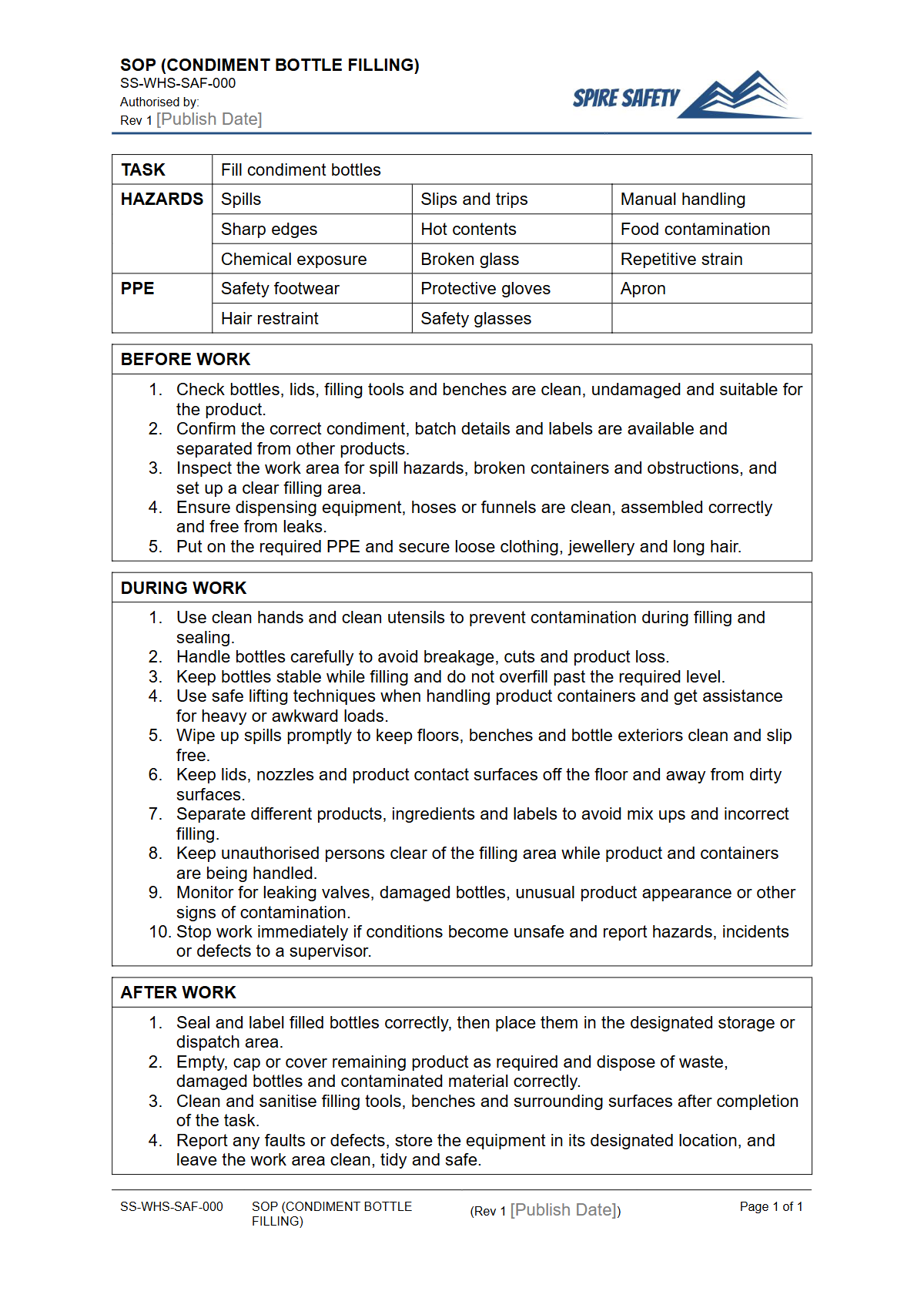
Purpose of the Free Safe Operating Procedure (Condiment Bottle Filling) Template
Our Free Safe Operating Procedure (Condiment Bottle Filling) Template provides a clear, structured framework for documenting the steps involved in this common hospitality task. While it may seem simple, filling sauce and condiment bottles involves multiple potential hazards, including manual handling, slips from spills, and risks of food contamination.
A formal SOP ensures every worker performs the task consistently and safely, every time. It serves as an essential training tool for new staff and a clear reference point for experienced team members.
Using this template helps a Person Conducting a Business or Undertaking (PCBU) meet their primary duty of care under Australian WHS laws by managing risks and providing safe systems of work. Formalising procedures like this is a fundamental component of effective WHS management systems, demonstrating a commitment to workplace health, safety, and food hygiene.
Video walkthrough
How to use the Free Safe Operating Procedure (Condiment Bottle Filling) Template
Using this template is straightforward. First, download the procedure in your preferred format (DOCX or PDF).
The DOCX version is fully editable, allowing you to tailor it to your specific operational needs. You must review and customise the document to reflect the unique environment of your kitchen or service area.
This includes listing the exact equipment used, specific cleaning chemicals, required Personal Protective Equipment (PPE) like gloves or aprons, and site-specific controls.
During customisation, you must identify all potential task-related hazards. For example, if staff need to retrieve bulk condiment containers from high shelving, you must include controls for that risk, such as referencing a specific Safe Operating Procedure for step ladder use. Once customised, consult with your workers to ensure the procedure is practical and clear before finalising it.
Important: This document is a template and a starting point. We have provided a structured guide, but you must customise it to reflect the specific hazards, equipment, substances, and processes used in your workplace.
Effective safety management requires procedures that are tailored to your unique operations.
When to use it
A Safe Operating Procedure for condiment filling should be a standard document in any commercial food preparation environment. It should be used during the induction and training of all new kitchen hands, chefs, and service staff who may perform this task.
It provides a clear, step-by-step guide that reduces ambiguity and ensures hygiene standards are maintained from day one.
The SOP should also be readily accessible in the workplace for quick reference. It becomes a critical document for refresher training, especially if procedures change or new equipment is introduced.
Furthermore, it is a key document to review during WHS compliance audits or council food safety inspections to demonstrate proactive risk management.
Who should use it
This template is designed for anyone responsible for safety and operational consistency in the hospitality and food service industries. This includes:
- Restaurant, Pub, and Cafe Owners
- Kitchen Managers and Head Chefs
- Work Health and Safety (WHS) Managers
- Supervisors and Team Leaders
- Catering Company Operators
- Food Truck Owners
Ultimately, the PCBU is responsible for ensuring safe work systems are in place. This SOP is a tool to help them fulfil that obligation.
For businesses needing assistance to develop and integrate such procedures into their overall safety framework, seeking expert WHS consulting can provide valuable guidance and support. For more tools to support your safety framework, including procedures for specific emergencies, explore our template for defibrillator operation. You can also browse our complete free WHS resources library for more templates and guides.
Common mistakes
Common mistakes to avoid
- Using the template without customising it for specific workplace equipment and chemicals.
- Failing to consult with and train workers on the finalised procedure.
- Omitting crucial steps for cleaning, sanitation, and waste disposal.
- Forgetting to schedule regular reviews to ensure the SOP remains current and effective.
Legal references
Legal considerations
The following legal requirements may be relevant to this type of work.
- Work Health and Safety Act (Harmonised) — Provides the primary duties for protecting workers and other people from work health and safety risks.
- Work Health and Safety Regulations (Harmonised) — Sets out requirements supporting the management of workplace hazards and risks.
The following codes may be relevant to this type of work.
- Managing WHS Risks Code of Practice — Provides practical guidance on identifying hazards, assessing risks and applying effective controls.
- Work Health and Safety Consultation, Cooperation and Coordination Code of Practice — Provides practical guidance on consulting workers and coordinating with other duty holders.
- Managing the Work Environment and Facilities Code of Practice — Provides practical guidance on safe work environments, workplace facilities and related controls.
Did you know
Hygiene is Key
According to Food Standards Australia New Zealand (FSANZ), an estimated 4.1 million cases of foodborne illness occur in Australia each year. Documented procedures for tasks like condiment filling are crucial for preventing cross-contamination.
FAQ
Frequently asked questions
01What are the main hazards involved in filling condiment bottles?
02Is a Safe Operating Procedure legally required for filling sauce bottles in Australia?
03How often should our condiment bottle filling SOP be reviewed?
04Can I use this SOP template for other kitchen tasks like food prep?
Share this resource
Free Safe Operating Procedure (Condiment Bottle Filling) Template
Browse Categories
How To Use It
- 1Download and open in Word or PDF.
- 2Replace the placeholders with your business details.
- 3Get it reviewed by a WHS specialist before rollout.
Need it customised?
Our WHS consultants can adapt this template to your site, run a gap analysis, or audit what you already have in place.
Book a Free Consultation WHS consulting servicesor call 1300 156 382
Related templates
- Free Safe Operating Procedure (Condiment Station Clean) Template
- Free Safe Operating Procedure (Conductivity Meter) Template
- Free Safe Operating Procedure (Conduit Bender) Template
- Free Safe Operating Procedure (Cone Crusher Clearing) Template
- Free Safe Operating Procedure (Confined Space Fan) Template
- Free Safe Operating Procedure (Confined Space Tripod) Template