
Free Safe Operating Procedure (Container Unloading) Template
Streamline your container unloading process and manage risks effectively.
Free Safe Operating Procedure (Container Unloading) Template
DOCX • 126 KB + PDF
Updated Oct 2026
No signup required
Purpose of the Free Safe Operating Procedure (Container Unloading) Template
Unloading shipping containers is a common but high-risk task in many Australian industries, from logistics and warehousing to manufacturing and retail. This activity exposes workers to significant hazards, including manual handling injuries, falls from height, and incidents involving mobile plant.
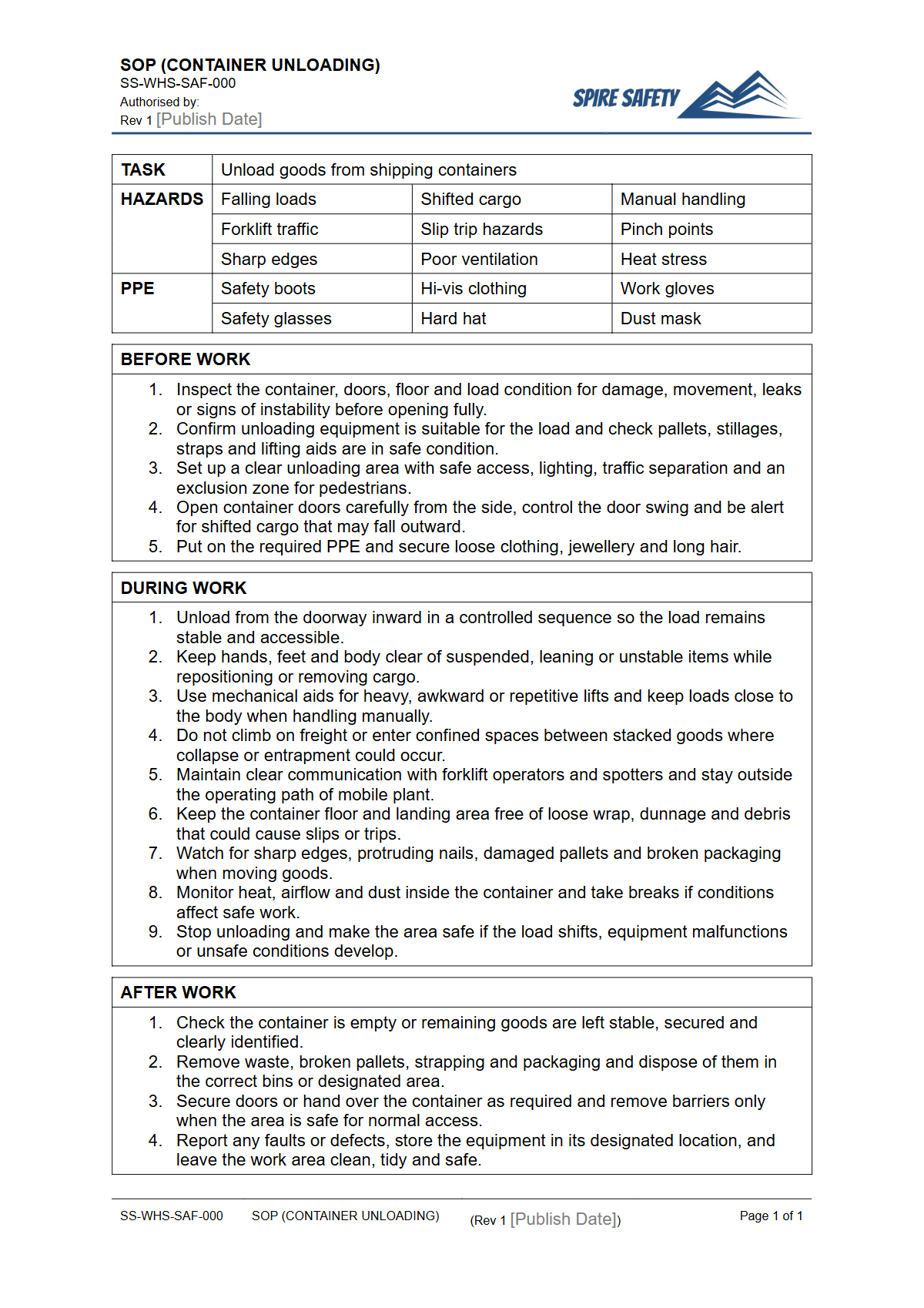
Our Free Safe Operating Procedure (Container Unloading) Template provides a structured framework for documenting a safe system of work. The purpose of this Safe Operating Procedure is to help you formalise your process, identify risks, and clearly define the control measures required to keep your workers safe. Implementing robust SOPs is a critical component of effective WHS management systems.
Video walkthrough
How to use the Free Safe Operating Procedure (Container Unloading) Template
This template is provided in both DOCX and PDF formats for your convenience. The DOCX version is fully editable, allowing you to adapt it to your specific operational needs.
To use it effectively, you must conduct a site-specific risk assessment and customise the document to reflect your workplace's unique environment, the types of goods being handled, the equipment used, and your personnel's training levels.
Important: This document is a starting point, not a complete, off-the-shelf solution. We have pre-filled common steps and hazards, but you are responsible for ensuring the final procedure is accurate and relevant to your operations.
Always consult with your workers and health and safety representatives during the drafting and review process.
Key Hazards in Container Unloading
A thorough SOP for container unloading should address a range of specific hazards. Without proper planning, workers can be exposed to risks such as:
- Musculoskeletal injuries: From repetitive or forceful lifting, carrying, and team handling of heavy or awkward items.
- Falls from height: Falling from the container deck, unsafe makeshift platforms, or ladders.
- Being struck by objects: Instability of the load can cause goods to fall on workers inside the container.
- Plant and vehicle incidents: Collisions or contact with forklifts, pallet jacks, or other vehicles operating in the area. Using equipment like telehandlers requires its own specific procedure, such as our Telehandler SOP template.
- Hazardous atmospheres: Poor ventilation can lead to a build-up of fumigant gases or an oxygen-deficient atmosphere.
- Slips, trips, and falls: On the container floor due to discarded packaging, spills, or uneven surfaces.
What to Include in Your Container Unloading SOP
A comprehensive SOP should be more than just a list of steps. It should be a practical guide that covers all phases of the task. Ensure your final document includes:
- Responsibilities: Clearly defines who is responsible for each part of the process (e.g., supervisor, forklift operator, unpacker).
- Required PPE: Specifies mandatory personal protective equipment, such as high-visibility clothing, steel-capped boots, gloves, and safety glasses.
- Pre-start Checks: Includes checks for the container's stability, the condition of the delivery vehicle, and the surrounding work area. Documenting procedures for transport is also vital, similar to how our Body Truck SOP template outlines vehicle-specific steps.
- Step-by-Step Procedure: Details the sequence of tasks from safely opening the doors to final clean-up.
- Emergency Procedures: Outlines the response to incidents like a load shift, injury, or chemical spill.
When to use a Safe Operating Procedure
An SOP for container unloading should be used every time the task is performed. It serves as the primary reference document for training new employees and conducting refresher training for existing workers.
It is not a document to be filed away and forgotten; it should be readily accessible in the work area. Furthermore, the SOP must be reviewed and updated whenever there is a change to the process, equipment, or substances used, or after an incident or near-miss occurs. Regular reviews of your safety documents can be integrated into your schedule of WHS compliance audits.
Who should use this template
This template is designed for use by Persons Conducting a Business or Undertaking (PCBUs), site managers, warehouse supervisors, and WHS advisors. It is a tool to help them meet their duty of care under WHS legislation.
Workers who perform the task of unloading containers should be trained in the final, site-specific SOP and use it as their guide to performing the work safely. For tasks that require access to goods stored at height within the container, procedures for safe access are critical, just as they are when using equipment detailed in a Step Ladder SOP template. If you need assistance developing or reviewing your safety documentation, our WHS consulting services can provide expert guidance.
By systematically addressing the risks involved, you can create a safer environment for everyone involved in container logistics. Explore our free WHS resources library for more templates and guides to support your safety management system.
Common mistakes
Common mistakes to avoid
- Assuming the load is stable and opening both container doors without first checking for potential load shift.
- Failing to ensure the truck's brakes are applied and wheels are chocked before allowing entry.
- Using incorrect manual handling techniques or workers attempting to lift items that are too heavy.
- Poor communication between workers inside the container and plant operators outside.
Legal references
Legal considerations
The following legal requirements may be relevant to this type of work.
- Work Health and Safety Act (Harmonised) — Provides the primary duties for protecting workers and other people from work health and safety risks.
- Work Health and Safety Regulations (Harmonised) — Sets out requirements supporting the management of workplace hazards and risks.
The following codes may be relevant to this type of work.
- Managing WHS Risks Code of Practice — Provides practical guidance on identifying hazards, assessing risks and applying effective controls.
- Work Health and Safety Consultation, Cooperation and Coordination Code of Practice — Provides practical guidance on consulting workers and coordinating with other duty holders.
- Managing the Work Environment and Facilities Code of Practice — Provides practical guidance on safe work environments, workplace facilities and related controls.
Did you know
Manual Handling Risk
According to Safe Work Australia, injuries resulting from manual handling are the most common type of workplace injury. Unpacking containers often involves repetitive and forceful movements, placing it in a high-risk category for musculoskeletal disorders.
Goods in Transit
Goods can shift dramatically during sea transit. A container that was packed securely at the origin may have a dangerously unstable load upon arrival, making the process of opening doors and beginning to unload a critical safety moment.
FAQ
Frequently asked questions
01What is a Safe Operating Procedure for container unloading?
02Who is responsible for creating a container unloading SOP?
03How often should a Safe Operating Procedure be reviewed?
04What are the biggest risks when unpacking a shipping container?
Share this resource
Free Safe Operating Procedure (Container Unloading) Template
Browse Categories
How To Use It
- 1Download and open in Word or PDF.
- 2Replace the placeholders with your business details.
- 3Get it reviewed by a WHS specialist before rollout.
Need it customised?
Our WHS consultants can adapt this template to your site, run a gap analysis, or audit what you already have in place.
Book a Free Consultation WHS consulting servicesor call 1300 156 382
Related templates
- Free Safe Operating Procedure (Continence Aid Disposal) Template
- Free Safe Operating Procedure (Conveyor Belt Operation) Template
- Free Safe Operating Procedure (Cooking Oil Storage) Template
- Free Safe Operating Procedure (Cooking Oil Transfer) Template
- Free Safe Operating Procedure (Cool Room Access) Template
- Free Safe Operating Procedure (Coolant Change) Template