
Free Safe Operating Procedure (Core Drill) Template
Standardise core drilling tasks and control hazards with our customisable SOP template. Download our free Safe Operating Procedure for core drills to get started.
Free Safe Operating Procedure (Core Drill) Template
DOCX • 126 KB + PDF
Updated Oct 2026
No signup required
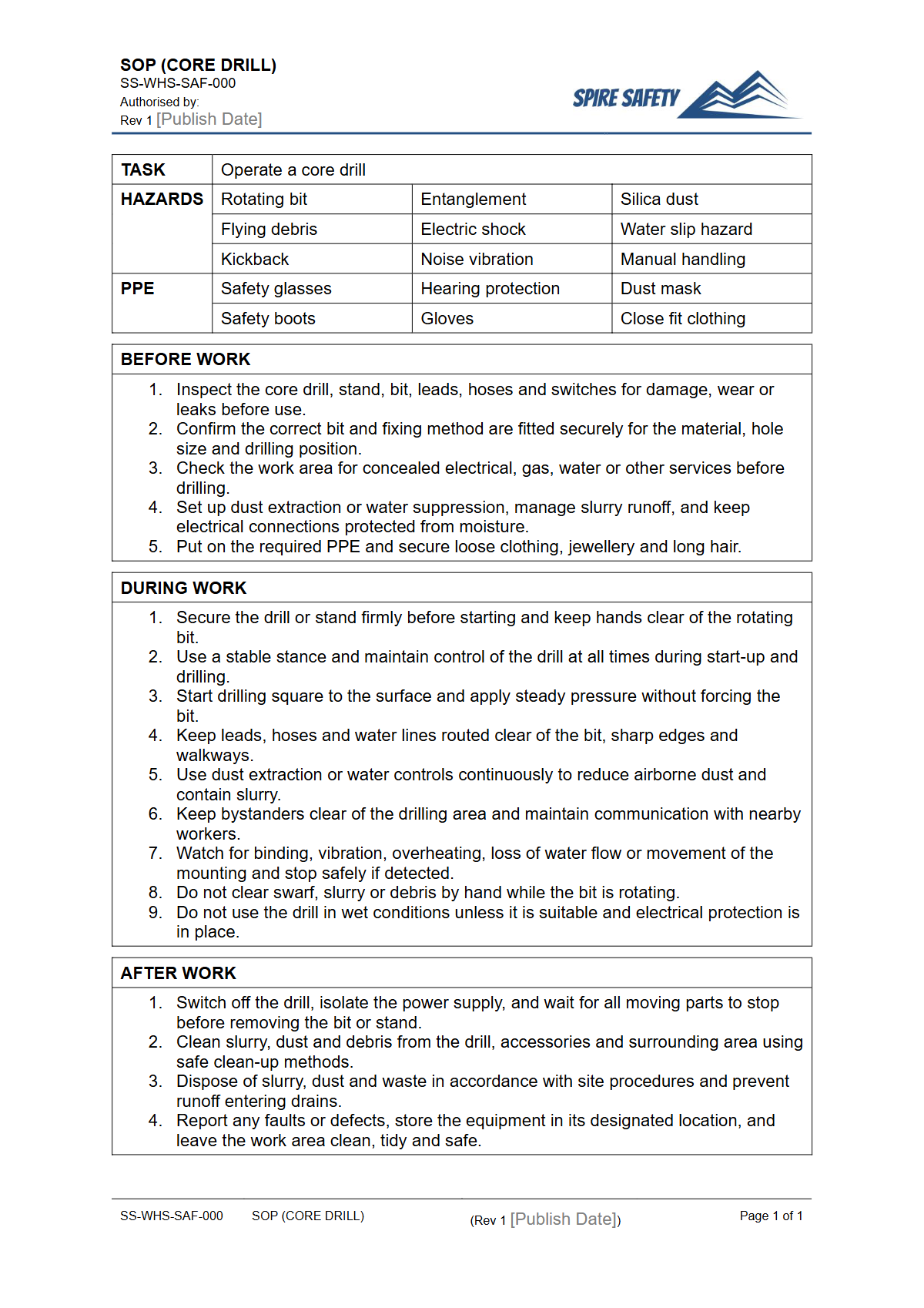
Operating a core drill introduces significant risks, including exposure to silica dust, electrical shock, and physical injury from kickback. Implementing a clear, step-by-step process is essential for worker safety.
This free Safe Operating Procedure (Core Drill) template provides a structured starting point for your business to document safe work practices, control hazards, and meet your safety obligations.
Video walkthrough
Purpose of the Free Safe Operating Procedure (Core Drill) Template
A Safe Operating Procedure, or SOP, is a fundamental document that outlines the safest and most efficient way to perform a specific task. For core drilling, this SOP serves to standardise the procedure from pre-start checks through to operation and shutdown.
It identifies potential hazards associated with the task and details the specific control measures required to eliminate or minimise those risks. A well-developed SOP is a critical component of a robust WHS management system, providing a clear reference for training, supervision, and incident investigation.
How to use the Free Safe Operating Procedure (Core Drill) Template
This SOP template is available for download in both DOCX and PDF formats. The DOCX version is fully editable, allowing you to tailor the content to your specific equipment and workplace conditions.
It is crucial to adapt this document to reflect the actual core drills you use, the materials you are drilling into, and the unique environmental factors of your site.
Please note: This document is a template and must be customised to your specific workplace, equipment, and environment. We recommend a consultation process with your team to ensure it is practical and effective.
Procedures for other common power tools, like our FREE Circular Saw SOP (Safe Operating Procedure) Template, should also be customised for site-specific use.
When to use a Core Drill SOP
An SOP for core drilling should be developed and implemented before any worker is permitted to operate the equipment. It forms the basis of operator training and competency assessments. The procedure should be readily available at the worksite for reference during operations and consulted during:
- Worker induction and training sessions.
- Planning for tasks that involve core drilling.
- Pre-start meetings or toolbox talks.
- Incident investigations or near-miss reporting.
- Regular reviews of workplace safety processes, which can be supported by expert WHS consulting.
Who is Responsible for the Procedure
Under Australian WHS laws, the Person Conducting a Business or Undertaking (PCBU) has the primary duty of care to ensure the health and safety of workers. This includes providing safe systems of work, such as SOPs. While the PCBU holds ultimate responsibility, other roles are critical:
- Supervisors and Managers: Must ensure the SOP is implemented, understood by all relevant workers, and consistently followed.
- Workers: Must follow the procedures outlined in the SOP and report any hazards or issues they identify.
It is essential that all operators are deemed competent through appropriate training and assessment before using a core drill. Procedures for related equipment are also important; for example, many sites use compressed air for cleanup, so it is wise to consult our Free Air Compressor SOP (Safe Operating Procedure) Template to manage associated risks.
Key Hazards to Address
When customising your SOP, ensure you address common core drilling hazards such as:
- Respirable Crystalline Silica (RCS) Dust: Generated from drilling into concrete, brick, or stone. Requires dust suppression controls like water delivery systems and appropriate respiratory protective equipment (RPE).
- Electrical Hazards: Risk of electric shock from damaged cords, water ingress into the motor, or drilling into concealed electrical services.
- Noise: High noise levels requiring hearing protection.
- Vibration: Prolonged use can lead to Hand-Arm Vibration Syndrome (HAVS).
- Kickback/Binding: The drill can bind in the material and rotate violently, causing serious injury.
- Struck-by Hazards: From ejected debris or dropped equipment.
Periodic checks of your safety documents, often integrated into a WHS compliance auditing schedule, ensure that controls for these hazards remain effective and current. For a wider range of safety documents, browse our complete free WHS resources library.
Common mistakes
Common mistakes to avoid
- Using a generic template without customising it for the specific model of core drill and worksite conditions.
- Failing to implement effective dust control measures, such as wet drilling or on-tool dust extraction.
- Neglecting to conduct a thorough pre-start inspection of the drill, cords, and safety clutch.
- Not verifying the location of hidden services like electrical conduits or water pipes before starting to drill.
Legal references
Legal considerations
The following legal requirements may be relevant to this type of work.
- Work Health and Safety Act (Harmonised) — Provides the primary duties for protecting workers and other people from work health and safety risks.
- Work Health and Safety Regulations (Harmonised) — Sets out requirements supporting the management of workplace hazards and risks.
The following codes may be relevant to this type of work.
- Managing WHS Risks Code of Practice — Provides practical guidance on identifying hazards, assessing risks and applying effective controls.
- Work Health and Safety Consultation, Cooperation and Coordination Code of Practice — Provides practical guidance on consulting workers and coordinating with other duty holders.
- Managing the Work Environment and Facilities Code of Practice — Provides practical guidance on safe work environments, workplace facilities and related controls.
Did you know
Silica Dust Danger
Drilling a single 50mm diameter hole through 100mm of concrete can generate airborne respirable crystalline silica (RCS) concentrations hundreds of times higher than the workplace exposure standard if uncontrolled.
Hand-Arm Vibration
Hand-Arm Vibration Syndrome (HAVS) is a preventable but permanent condition caused by regular use of vibrating tools like core drills. Damage can include impaired blood circulation and nerve function in the hands and fingers.
FAQ
Frequently asked questions
01What is a Safe Operating Procedure for a core drill?
02Is this free core drill SOP template WHS-aligned?
03What are the most critical hazards to include in a core drill SOP?
04Who needs to be trained on the core drill SOP?
Share this resource
Free Safe Operating Procedure (Core Drill) Template
Browse Categories
How To Use It
- 1Download and open in Word or PDF.
- 2Replace the placeholders with your business details.
- 3Get it reviewed by a WHS specialist before rollout.
Need it customised?
Our WHS consultants can adapt this template to your site, run a gap analysis, or audit what you already have in place.
Book a Free Consultation WHS consulting servicesor call 1300 156 382
Related templates
- Free Safe Operating Procedure (Core Drilling Rig) Template
- Free Safe Operating Procedure (Cotton Gin) Template
- Free Safe Operating Procedure (Council Bin Cleaning) Template
- Free Safe Operating Procedure (Council Depot Cleanup) Template
- Free Safe Operating Procedure (Countertop Cleaning) Template
- Free Safe Operating Procedure (Courier Bag Handling) Template