
Free Safe Operating Procedure (Dispatch Documentation) Template
Standardise your dispatch process with our free Safe Operating Procedure for dispatch documentation.
Free Safe Operating Procedure (Dispatch Documentation) Template
DOCX • 126 KB + PDF
Updated Oct 2026
No signup required
Purpose of the Free Safe Operating Procedure (Dispatch Documentation) Template
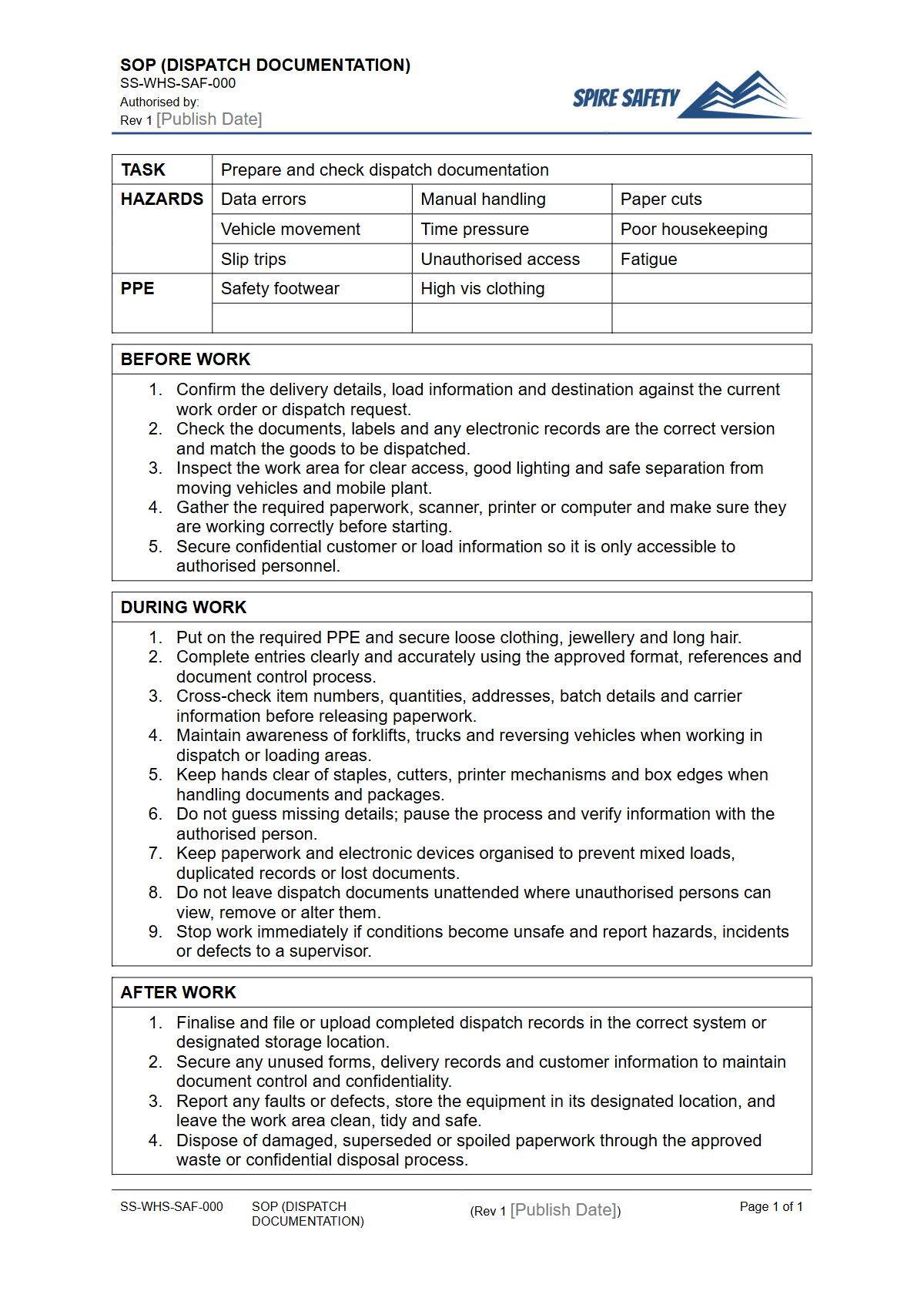
This Free Safe Operating Procedure (Dispatch Documentation) Template provides a structured framework for formalising the administrative tasks involved in shipping goods from your workplace. A clear, documented procedure is essential for ensuring accuracy, traceability, and safety in all dispatch activities.
It helps manage risks associated with incorrect consignments, improper labelling, communication breakdowns between teams, and load verification. By standardising these steps, you minimise the potential for costly errors and workplace incidents.
Implementing robust procedural documents is a cornerstone of effective safety management. A well-defined SOP for dispatch paperwork integrates directly into your company's broader WHS management systems, providing clear instructions for workers and demonstrating a commitment to operational control.
It serves as a vital training tool and a reference point for consistent, safe work practices in your logistics or warehouse environment.
Video walkthrough
How to use the Free Safe Operating Procedure (Dispatch Documentation) Template
To get the most value from this resource, it must be adapted to the specific operational realities of your business. The template outlines a general process, but your unique software, courier arrangements, and product types will require specific details.
- Download and Customise: Download the DOCX file and open it. Read through the entire document with key personnel, such as warehouse supervisors and administrative staff.
- Add Site-Specific Details: Modify the steps to reflect your exact workflow. Include names of specific software (e.g., ERP, WMS), locations of printers or document stations, and any unique paperwork you use. Add site emergency contacts and detail any specific Personal Protective Equipment (PPE) required in the dispatch area.
- Review and Train: Once customised, use the SOP as a basis for training new and existing employees. Ensure everyone involved in the dispatch process understands their role and responsibilities as outlined in the document.
IMPORTANT: This document is a template and not a complete safety solution. We strongly recommend you conduct a thorough, site-specific risk assessment for your entire dispatch process, from paperwork to physical loading.
It is your responsibility to ensure the final document is comprehensive and accurately reflects the hazards and control measures relevant to your workplace.
Dispatch often involves more than just paperwork; it includes physical handling and equipment use. For related machinery, you may need additional procedures, such as a FREE Conveyer System SOP to detail safe operation.
When to use a Safe Operating Procedure for Dispatch
A formal SOP for dispatch documentation is critical in any business that regularly sends goods. It is particularly useful in several key scenarios:
- Onboarding and Training: Use it to provide consistent, structured training for new logistics, warehouse, or administrative team members.
- Process Standardisation: Implement it to ensure every team member follows the same approved steps, reducing variability and the risk of error.
- Performance and Auditing: The SOP serves as a benchmark during internal reviews and is a key piece of evidence during external WHS compliance auditing to demonstrate formalised, safe systems of work.
- Incident Investigation: Following a shipping error or near miss, the SOP can be reviewed and updated to incorporate lessons learned and prevent recurrence.
If your dispatch process involves loading vehicles with mobile plant, documenting the safe use of that equipment is also crucial. A FREE Telehandler SOP Template can provide a starting point for these related tasks.
Who should use it
This template is designed for individuals responsible for health and safety, logistics, and operational management within an organisation. Key users include:
- Work Health and Safety (WHS) Managers
- Logistics and Supply Chain Managers
- Warehouse Supervisors and Team Leaders
- Small Business Owners managing their own shipping
- Compliance Officers and Internal Auditors
Anyone tasked with developing, implementing, or refining workplace procedures will find this template a valuable starting point. For organisations with complex logistics or those handling dangerous goods, seeking external support through WHS consulting can provide the necessary expertise to ensure all risks are adequately managed.
By implementing a clear SOP, you empower your team to perform their duties safely and efficiently. Explore our free WHS resources library for more templates to support your safety management system.
Common mistakes
Common mistakes to avoid
- Failing to tailor the template to specific company software, couriers, and paperwork.
- Neglecting to include specific procedures for handling hazardous or dangerous goods.
- Not training all relevant staff (including casuals and new starters) on the finalised procedure.
- Forgetting to review and update the SOP after process changes or supply chain incidents.
Legal references
Legal considerations
The following legal requirements may be relevant to this type of work.
- Work Health and Safety Act (Harmonised) — Provides the primary duties for protecting workers and other people from work health and safety risks.
- Work Health and Safety Regulations (Harmonised) — Sets out requirements supporting the management of workplace hazards and risks.
The following codes may be relevant to this type of work.
- Managing WHS Risks Code of Practice — Provides practical guidance on identifying hazards, assessing risks and applying effective controls.
- Work Health and Safety Consultation, Cooperation and Coordination Code of Practice — Provides practical guidance on consulting workers and coordinating with other duty holders.
- Managing the Work Environment and Facilities Code of Practice — Provides practical guidance on safe work environments, workplace facilities and related controls.
Did you know
The Cost of Error
According to industry studies, shipping errors can cost businesses significantly, not just in freight charges but also in lost productivity, damaged customer satisfaction, and the administrative costs of returns management. A clear SOP helps minimise these preventable errors.
FAQ
Frequently asked questions
01Is a Safe Operating Procedure for documentation legally required in Australia?
02What should be included in a dispatch documentation SOP?
03How often should we review our dispatch SOP?
04Can this SOP be used for receiving goods as well?
Share this resource
Free Safe Operating Procedure (Dispatch Documentation) Template
Browse Categories
How To Use It
- 1Download and open in Word or PDF.
- 2Replace the placeholders with your business details.
- 3Get it reviewed by a WHS specialist before rollout.
Need it customised?
Our WHS consultants can adapt this template to your site, run a gap analysis, or audit what you already have in place.
Book a Free Consultation WHS consulting servicesor call 1300 156 382
Related templates
- Free Safe Operating Procedure (Dispatch Load Check) Template
- Free Safe Operating Procedure (Display Stand Setup) Template
- Free Safe Operating Procedure (Disposable Apron Use) Template
- Free Safe Operating Procedure (Disposable Gown Use) Template
- Free Safe Operating Procedure (Dissolved Oxygen Meter) Template
- Free Safe Operating Procedure (Dock Crane) Template