
Free Safe Operating Procedure (Drainage Outlet Check) Template
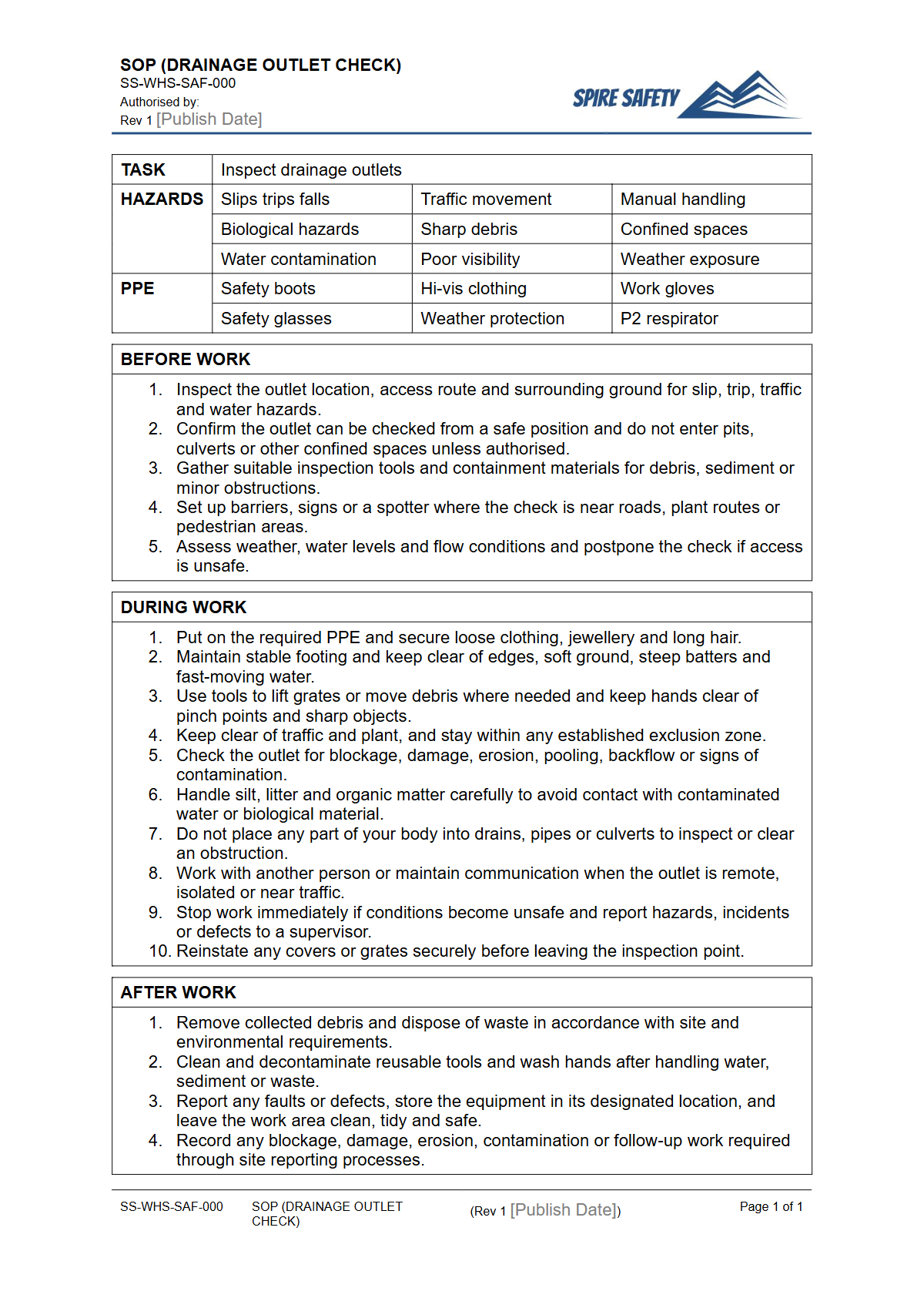
Formalise maintenance tasks with our Safe Operating Procedure (Drainage Outlet Check) template. This free resource helps outline steps for safe inspections.
Free Safe Operating Procedure (Drainage Outlet Check) Template
DOCX • 126 KB + PDF
Updated Oct 2026
No signup required
Purpose of the Free Safe Operating Procedure (Drainage Outlet Check) Template
The primary purpose of this Safe Operating Procedure is to provide a clear, step-by-step guide for workers performing drainage outlet checks. Regular inspections help prevent blockages from debris, soil, or vegetation, which can lead to flooding, water damage, and costly repairs.
More importantly, it addresses associated safety risks such as slips and trips on wet surfaces, ergonomic injuries from manual clearing, and exposure to contaminated water or pests. By implementing a formal procedure, you establish a consistent and safe method of work, which is a core component of effective WHS management systems.
Video walkthrough
How to use the Free Safe Operating Procedure (Drainage Outlet Check) Template
Begin by downloading the template in your preferred format (DOCX or PDF). The document is a comprehensive starting point, not a finished product.
Please note: This template must be customised to your specific workplace. We recommend you consult with workers who will perform the task, as well as their supervisors, to ensure the procedure reflects the actual equipment, drainage systems, and environmental conditions at your site. Incorporate details about specific locations, types of outlets (e.g., stormwater pits, agricultural channels), and emergency contacts.
Once finalised, use the SOP as a basis for training and competency assessments.
Reviewing and customising SOPs is also a good opportunity to evaluate your overall safety framework. Undertaking a periodic WHS compliance audit can help identify other areas for improvement across your operations, ensuring your safety documentation remains relevant and effective.
For expert assistance in tailoring these documents to your specific operational needs and ensuring they align with your broader safety strategy, our WHS consulting services can provide targeted support.
When to use this Safe Operating Procedure
This SOP should be integrated into your organisation's scheduled maintenance program. The frequency of checks will depend on factors like your location, surrounding vegetation, and historical rainfall patterns.
It is essential to use the procedure for routine checks (e.g., monthly or quarterly) to ensure ongoing functionality. Additionally, the SOP should be triggered for reactive checks, such as immediately following heavy rainfall, storms, or high wind events that are likely to deposit debris into the drainage system.
Proactive checks before a predicted severe weather event can also significantly mitigate risks.
For groundwork tasks involving digging near or installing new drainage infrastructure, a different set of procedures is required. Refer to our FREE Trencher SOP Template for guidance on safely operating relevant excavation equipment.
Who should use this Safe Operating Procedure
This procedure is designed for any person conducting business or undertaking (PCBU) that manages a property with drainage systems. It should be used by facility managers, maintenance personnel, groundskeepers, and any other workers assigned to inspect and clear drainage outlets.
It also serves as a critical training and reference tool for supervisors overseeing these tasks, ensuring they understand the required controls and can verify that work is being performed safely. The clear, step-by-step format makes it accessible for workers of all experience levels once they have received appropriate training.
During cleaning, workers may need to use equipment like high-pressure water jets or compressed air to clear obstructions. Safe use of such machinery is paramount, and a specific Free Air Compressor SOP should be developed and followed for those tasks.
If your site management involves extensive land forming or maintenance of unsealed roads and channels, other procedures will be necessary. For example, maintaining proper ground slope towards drainage outlets might involve tasks covered in our FREE Grader SOP Template.
You can browse our entire collection of procedural documents and checklists in our free WHS resources library to build out your safety documentation. By creating a comprehensive suite of SOPs, you foster a proactive safety culture and demonstrate a commitment to managing workplace risks effectively.
Common mistakes
Common mistakes to avoid
- Neglecting to customise the template for specific site conditions and drainage types.
- Failing to provide adequate training to workers on the procedure and associated hazards.
- Using the SOP as a 'set and forget' document without regular reviews and updates.
- Overlooking the need for specific PPE, especially when dealing with potentially contaminated water.
Legal references
Legal considerations
The following legal requirements may be relevant to this type of work.
- Work Health and Safety Act (Harmonised) — Provides the primary duties for protecting workers and other people from work health and safety risks.
- Work Health and Safety Regulations (Harmonised) — Sets out requirements supporting the management of workplace hazards and risks.
The following codes may be relevant to this type of work.
- Managing WHS Risks Code of Practice — Provides practical guidance on identifying hazards, assessing risks and applying effective controls.
- Work Health and Safety Consultation, Cooperation and Coordination Code of Practice — Provides practical guidance on consulting workers and coordinating with other duty holders.
- Managing the Work Environment and Facilities Code of Practice — Provides practical guidance on safe work environments, workplace facilities and related controls.
Did you know
Blocked Drains and Property Damage
Water damage from blocked drains is a leading cause of property insurance claims in Australia, often resulting in significant repair costs and business interruption.
Hidden Hazards
Blocked drainage can create unexpected hazards, including soil erosion that undermines building foundations and pathways, and stagnant water that becomes a breeding ground for mosquitos and other pests.
FAQ
Frequently asked questions
01What should be included in a drainage outlet check SOP?
02How often should drainage outlets be checked?
03Is this template suitable for all types of drainage systems?
04Who is responsible for creating a Safe Operating Procedure?
Share this resource
Free Safe Operating Procedure (Drainage Outlet Check) Template
Browse Categories
How To Use It
- 1Download and open in Word or PDF.
- 2Replace the placeholders with your business details.
- 3Get it reviewed by a WHS specialist before rollout.
Need it customised?
Our WHS consultants can adapt this template to your site, run a gap analysis, or audit what you already have in place.
Book a Free Consultation WHS consulting servicesor call 1300 156 382
Related templates
- Free Safe Operating Procedure (Drainage Outlet Clean) Template
- Free Safe Operating Procedure (Drainage Swale Cleaning) Template
- Free Safe Operating Procedure (Drill Bit Change) Template
- Free Safe Operating Procedure (Drill Mast Setup) Template
- Free Safe Operating Procedure (Drill Rod Breakout) Template
- Free Safe Operating Procedure (Drill Rod Handling) Template