
Free Safe Operating Procedure (Drum Pump) Template
Safely operate drum pumps with our structured template. Download this free Safe Operating Procedure to define safe work methods and control risks.
Free Safe Operating Procedure (Drum Pump) Template
DOCX • 126 KB + PDF
Updated Oct 2026
No signup required
Purpose of the Free Safe Operating Procedure (Drum Pump) Template
This Safe Operating Procedure (SOP) template provides a structured framework for documenting the safe use of manual and powered drum pumps in your workplace. Using a drum pump may seem simple, but it carries significant risks, including chemical exposure from splashes, musculoskeletal injuries from awkward postures, and environmental contamination from spills.
A documented procedure is a critical tool for managing these hazards effectively.
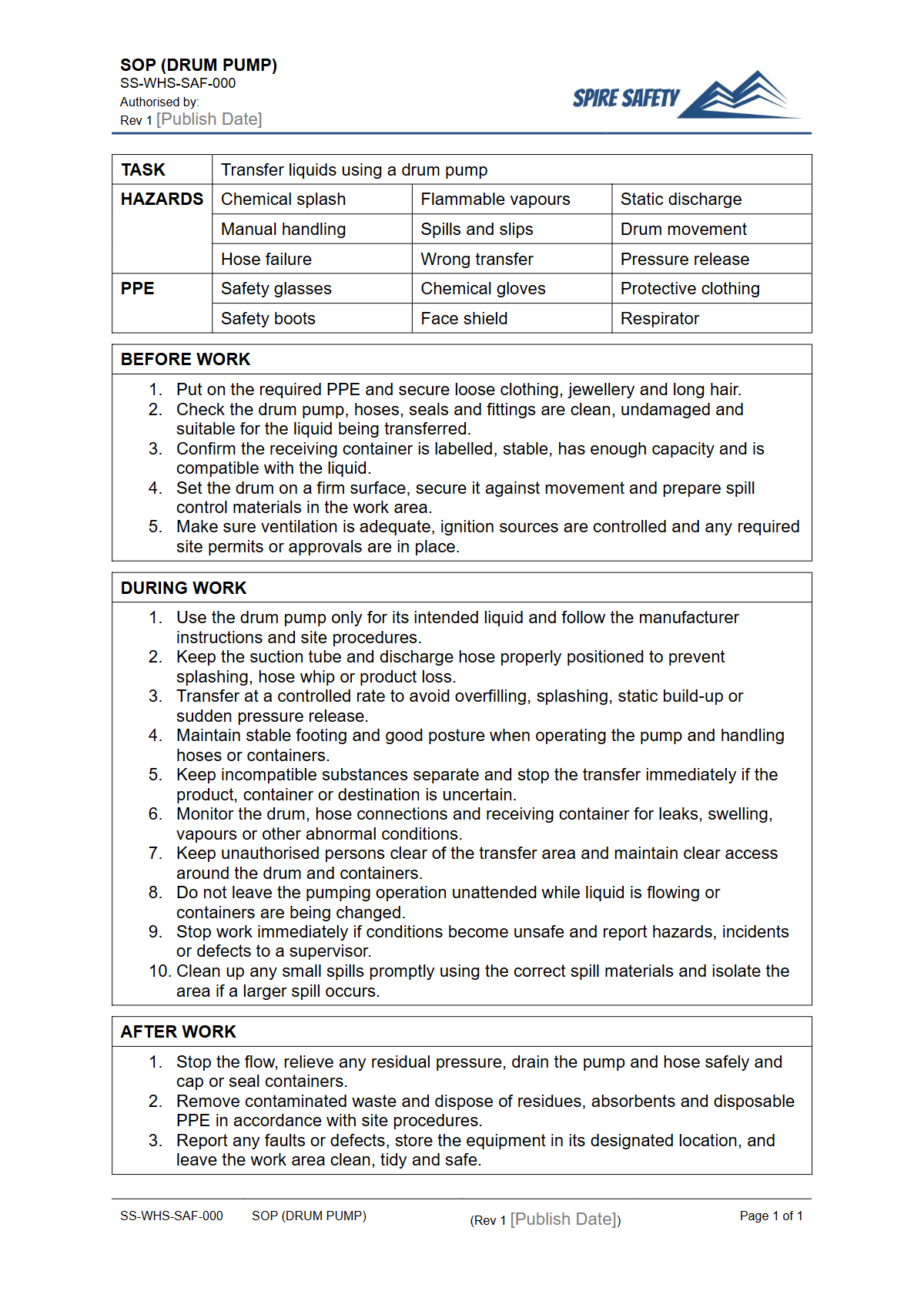
This template guides you in outlining step-by-step instructions, identifying necessary personal protective equipment (PPE), and detailing emergency responses. Implementing a robust SOP for drum pumps helps ensure that all workers follow a consistent, safe method, reducing the likelihood of incidents.
It serves as a key component of your overall WHS management systems, demonstrating a commitment to proactive risk control.
Video walkthrough
How to use the Free Safe Operating Procedure (Drum Pump) Template
Our free Safe Operating Procedure (Drum Pump) template is available in both DOCX and PDF formats. The DOCX file is fully editable, allowing you to tailor the content to the specific drum pumps, chemicals, and processes used at your site.
The PDF version is a convenient, ready-to-print reference for established procedures.
Important: This document is a template only. You must consult with your workers and other relevant stakeholders to customise it for your specific workplace.
Your final SOP must reflect your unique equipment, operational environment, the substances being handled (referencing their Safety Data Sheets), and existing risk controls. We are not liable for any incidents that may arise from the use of this template.
Key Sections in the Template
Our structured template prompts you to address all stages of the task to ensure a comprehensive procedure. It includes dedicated sections for:
- Required PPE: Specify the exact safety glasses, gloves, aprons, and respiratory protection needed based on the substance's Safety Data Sheet (SDS).
- Pre-Operational Checks: Detail inspections for the pump, hoses, seals, and drum to ensure equipment is in good working order before use.
- Step-by-Step Operating Guide: Outline the sequence for safely inserting the pump, transferring the liquid, and monitoring the process.
- Post-Operational Tasks: Document procedures for removing the pump, cleaning equipment, and storing it correctly.
- Emergency Procedures: List actions to take in case of a spill, chemical splash, or equipment failure.
Adapting the SOP for Your Workplace
Effective customisation is essential. When adapting this template, you should always reference the manufacturer's operating manual for the specific model of drum pump.
Equally important is the Safety Data Sheet (SDS) for the substance being transferred, as it dictates the required PPE and handling precautions. Like procedures for other powered equipment, such as our Free Air Compressor SOP, the detail must match the risk.
When to use a Drum Pump SOP
A specific Safe Operating Procedure for drum pumps should be used whenever workers are required to transfer liquids from drums, barrels, or intermediate bulk containers (IBCs). This is particularly critical in situations involving:
- Hazardous chemicals, such as acids, alkalis, solvents, or flammable liquids.
- High-consequence liquids where a spill could cause significant environmental damage or financial loss.
- Frequent or repetitive decanting tasks, where ergonomic risks are higher.
- Work areas with new or inexperienced employees who require clear, unambiguous instruction.
Even when transferring seemingly harmless substances like water or food-grade oils, an SOP promotes good work practices and prevents complacency. The process of developing the SOP often highlights risks that may have been previously overlooked.
Who should use this Safe Operating Procedure
This SOP is a valuable tool for multiple roles within an organisation:
Workers and Operators: As a primary training document and an on-the-job reference to ensure they perform the task safely and consistently every time. It empowers them to identify and control hazards associated with their work.
Supervisors and Team Leaders: For conducting training, verifying competency, and carrying out workplace inspections. The SOP provides a clear benchmark against which to measure safe work performance and is an essential tool during incident investigations.
WHS Managers and Persons Conducting a Business or Undertaking (PCBUs): To meet their primary duty of care obligations. A well-implemented SOP is a practical control measure that supports compliance.
The effectiveness of such procedures can be verified during a WHS compliance auditing program. This documentation demonstrates that risks have been systematically identified and that steps have been taken to control them.
Just as with procedures for moving materials on a larger scale, like those in a FREE Conveyer System SOP, clear documentation is the foundation of a safe system of work. You can explore our entire free WHS resources library for more templates to support your safety management system.
Common mistakes
Common mistakes to avoid
- Using the wrong pump material for the chemical being transferred.
- Failing to check hoses, seals, and connections for leaks or damage before starting.
- Neglecting to wear the appropriate Personal Protective Equipment (PPE) specified in the SDS.
- Improper manual handling techniques when moving or positioning heavy drums.
Legal references
Legal considerations
The following legal requirements may be relevant to this type of work.
- Work Health and Safety Act (Harmonised) — Provides the primary duties for protecting workers and other people from work health and safety risks.
- Work Health and Safety Regulations (Harmonised) — Sets out requirements supporting the management of workplace hazards and risks.
The following codes may be relevant to this type of work.
- Managing WHS Risks Code of Practice — Provides practical guidance on identifying hazards, assessing risks and applying effective controls.
- Work Health and Safety Consultation, Cooperation and Coordination Code of Practice — Provides practical guidance on consulting workers and coordinating with other duty holders.
- Managing the Work Environment and Facilities Code of Practice — Provides practical guidance on safe work environments, workplace facilities and related controls.
Did you know
Grounding is Critical
When transferring flammable liquids, static electricity can build up on the drum and pump, potentially creating a spark. Properly grounding all components is an essential control to prevent a fire or explosion.
Material Matters
The material of the drum pump tube (e.g., polypropylene, stainless steel, PVDF) must be chemically compatible with the substance being transferred. Using the wrong material can lead to pump degradation, failure, and dangerous leaks.
FAQ
Frequently asked questions
01What hazards are associated with using a drum pump?
02Is training required to use a drum pump?
03How often should a Safe Operating Procedure for a drum pump be reviewed?
04What PPE is needed when using a drum pump?
Share this resource
Free Safe Operating Procedure (Drum Pump) Template
Browse Categories
How To Use It
- 1Download and open in Word or PDF.
- 2Replace the placeholders with your business details.
- 3Get it reviewed by a WHS specialist before rollout.
Need it customised?
Our WHS consultants can adapt this template to your site, run a gap analysis, or audit what you already have in place.
Book a Free Consultation WHS consulting servicesor call 1300 156 382
Related templates
- Free Safe Operating Procedure (Drum Sander) Template
- Free Safe Operating Procedure (Drum Transfer Pump) Template
- Free Safe Operating Procedure (Dry Cleaning Machine) Template
- Free Safe Operating Procedure (Dry Dock Cleaning) Template
- Free Safe Operating Procedure (Dry Goods Handling) Template
- Free Safe Operating Procedure (Dry Ice Handling) Template