
Free Safe Operating Procedure (Dry Dock Cleaning) Template
Download our free Safe Operating Procedure (Dry Dock Cleaning) template.
Free Safe Operating Procedure (Dry Dock Cleaning) Template
DOCX • 126 KB + PDF
Updated Oct 2026
No signup required
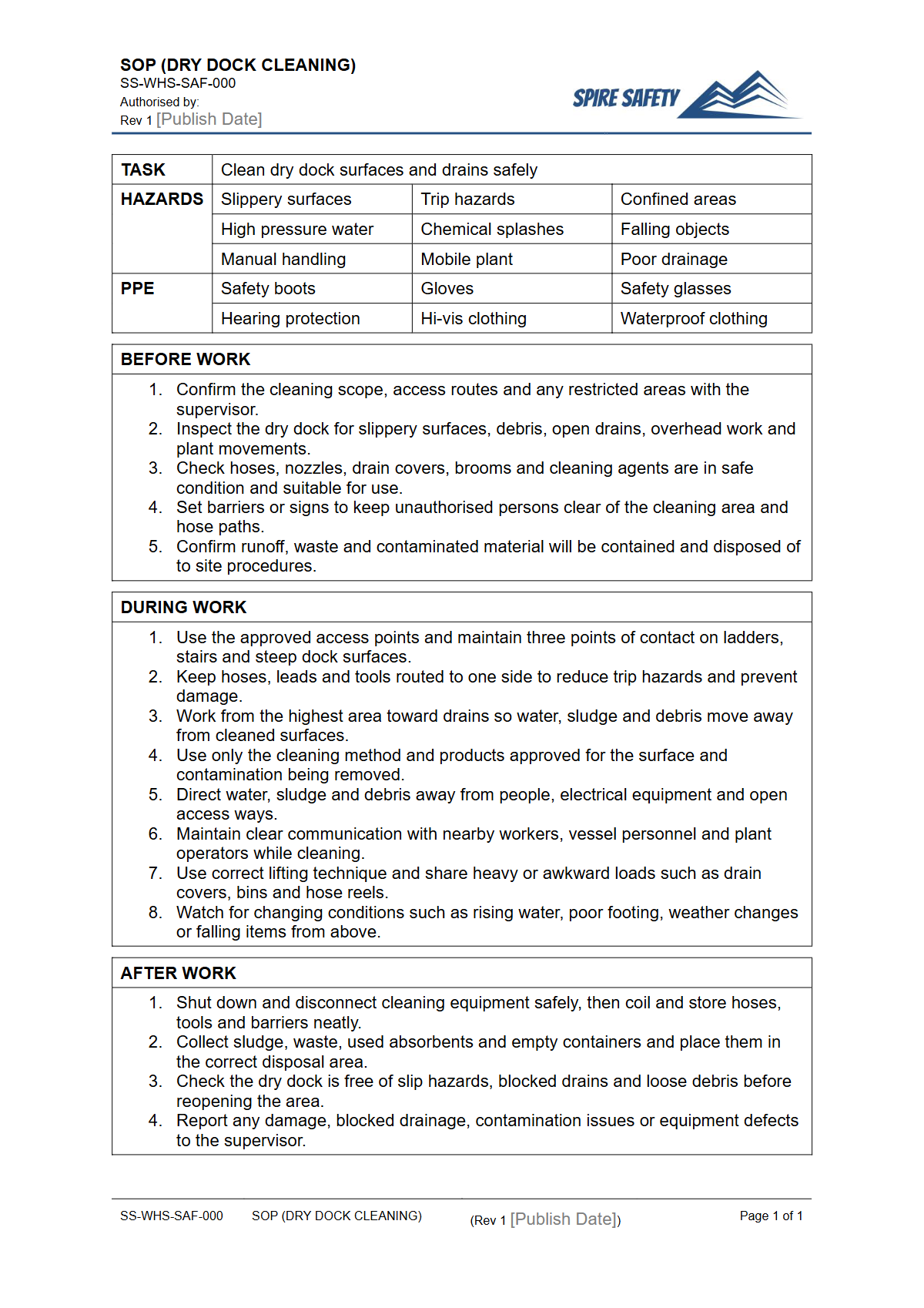
Purpose of the Free Safe Operating Procedure (Dry Dock Cleaning) Template
Dry dock cleaning is a high-risk activity that involves numerous hazards, from high-pressure water jetting and confined spaces to exposure to marine growth and hazardous chemicals. This Free Safe Operating Procedure (Dry Dock Cleaning) Template provides a structured starting point for organisations to document a safe system of work for these tasks.
Using a formalised Safe Operating Procedure (SOP) helps clearly define the required steps, safety controls, personal protective equipment (PPE), and emergency procedures necessary to protect workers and meet regulatory obligations.
The primary goal of this template is to guide you in creating a site-specific document that addresses the unique risks of your workplace. It covers key areas such as pre-operational checks, task execution, and post-task clean-up, ensuring a comprehensive approach to safety management for dry dock operations.
Documenting these processes is a fundamental part of a robust safety framework, demonstrating due diligence and a commitment to worker wellbeing.
Video walkthrough
How to use the Free Safe Operating Procedure (Dry Dock Cleaning) Template
This document is a template, not a finished procedure. You must customise it to reflect the specific equipment, environment, chemicals, and processes used in your workplace.
A generic SOP is insufficient for managing site-specific risks. We recommend a consultation process involving workers, supervisors, and WHS personnel to ensure the final document is practical, accurate, and effective.
Customisation Steps:
- Conduct a Risk Assessment: Before customising the SOP, perform a thorough WHS risk assessment for your dry dock cleaning activities. Identify all potential hazards and determine appropriate control measures.
- Insert Site-Specific Details: Add information about your specific location, the types of vessels being cleaned, the exact equipment used (e.g., brand and model of pressure washers), and the chemicals involved.
- Define Roles and Responsibilities: Clearly state who is responsible for each part of the procedure, from setup to sign-off.
- Review and Approve: Once customised, the SOP should be reviewed and approved by a competent person before being communicated to all relevant workers.
When to Use This Safe Operating Procedure
A Safe Operating Procedure for dry dock cleaning should be used consistently as part of your operational framework. It is not a document to be filed away and forgotten.
Use it for inducting new workers assigned to cleaning tasks, conducting pre-start meetings or toolbox talks before work commences, and as a reference guide during operations. It should also be a central document during incident investigations or when reviewing and improving your safety processes.
Regular reviews and updates to your SOPs are crucial, often forming part of a comprehensive WHS compliance auditing schedule to ensure they remain current with any changes in equipment, procedures, or legislation.
Who Should Use It
This SOP is intended for a range of personnel within an organisation operating or managing dry docks. This includes WHS Managers and Safety Advisors who are responsible for developing and overseeing the safety framework.
Site Supervisors and Team Leaders must use the SOP to direct work, train their teams, and monitor compliance on the ground. Most importantly, the workers who perform the cleaning tasks must be thoroughly trained in the SOP's contents so they understand the approved safe method for their work.
Integrating this procedure into your broader WHS management systems ensures consistency and reinforces a strong safety culture across the entire organisation.
Dry dock cleaning often involves multiple pieces of equipment operating simultaneously. This may include high-pressure pumps and compressors.
Using a dedicated Free Air Compressor SOP can help manage the specific risks associated with that plant. Similarly, the high-pressure water streams used are a significant hazard.
While this procedure covers the overall task, developing a more focused procedure using a resource like our FREE Waterjet Cutter SOP Template can provide more detailed guidance on managing jetting risks.
Accessing all areas of a large vessel hull can also introduce risks related to working at height or using access equipment. It's essential to manage these hazards with their own specific procedures.
For tasks involving portable access equipment, for example, it is best practice to use a specific procedure like our FREE Step Ladder SOP Template to ensure correct selection and use.
Common mistakes
Common mistakes to avoid
- Using the template without customising it for site-specific equipment and conditions.
- Failing to adequately train all workers on the finalised SOP's content and emergency procedures.
- Specifying inadequate or incorrect Personal Protective Equipment (PPE) for high-pressure water jetting or chemical handling.
- Neglecting to implement and verify isolation and lockout/tagout procedures for equipment before cleaning begins.
Legal references
Legal considerations
The following legal requirements may be relevant to this type of work.
- Work Health and Safety Act (Harmonised) — Provides the primary duties for protecting workers and other people from work health and safety risks.
- Work Health and Safety Regulations (Harmonised) — Sets out requirements supporting the management of workplace hazards and risks.
The following codes may be relevant to this type of work.
- Managing WHS Risks Code of Practice — Provides practical guidance on identifying hazards, assessing risks and applying effective controls.
- Work Health and Safety Consultation, Cooperation and Coordination Code of Practice — Provides practical guidance on consulting workers and coordinating with other duty holders.
- Managing the Work Environment and Facilities Code of Practice — Provides practical guidance on safe work environments, workplace facilities and related controls.
Did you know
High-Pressure Hazards
Water jetting streams used in marine cleaning can exceed 40,000 PSI. At this pressure, water can easily cut through standard work boots and protective clothing, causing severe and life-threatening injuries.
Toxic Biofouling
Marine growth, or biofouling, removed from ship hulls can contain toxic organisms and high concentrations of heavy metals from anti-fouling paints. This makes the waste material and runoff a significant environmental and health hazard.
FAQ
Frequently asked questions
01What is a Safe Operating Procedure for dry dock cleaning?
02Why is a specific SOP needed for dry dock cleaning?
03Who is responsible for implementing the Dry Dock Cleaning SOP?
04How often should a dry dock cleaning SOP be reviewed?
Share this resource
Free Safe Operating Procedure (Dry Dock Cleaning) Template
Browse Categories
How To Use It
- 1Download and open in Word or PDF.
- 2Replace the placeholders with your business details.
- 3Get it reviewed by a WHS specialist before rollout.
Need it customised?
Our WHS consultants can adapt this template to your site, run a gap analysis, or audit what you already have in place.
Book a Free Consultation WHS consulting servicesor call 1300 156 382
Related templates
- Free Safe Operating Procedure (Dry Goods Handling) Template
- Free Safe Operating Procedure (Dry Ice Handling) Template
- Free Safe Operating Procedure (Dryer Lint Cleaning) Template
- Free Safe Operating Procedure (Drywall Lift) Template
- Free Safe Operating Procedure (Duct Access Cleaning) Template
- Free Safe Operating Procedure (Duct Crimper) Template