
Free Safe Operating Procedure (Drum Transfer Pump) Template
Download our free Safe Operating Procedure for drum transfer pumps to clearly define operational risks and controls. Get your customisable DOCX template now.
Free Safe Operating Procedure (Drum Transfer Pump) Template
DOCX • 126 KB + PDF
Updated Oct 2026
No signup required
Purpose of the Free Safe Operating Procedure (Drum Transfer Pump) Template
This Free Safe Operating Procedure (Drum Transfer Pump) Template provides a structured starting point for documenting the safe use of drum pumps in your workplace. Drum transfer pumps are essential for moving liquids from large containers, but they introduce significant risks, including chemical exposure, spills, musculoskeletal injuries, and even fire or explosion with flammable substances.
Using a formal SOP helps your organisation manage these risks by providing clear, step-by-step instructions for operators.
A well-developed SOP is a critical control measure that standardises safe work practices, assists in training and competency assessments, and demonstrates due diligence. It forms a fundamental part of your overall safety framework and supports the development of comprehensive WHS management systems by formalising your risk management processes for specific tasks.
Video walkthrough
How to use the Free Safe Operating Procedure (Drum Transfer Pump) Template
Our template, available in both DOCX and PDF formats, is designed for easy customisation. After downloading, you should adapt the document to reflect the specific realities of your workplace.
This involves consulting with the workers who actually use the equipment to ensure the procedure is practical and effective.
Key customisation steps include:
- Identifying the specific make and model of the drum transfer pumps in use.
- Listing the types of chemicals or substances being transferred and their associated hazards (refer to Safety Data Sheets).
- Detailing the specific personal protective equipment (PPE) required.
- Adding site-specific emergency contacts and procedures.
- Incorporating feedback from operators and supervisors.
This process ensures the final document is a true reflection of safe work practices on your site, not just a generic guide. The same principles apply when adapting other procedural documents, such as an air compressor SOP, for other common workshop equipment.
Please note: This document is a template provided as a guide only. It must be thoroughly reviewed and customised by a competent person to align with your specific operational context, equipment, and the chemicals in use.
We are not liable for any incidents arising from the use of this document.
What's Included in the Template?
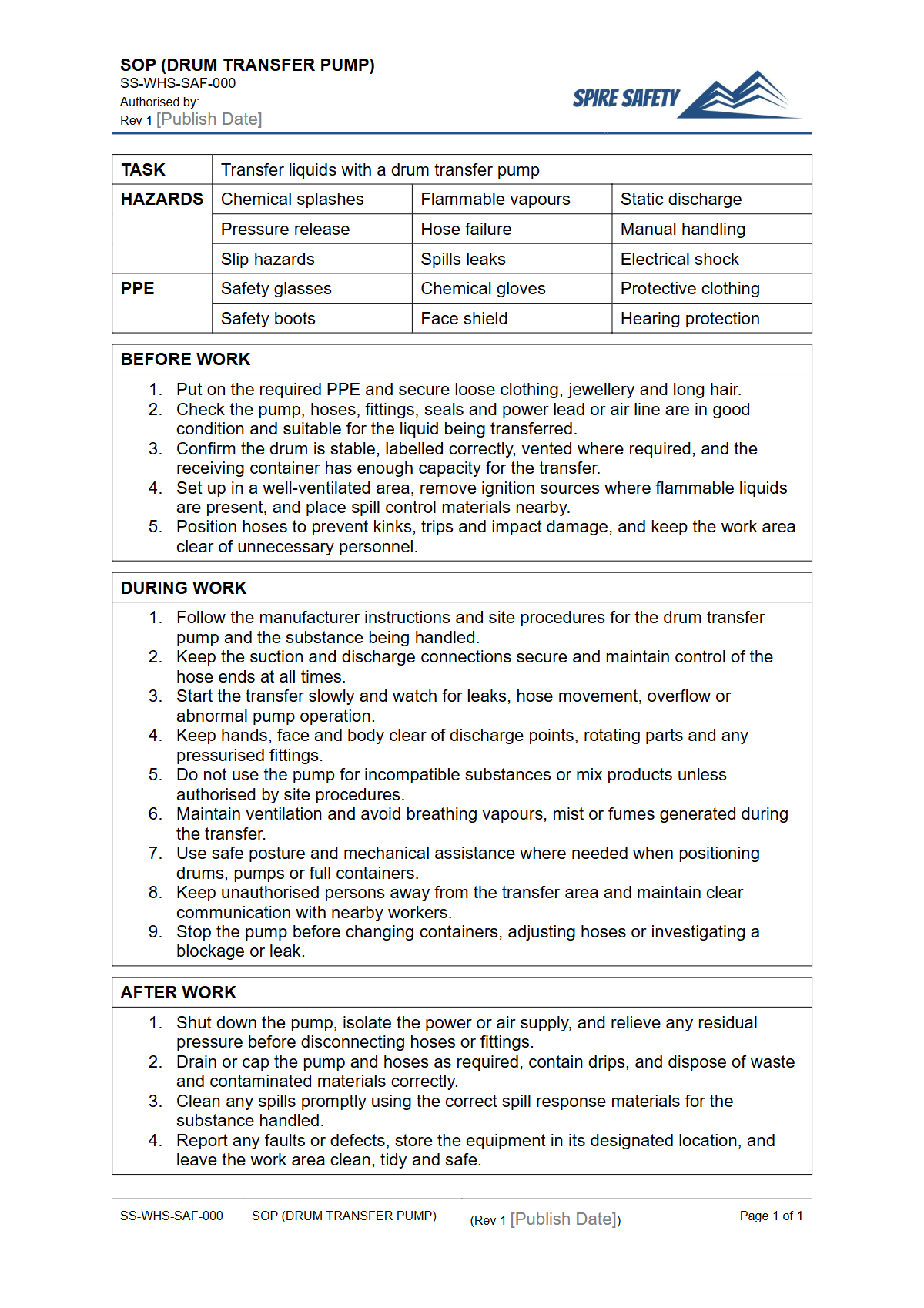
Our template is structured based on the model WHS framework to guide you through a logical workflow for using a drum pump.
Key Sections:
- Risk Assessment: A section to outline identified hazards and control measures.
- Personal Protective Equipment (PPE): Specifies the required PPE for the task.
- Pre-Operational Checks: A checklist of actions to perform before starting the pump, such as inspecting hoses for cracks, checking seals, and ensuring power sources are safe.
- Step-by-Step Operating Procedure: Detailed instructions for setting up, operating, and monitoring the pump. This includes steps for bonding and earthing when handling flammable liquids.
- Post-Operational Tasks: Procedures for shutting down, cleaning, and storing the equipment correctly.
- Emergency Procedures: Clear steps to take in case of a spill, fire, or personal injury.
When to Use a Drum Pump SOP
A Safe Operating Procedure for a drum transfer pump should be a living document, actively used in daily operations. It is not meant to be filed away and forgotten.
Use it during worker inductions, for refresher training sessions, and as a pre-start reference before beginning a transfer task. Placing a laminated copy near the work area ensures it is always accessible to operators when needed.
The SOP also serves as a critical reference document during incident investigations and regular safety inspections. Integrating it with procedures for related machinery, such as those in a Conveyer System SOP, helps build a cohesive safety culture around material handling processes.
If your processes are complex or high-risk, seeking advice through general WHS consulting can provide valuable external perspective.
Who Should Use This SOP Template?
This template is intended for anyone responsible for workplace safety and operational management. This includes:
- WHS Managers and Safety Officers: To develop and implement standardised procedures as part of the safety management system.
- Supervisors and Team Leaders: To train their teams, enforce safe work practices, and conduct pre-start briefings.
- Business Owners and Directors (PCBUs): To meet their primary duty of care by providing safe systems of work.
- Operators: As a practical guide and reference to perform their tasks safely and consistently.
Ultimately, the SOP is a tool for everyone in the organisation. Its effectiveness is regularly scrutinised during internal and external safety reviews, making it a key piece of evidence in any WHS compliance auditing program. For more useful documents, browse our complete free WHS resources library.
Common mistakes
Common mistakes to avoid
- Using the wrong pump type or material for the chemical being transferred, leading to corrosion and leaks.
- Failing to properly earth and bond the pump and drum when transferring flammable or combustible liquids.
- Neglecting pre-use inspections of hoses, seals, nozzles, and power sources.
- Leaving the pump running unattended or attempting to clear blockages while it is powered on.
Legal references
Legal considerations
The following legal requirements may be relevant to this type of work.
- Work Health and Safety Act (Harmonised) — Provides the primary duties for protecting workers and other people from work health and safety risks.
- Work Health and Safety Regulations (Harmonised) — Sets out requirements supporting the management of workplace hazards and risks.
The following codes may be relevant to this type of work.
- Managing WHS Risks Code of Practice — Provides practical guidance on identifying hazards, assessing risks and applying effective controls.
- Work Health and Safety Consultation, Cooperation and Coordination Code of Practice — Provides practical guidance on consulting workers and coordinating with other duty holders.
- Managing the Work Environment and Facilities Code of Practice — Provides practical guidance on safe work environments, workplace facilities and related controls.
Did you know
Static Risk
Decanting flammable liquids can generate static electricity. If the pump, drum, and receiving container are not properly earthed and bonded, a static discharge can ignite flammable vapours, causing a fire or explosion.
Manual Handling
A standard 205-litre drum can weigh over 200kg, making manual handling a significant risk factor for musculoskeletal injuries even before the pumping process begins. Mechanical aids should always be considered.
FAQ
Frequently asked questions
01What hazards are associated with using a drum transfer pump?
02How often should a Safe Operating Procedure for a drum transfer pump be reviewed?
03Is training required in addition to an SOP for a drum transfer pump?
04What personal protective equipment (PPE) is needed for operating a drum transfer pump?
Share this resource
Free Safe Operating Procedure (Drum Transfer Pump) Template
Browse Categories
How To Use It
- 1Download and open in Word or PDF.
- 2Replace the placeholders with your business details.
- 3Get it reviewed by a WHS specialist before rollout.
Need it customised?
Our WHS consultants can adapt this template to your site, run a gap analysis, or audit what you already have in place.
Book a Free Consultation WHS consulting servicesor call 1300 156 382
Related templates
- Free Safe Operating Procedure (Dry Cleaning Machine) Template
- Free Safe Operating Procedure (Dry Dock Cleaning) Template
- Free Safe Operating Procedure (Dry Goods Handling) Template
- Free Safe Operating Procedure (Dry Ice Handling) Template
- Free Safe Operating Procedure (Dryer Lint Cleaning) Template
- Free Safe Operating Procedure (Drywall Lift) Template