
Free Safe Operating Procedure (Duct Cutter) Template
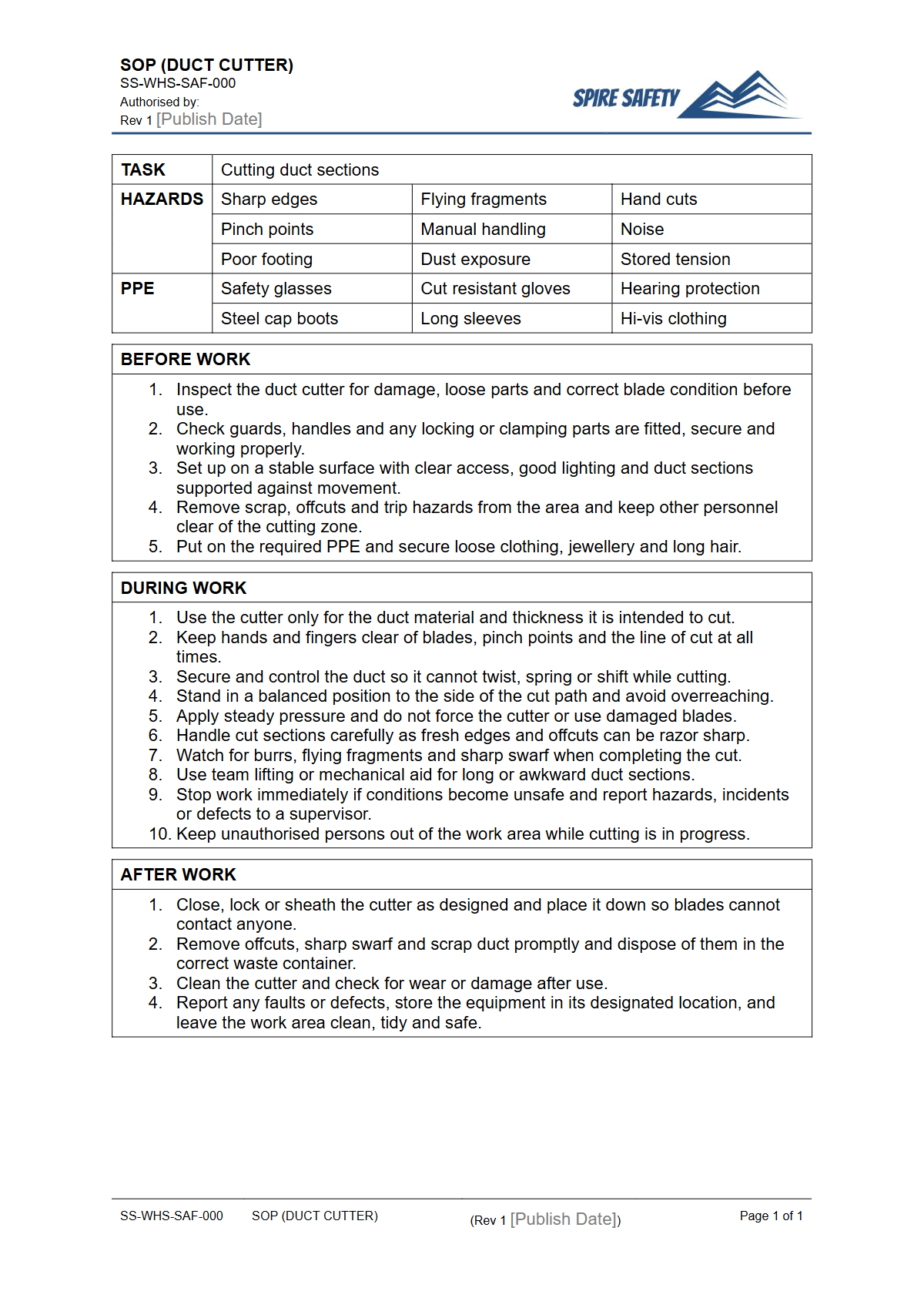
Formalise the safe use of manual, electric, and pneumatic duct cutters with our structured template. Download your free Safe Operating Procedure today.
Free Safe Operating Procedure (Duct Cutter) Template
DOCX • 126 KB + PDF
Updated Oct 2026
No signup required
Purpose of the Free Safe Operating Procedure (Duct Cutter) Template
A duct cutter is a common tool in HVAC, construction, and sheet metal fabrication, but its sharp blades and powerful action present significant risks of lacerations and other injuries. This Free Safe Operating Procedure (Duct Cutter) Template provides a structured framework for documenting the required safety measures when using this equipment.
Formalising these steps helps standardise safe work practices, reduce the likelihood of incidents, and provides a clear, actionable document for worker training and supervision.
Using a documented SOP for equipment like duct cutters is a fundamental component of a proactive safety culture. It demonstrates a commitment to risk management and is a key element in building and maintaining an effective WHS management system. This template helps your organisation outline operator responsibilities, pre-start checks, operational steps, and shutdown procedures clearly and concisely.
Video walkthrough
How to use the Free Safe Operating Procedure (Duct Cutter) Template
Our template is designed for ease of use and customisation. Simply download the DOCX file and open it in your preferred word processor to begin editing.
A PDF version is also available for straightforward printing and distribution. The document is pre-formatted with sections covering key safety areas, including hazards, risk controls, required PPE, and step-by-step instructions.
It is vital to recognise that this document is a starting point. We have provided a solid framework aligned with Australian WHS principles, but you must customise the content to reflect the specific duct cutters, materials, and unique hazards present in your workplace.
Review and adapt each section with input from competent persons and the workers who will be using the equipment. This collaborative approach ensures the final SOP is practical, relevant, and effective, much like the process you would follow for our free Circular Saw SOP template.
Key Areas to Customise
- Plant and Equipment Details: List the specific make, model, and type (manual, electric, pneumatic) of duct cutters used on your site.
- Associated Hazards: Identify all potential hazards specific to your work environment, such as sharp edges on cut material, electrical risks, or ergonomic strain from repetitive use.
- Personal Protective Equipment (PPE): Specify the exact PPE required, such as cut-resistant gloves (e.g., ANSI/ISEA 105 level), safety glasses or goggles, and steel-capped boots.
- Step-by-Step Procedure: Detail the sequence of tasks, from pre-start inspection and securing the workpiece to the cutting process and post-use cleaning and storage.
- Emergency Procedures: Outline site-specific first aid responses for cuts and lacerations, and include emergency contact information.
When to use a Duct Cutter SOP
A Safe Operating Procedure is a dynamic document that should be integrated into your daily operations. It is not a 'set and forget' piece of paperwork.
Its primary use is for pre-start planning and as a direct reference for workers before they begin a task involving a duct cutter. It also serves as a critical training resource for new employees or those unfamiliar with the equipment.
Furthermore, the SOP should be reviewed during regular safety meetings or toolbox talks to refresh knowledge and reinforce safe behaviour. Following any incident, near-miss, or change in equipment or process, the SOP must be reviewed and updated to incorporate any new learnings.
If you need support embedding these processes into your workflow, our WHS consulting services can provide expert guidance.
Who should use this SOP
This Safe Operating Procedure should be used by anyone involved in tasks that require a duct cutter. This includes HVAC technicians, plumbers, construction workers, and sheet metal workers who physically operate the tool.
It is also an essential resource for supervisors and managers responsible for overseeing this work, enabling them to monitor compliance and enforce safe practices effectively.
WHS advisors and managers can use this template to build a comprehensive library of task-specific procedures for their organisation. Standardising the approach for all high-risk equipment, from duct cutters to larger machinery, creates a consistent and predictable safety environment.
For example, a workshop might also require procedures for other common equipment, like those outlined in our free Air Compressor SOP template. You can find many more similar documents in our complete free WHS resources library to support your safety system.
Common mistakes
Common mistakes to avoid
- Using a dull, damaged, or incorrect type of blade for the duct material.
- Failing to wear appropriate PPE, especially cut-resistant gloves and safety glasses.
- Not properly securing the ductwork before initiating a cut, leading to slips and uncontrolled movement.
- Placing hands or fingers too close to the cutting path during operation.
Legal references
Legal considerations
The following legal requirements may be relevant to this type of work.
- Work Health and Safety Act (Harmonised) — Provides the primary duties for protecting workers and other people from work health and safety risks.
- Work Health and Safety Regulations (Harmonised) — Sets out requirements supporting the management of workplace hazards and risks.
The following codes may be relevant to this type of work.
- Managing WHS Risks Code of Practice — Provides practical guidance on identifying hazards, assessing risks and applying effective controls.
- Work Health and Safety Consultation, Cooperation and Coordination Code of Practice — Provides practical guidance on consulting workers and coordinating with other duty holders.
- Managing the Work Environment and Facilities Code of Practice — Provides practical guidance on safe work environments, workplace facilities and related controls.
Did you know
Types of Cutters
Duct cutters come in various forms, including manual hand snips, electric shears for faster cutting, and powerful pneumatic cutters that use compressed air for high-volume fabrication work.
Hand Tool Injuries
According to Safe Work Australia, injuries involving non-powered hand tools are a significant cause of workplace incidents, highlighting the need for proper procedures even for seemingly simple equipment.
FAQ
Frequently asked questions
01What key information must be in a Safe Operating Procedure for a duct cutter?
02Who is responsible for writing a duct cutter SOP?
03How often should an SOP for a duct cutter be reviewed?
04Is a Safe Operating Procedure a legal requirement in Australia?
Share this resource
Free Safe Operating Procedure (Duct Cutter) Template
Browse Categories
How To Use It
- 1Download and open in Word or PDF.
- 2Replace the placeholders with your business details.
- 3Get it reviewed by a WHS specialist before rollout.
Need it customised?
Our WHS consultants can adapt this template to your site, run a gap analysis, or audit what you already have in place.
Book a Free Consultation WHS consulting servicesor call 1300 156 382
Related templates
- Free Safe Operating Procedure (Duct Grille Cleaning) Template
- Free Safe Operating Procedure (Duct Lifter) Template
- Free Safe Operating Procedure (Duct Notcher) Template
- Free Safe Operating Procedure (Dump Point Cleaning) Template
- Free Safe Operating Procedure (Dump Point Inspection) Template
- Free Safe Operating Procedure (Dust Collector) Template