
Free Safe Operating Procedure (Dye Penetrant Test) Template
Download our free Safe Operating Procedure (Dye Penetrant Test) template. This document helps you formalise safe work methods for non-destructive testing.
Free Safe Operating Procedure (Dye Penetrant Test) Template
DOCX • 126 KB + PDF
Updated Oct 2026
No signup required
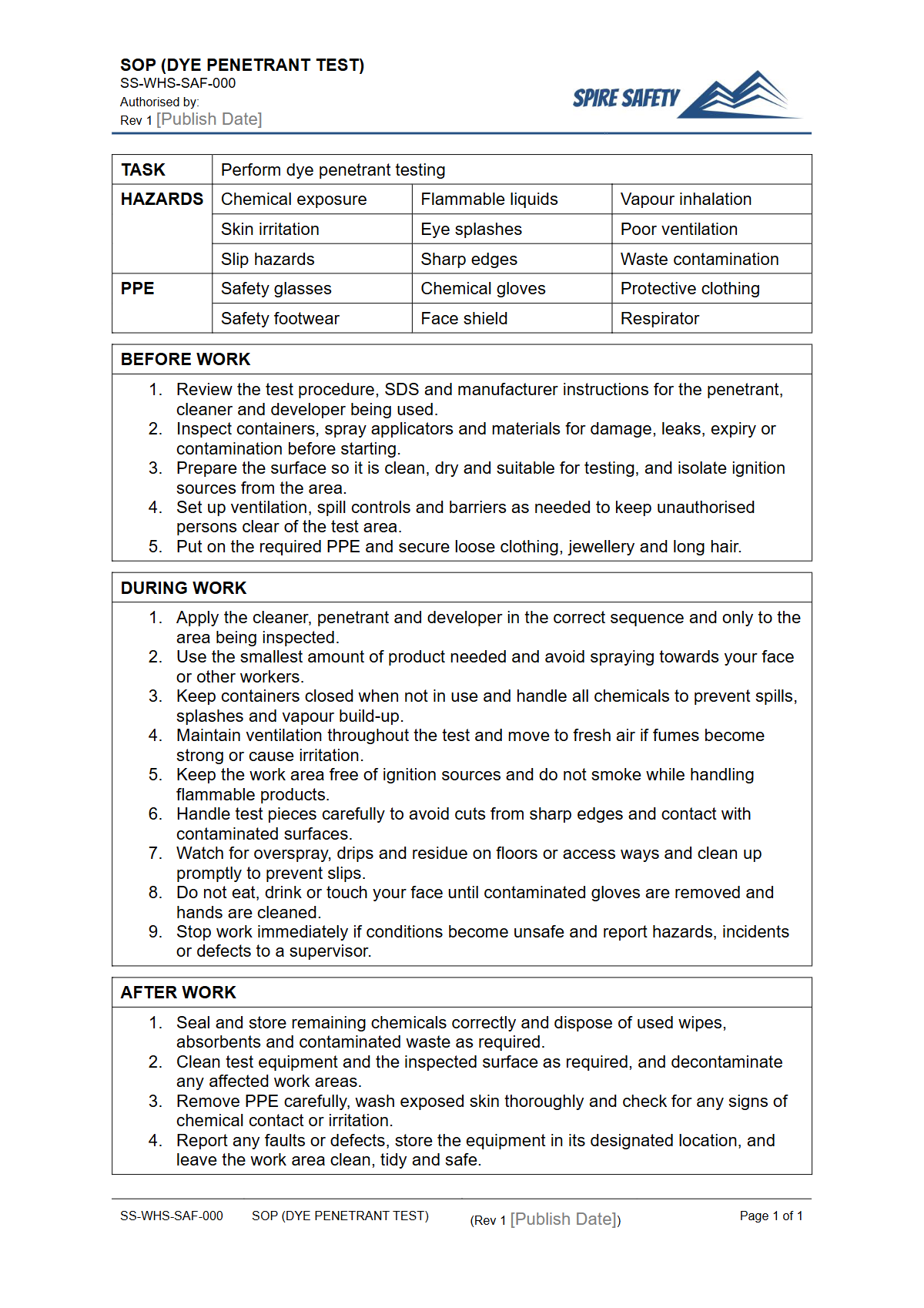
Purpose of the Free Safe Operating Procedure (Dye Penetrant Test) Template
This Safe Operating Procedure (SOP) template provides a structured framework for documenting the safe work methods required for dye penetrant testing (DPT). Also known as liquid penetrant inspection (LPI), this non-destructive testing (NDT) method is widely used to detect surface-breaking defects like cracks, laps, and porosity in non-porous materials.
The primary purpose of this SOP is to help your organisation manage the associated health and safety risks, including exposure to hazardous chemicals, fire hazards from flammable liquids, and musculoskeletal injuries from awkward postures.
By clearly defining the steps for preparation, application, removal, and inspection, this document helps ensure the process is performed consistently and safely every time. It serves as a vital tool for worker training, risk management, and demonstrating due diligence in providing a safe system of work.
A well-developed SOP is a cornerstone of an effective safety program, and getting it right may require specialist advice. If you need assistance with complex risk assessments, consider engaging professional WHS consulting services to ensure all hazards are identified and controlled.
Key Elements of a Dye Penetrant Test Safe Operating Procedure
A comprehensive SOP for dye penetrant testing should cover several critical areas to be effective. These include:
- Pre-operational Checks: Ensuring the work area is well-ventilated, fire suppression equipment is available, and all necessary materials and personal protective equipment (PPE) are ready.
- Step-by-Step Procedure: A detailed sequence covering surface preparation, penetrant application, dwell time, excess penetrant removal, developer application, and inspection.
- Risk Control Measures: Specific actions to mitigate identified hazards, such as the use of specific PPE (e.g., nitrile gloves, safety glasses), requirements for mechanical ventilation, and handling procedures for flammable liquids.
- Emergency Procedures: Clear instructions for responding to spills, fires, or chemical exposures.
These elements create a robust document that goes beyond simple instructions, forming an integral part of your overall safety framework. For processes involving other common workshop equipment, you might also need documents like our free Air Compressor SOP template to cover all related tasks.
Video walkthrough
How to use the Free Safe Operating Procedure (Dye Penetrant Test) Template
Our free Safe Operating Procedure for dye penetrant testing is available for download as a fully editable DOCX file and a print-ready PDF. To use it, simply download the format that best suits your needs and adapt it to the specific context of your workplace.
It is crucial to remember that this template is a starting point, not a finished document.
Important: You must customise this template to reflect your specific workplace. This includes adding details about the exact chemical products you use (penetrants, cleaners, developers), the types of materials you test, the equipment in your work area, and your organisation's emergency procedures. We have included prompts and placeholder text to guide you through this customisation process.
Involving your workers who perform the task in the review and customisation process is essential for creating a practical and effective procedure. This collaborative approach helps build a stronger safety culture and integrate procedures into your broader WHS management systems.
When to Use a Dye Penetrant Test Safe Operating Procedure
A formal SOP for dye penetrant testing should be in place and actively used in several key situations. It is essential before any worker undertakes the task, particularly new or inexperienced employees.
The SOP forms the basis of their training and competency assessment, ensuring they understand the hazards and control measures from the outset.
The document should also be reviewed and referenced during toolbox talks or pre-start meetings before commencing NDT activities. This reinforces safe work practices and provides an opportunity to discuss any site-specific conditions that may affect the task.
Furthermore, the SOP is a critical reference document during incident investigations or regular safety audits. It's also a valuable tool for quality control, as consistent application is key to reliable test results in manufacturing and maintenance, where you might find processes requiring a Conveyer System SOP alongside NDT work.
Who Should Use This Safe Operating Procedure
This SOP is intended for a range of personnel within an organisation. Primarily, it is for the workers and technicians who directly perform dye penetrant tests.
They will use it as a step-by-step guide to conduct their work safely and effectively. Supervisors and team leaders are also key users, responsible for ensuring their teams follow the documented procedure, providing adequate training, and monitoring compliance.
Work Health and Safety (WHS) managers or advisors will use this template to develop, implement, and review safety documentation as part of the overall safety management system. It can also be used by procurement officers to ensure that new chemicals or equipment purchased for DPT are aligned with existing safe work methods.
Finally, external auditors and consultants may reference the SOP during a WHS compliance auditing process to verify that safe systems of work are documented and implemented. You can explore our entire collection of procedural documents in our free WHS resources library for more templates.
Common mistakes
Common mistakes to avoid
- Inadequate surface cleaning and preparation before applying the penetrant.
- Using an incorrect dwell time (either too short or too long) for the penetrant to seep into flaws.
- Over-cleaning or wiping the penetrant out of the flaw during the excess removal step.
- Applying the developer coating too thickly, which can obscure fine indications.
Legal references
Legal considerations
The following legal requirements may be relevant to this type of work.
- Work Health and Safety Act (Harmonised) — Provides the primary duties for protecting workers and other people from work health and safety risks.
- Work Health and Safety Regulations (Harmonised) — Sets out requirements supporting the management of workplace hazards and risks.
The following codes may be relevant to this type of work.
- Managing WHS Risks Code of Practice — Provides practical guidance on identifying hazards, assessing risks and applying effective controls.
- Work Health and Safety Consultation, Cooperation and Coordination Code of Practice — Provides practical guidance on consulting workers and coordinating with other duty holders.
- Managing the Work Environment and Facilities Code of Practice — Provides practical guidance on safe work environments, workplace facilities and related controls.
Did you know
Early NDT
One of the earliest forms of penetrant inspection was the 'oil and whiting' method, used in the railway industry in the early 20th century to find cracks in steel locomotive parts.
Colour Contrast
The bright red dye used in visible penetrant testing is chosen for its high contrast against the white developer background, making even microscopic cracks visible to the naked eye.
FAQ
Frequently asked questions
01What are the main hazards of dye penetrant testing?
02Does this SOP template cover all types of penetrant testing?
03Is a Safe Operating Procedure a legal requirement for dye penetrant testing in Australia?
04What PPE is required for dye penetrant testing?
Share this resource
Free Safe Operating Procedure (Dye Penetrant Test) Template
Browse Categories
How To Use It
- 1Download and open in Word or PDF.
- 2Replace the placeholders with your business details.
- 3Get it reviewed by a WHS specialist before rollout.
Need it customised?
Our WHS consultants can adapt this template to your site, run a gap analysis, or audit what you already have in place.
Book a Free Consultation WHS consulting servicesor call 1300 156 382
Related templates
- Free Safe Operating Procedure (Dyeing Machine) Template
- Free Safe Operating Procedure (Dynamic Cone Penetrometer) Template
- Free Safe Operating Procedure (E-Waste Collection) Template
- Free Safe Operating Procedure (E-Waste Dropoff Intake) Template
- Free Safe Operating Procedure (Earth Tester) Template
- Free Safe Operating Procedure (Earthing Stick) Template