
Free Safe Operating Procedure (E-Waste Dropoff Intake) Template
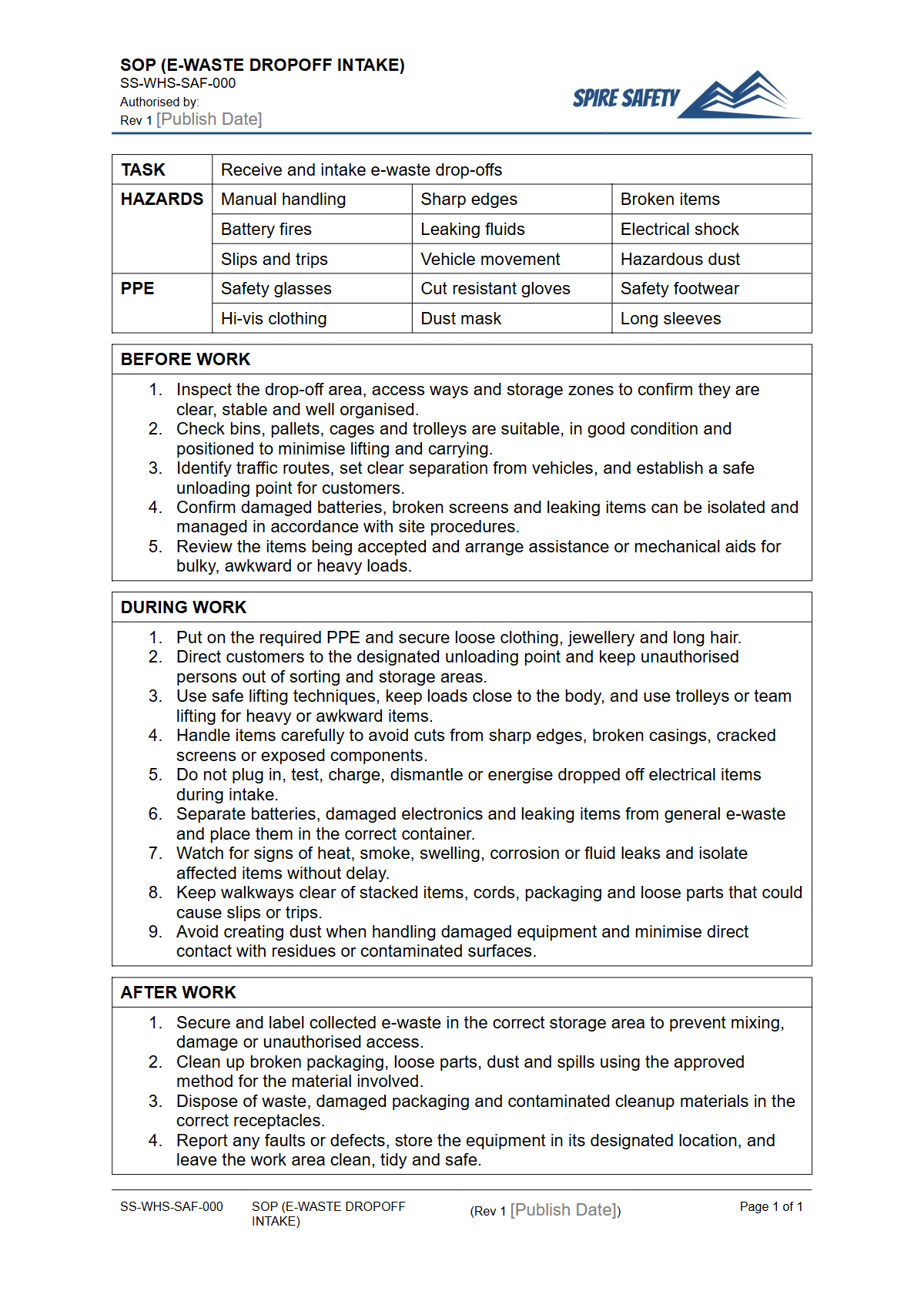
Handling electronic waste requires clear safety protocols. Our free Safe Operating Procedure for E-Waste Dropoff Intake provides a structured starting point.
Free Safe Operating Procedure (E-Waste Dropoff Intake) Template
DOCX • 126 KB + PDF
Updated Oct 2026
No signup required
Purpose of the Free Safe Operating Procedure (E-Waste Dropoff Intake) Template
Managing the intake of electronic waste (e-waste) at drop-off points, transfer stations, or recycling facilities presents unique workplace health and safety challenges. This Free Safe Operating Procedure (E-Waste Dropoff Intake) Template is designed to provide a structured framework for controlling the hazards associated with receiving used electronic goods from the public or commercial sources.
A documented SOP is a critical tool for ensuring tasks are performed safely and consistently.
The primary purpose of this SOP is to identify and mitigate risks inherent in e-waste handling. These include:
- Manual Handling Risks: Injuries from lifting, carrying, and moving heavy or awkward items like old televisions, computer monitors, and large appliances.
- Cuts and Lacerations: Hazards from broken screens, sharp plastic casings, and exposed metal components.
- Hazardous Substances: Potential exposure to materials like lead, mercury, cadmium, and flame retardants found in older electronics.
- Fire and Electrical Risks: The significant danger posed by damaged or faulty lithium-ion batteries, which can cause fires or explosions, as well as residual electrical charge in some devices.
By implementing a clear procedure, organisations can standardise their intake process, reduce the likelihood of incidents, and demonstrate a commitment to worker safety.
Video walkthrough
How to use the Free Safe Operating Procedure (E-Waste Dropoff Intake) Template
This template, available in DOCX and PDF formats, serves as a comprehensive starting point. To make it effective and relevant for your operation, you must customise it to your specific work environment.
Download the DOCX version to edit the content, add your company logo, and insert site-specific details.
Please note: This is a template that we have provided as a starting point. It is essential that you customise this document to reflect the specific hazards, equipment, and environment of your workplace.
A generic document will not meet your legal obligations. A thorough risk assessment should be conducted to inform the final SOP.
Effective customisation involves detailing the specific types of e-waste accepted, the layout of the drop-off area, the equipment used (e.g., pallet jacks, trolleys, bulk bins), required Personal Protective Equipment (PPE), and emergency procedures. This SOP should be integrated into your organisation's overall WHS management systems to ensure it aligns with your broader safety policies.
When to use it
A Safe Operating Procedure for e-waste intake should be a living document used in various daily activities. It is not a 'set and forget' file. Use it for:
- Worker Training and Induction: To ensure all new and existing staff understand the correct, safe method for handling e-waste from day one.
- Pre-start or Toolbox Talks: As a reference point for discussing specific hazards, such as a recent influx of damaged batteries or procedures for a council collection day.
- Procedural Reviews: After an incident or near-miss, the SOP should be reviewed to identify and implement improvements.
- Audits and Inspections: As evidence of a formalised process for managing a high-risk task. Regular reviews as part of your internal WHS compliance auditing program will help keep it current.
If your e-waste sorting process involves mechanical aids, you may need additional procedures. For example, if items are sorted on a production line, you will also require a FREE Conveyer System SOP to manage associated risks.
Who should use it
This SOP is intended for all personnel involved in the e-waste management chain. A Person Conducting a Business or Undertaking (PCBU) has the primary duty of care to ensure a safe work environment, which includes providing safe systems of work like this SOP.
Key users include:
- Facility Managers and Supervisors: Responsible for implementing, monitoring, and reviewing the procedure to ensure it is being followed correctly.
- WHS Representatives: To assist in the consultation, development, and review process.
- Workers and Operators: The primary users who must follow the step-by-step instructions to perform their tasks safely. Their feedback is invaluable for improving the procedure.
Once collected, bulk containers of e-waste often require mechanical handling. Operations involving heavy machinery should be covered by their own specific procedures, such as our FREE Telehandler SOP Template, to manage the risks of moving large, heavy loads.
For expert assistance tailoring documents to your specific operational needs, consider our WHS consulting services.
Common mistakes
Common mistakes to avoid
- Failing to properly identify and segregate potentially damaged lithium-ion batteries.
- Using the template without conducting and incorporating a site-specific risk assessment.
- Providing inadequate training on safe manual handling techniques for bulky or heavy items.
- Not providing, maintaining, or ensuring the use of appropriate PPE, like puncture-resistant gloves and safety glasses.
Legal references
Legal considerations
The following legal requirements may be relevant to this type of work.
- Work Health and Safety Act (Harmonised) — Provides the primary duties for protecting workers and other people from work health and safety risks.
- Work Health and Safety Regulations (Harmonised) — Sets out requirements supporting the management of workplace hazards and risks.
The following codes may be relevant to this type of work.
- Managing WHS Risks Code of Practice — Provides practical guidance on identifying hazards, assessing risks and applying effective controls.
- Work Health and Safety Consultation, Cooperation and Coordination Code of Practice — Provides practical guidance on consulting workers and coordinating with other duty holders.
- Managing the Work Environment and Facilities Code of Practice — Provides practical guidance on safe work environments, workplace facilities and related controls.
Did you know
A Growing Stream
Electronic waste is one of the fastest-growing waste streams in Australia. The National Television and Computer Recycling Scheme helps fund and regulate the collection and recycling of TVs and computers.
Hidden Dangers
A single damaged lithium-ion battery from a laptop or phone can cause a significant fire in a collection bin or truck, posing a major risk to waste management facilities and personnel.
FAQ
Frequently asked questions
01What are the main hazards when accepting e-waste?
02Does this SOP template cover e-waste dismantling?
03How often should an SOP for e-waste intake be reviewed?
04Is this template suitable for all types of e-waste?
Share this resource
Free Safe Operating Procedure (E-Waste Dropoff Intake) Template
Browse Categories
How To Use It
- 1Download and open in Word or PDF.
- 2Replace the placeholders with your business details.
- 3Get it reviewed by a WHS specialist before rollout.
Need it customised?
Our WHS consultants can adapt this template to your site, run a gap analysis, or audit what you already have in place.
Book a Free Consultation WHS consulting servicesor call 1300 156 382
Related templates
- Free Safe Operating Procedure (Earth Tester) Template
- Free Safe Operating Procedure (Earthing Stick) Template
- Free Safe Operating Procedure (Edge Bander) Template
- Free Safe Operating Procedure (Edge Protection) Template
- Free Safe Operating Procedure (Effluent Area Check) Template
- Free Safe Operating Procedure (Effluent Spill Cleanup) Template