
Free Safe Operating Procedure (Effluent Spill Cleanup) Template
Effectively manage and document the process for cleaning up effluent spills with our free Safe Operating Procedure template. Download the customisable DOCX.
Free Safe Operating Procedure (Effluent Spill Cleanup) Template
DOCX • 126 KB + PDF
Updated Oct 2026
No signup required
Purpose of the Free Safe Operating Procedure (Effluent Spill Cleanup) Template
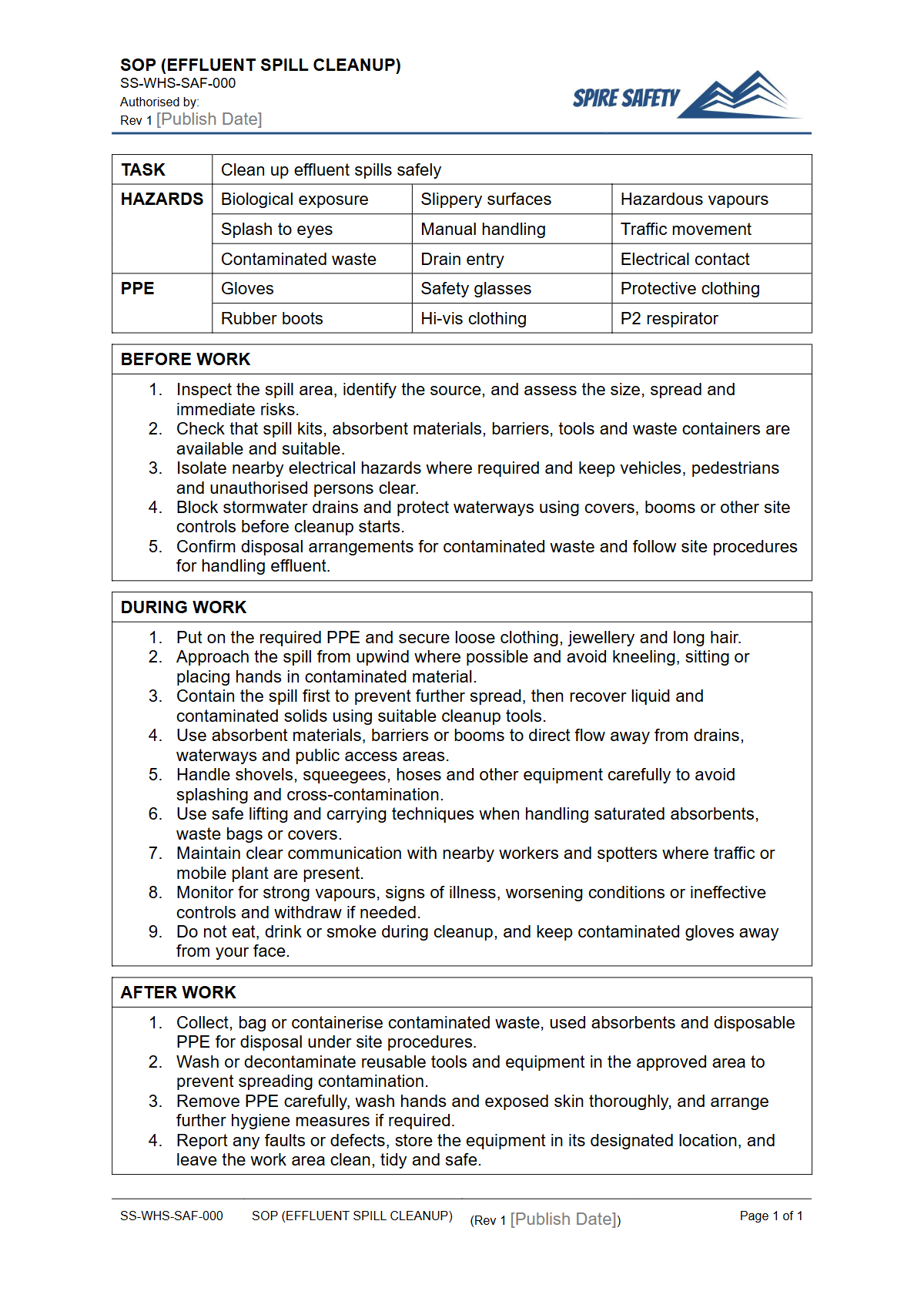
Managing effluent spills is critical for maintaining a safe and environmentally responsible workplace. Our free Safe Operating Procedure (Effluent Spill Cleanup) template provides a structured starting point for documenting the specific steps required to safely contain, clean, and decontaminate an area after an effluent spill.
This SOP is designed to help your organisation control risks associated with biological hazards, chemical contaminants, and slip hazards that effluent can present. Formalising this process is a key part of demonstrating proactive risk management and fulfilling your duties under Australian WHS legislation.
Using a standardised procedure ensures that responses are consistent, efficient, and aligned with best practice. It helps minimise worker exposure to potentially harmful substances and reduces the environmental impact of a spill.
This document serves as a fundamental component within broader WHS management systems, providing clear, actionable guidance for workers and supervisors.
Video walkthrough
How to use the Free Safe Operating Procedure (Effluent Spill Cleanup) Template
This resource is available as a fully editable DOCX file and a print-ready PDF. To get the most out of this template, you must adapt it to the specific context of your site.
It is not a complete, out-of-the-box solution. Workplace environments, types of effluent (e.g., from agriculture, manufacturing, or wastewater treatment), and available cleanup equipment vary significantly.
Effective safety documentation must reflect these site-specific details.
Important: You must customise this template to your workplace. We have included placeholder sections for you to detail your specific types of personal protective equipment (PPE), spill kit contents, decontamination steps, and waste disposal protocols.
You should also conduct a site-specific risk assessment to identify all relevant hazards and integrate the controls into this procedure. If you require expert assistance in tailoring safety documents, our WHS consulting services can provide tailored support.
When to use an Effluent Spill Cleanup SOP
This Safe Operating Procedure should be the primary reference document for all personnel involved in spill response activities. It is used immediately following the identification of an effluent spill to guide a safe and organised cleanup.
Beyond reactive use, the SOP is a vital tool for training and competency. It should be a core part of induction for new workers and included in regular refresher training and emergency drills.
This ensures everyone understands their role and the correct procedure before an incident occurs.
Regular reviews of the SOP are also necessary, especially after a spill incident or when new chemicals or processes are introduced. These reviews help refine the procedure and ensure its ongoing effectiveness. The process aligns with the continuous improvement cycle often verified during WHS compliance auditing.
Who should use this SOP?
This SOP is intended for several key roles within an organisation:
- Workers and Operators: The primary users are the individuals tasked with performing the cleanup. The SOP gives them clear, step-by-step instructions to follow, reducing confusion and risk.
- Supervisors and Team Leaders: Managers use the SOP to oversee the cleanup, ensure procedures are followed correctly, and verify that the area is safe for normal operations to resume.
- WHS Managers and Personnel: Safety professionals use the SOP as a tool for risk management, training development, and incident investigation. It forms part of the site's overall safety documentation, alongside procedures for other specific tasks, such as those covered in our Conveyer System SOP.
In environments with diverse machinery, having a library of clear SOPs is crucial. For example, a farm that needs an effluent spill procedure might also benefit from our free Spreader SOP template to manage risks associated with its machinery.
Consistency across all documented procedures strengthens the overall safety culture.
Key Components of an Effective Spill Response SOP
A robust effluent spill SOP should be comprehensive. Our template prompts you to consider several critical areas to ensure a thorough and safe response. Key sections to customise include:
- Hazard Identification: Clearly state the potential biological, chemical, and physical hazards of the specific effluent at your site.
- Required PPE: List the exact PPE required, such as nitrile gloves, safety glasses or goggles, waterproof boots, and respiratory protection if vapours are a risk.
- Spill Containment: Detail the first steps to stop the source of the spill and prevent it from spreading using booms, absorbent socks, or drain covers.
- Cleanup and Decontamination: Provide step-by-step instructions on applying absorbent materials, cleaning the surface, and decontaminating tools and the affected area. This is distinct from routine maintenance tasks, such as those outlined in a free Air Compressor SOP template, as it involves managing biohazards or chemical contaminants.
- Waste Disposal: Specify how to correctly bag, label, and dispose of all contaminated materials in accordance with local environmental regulations.
By thoroughly completing each section, you create a procedure that is not only a guide for action but also a valuable record of your risk management process. You can find more templates like this one in our free WHS resources library to help build out your safety management system.
Common mistakes
Common mistakes to avoid
- Using the incorrect type of PPE for the specific chemical or biological hazards involved.
- Failing to properly contain the spill, allowing it to spread to drains or unpaved surfaces.
- Improperly disposing of contaminated cleanup materials, leading to environmental fines.
- Neglecting to decontaminate equipment, footwear, and the affected area after the initial cleanup.
Legal references
Legal considerations
The following legal requirements may be relevant to this type of work.
- Work Health and Safety Act (Harmonised) — Provides the primary duties for protecting workers and other people from work health and safety risks.
- Work Health and Safety Regulations (Harmonised) — Sets out requirements supporting the management of workplace hazards and risks.
The following codes may be relevant to this type of work.
- Managing WHS Risks Code of Practice — Provides practical guidance on identifying hazards, assessing risks and applying effective controls.
- Work Health and Safety Consultation, Cooperation and Coordination Code of Practice — Provides practical guidance on consulting workers and coordinating with other duty holders.
- Managing the Work Environment and Facilities Code of Practice — Provides practical guidance on safe work environments, workplace facilities and related controls.
Did you know
Biological Hazards
Untreated effluent can contain a host of pathogenic microorganisms, including bacteria like E. coli and Salmonella, viruses, and parasites, posing a significant infection risk to workers during cleanup.
Environmental Impact
A single litre of certain industrial effluents can contaminate thousands of litres of water, highlighting the critical importance of rapid containment to prevent entry into stormwater drains or natural waterways.
FAQ
Frequently asked questions
01What should be included in an effluent spill cleanup procedure?
02What PPE is required for cleaning up an effluent spill?
03How do you dispose of waste after an effluent spill cleanup?
04Why is a documented SOP important for spill response?
Share this resource
Free Safe Operating Procedure (Effluent Spill Cleanup) Template
Browse Categories
How To Use It
- 1Download and open in Word or PDF.
- 2Replace the placeholders with your business details.
- 3Get it reviewed by a WHS specialist before rollout.
Need it customised?
Our WHS consultants can adapt this template to your site, run a gap analysis, or audit what you already have in place.
Book a Free Consultation WHS consulting servicesor call 1300 156 382
Related templates
- Free Safe Operating Procedure (Egg Collection) Template
- Free Safe Operating Procedure (Egg Grading) Template
- Free Safe Operating Procedure (Egg Packing) Template
- Free Safe Operating Procedure (Electric Bed Adjustment) Template
- Free Safe Operating Procedure (Electric Planer) Template
- Free Safe Operating Procedure (Electric Screwdriver) Template