
Free Safe Operating Procedure (Electrode Oven) Template
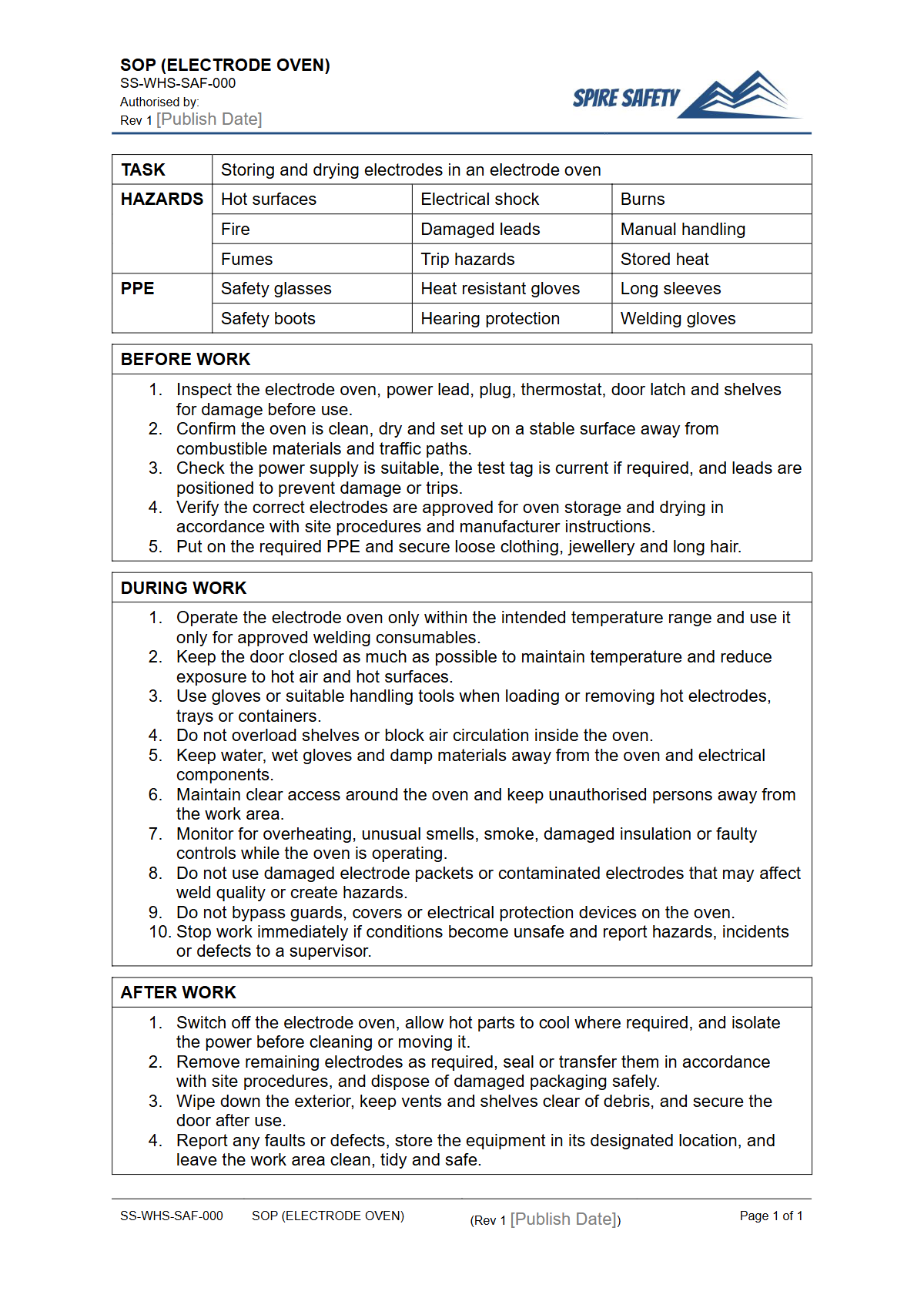
Download our free Safe Operating Procedure (SOP) template for electrode ovens. This customisable DOCX and PDF helps you document safe work methods.
Free Safe Operating Procedure (Electrode Oven) Template
DOCX • 126 KB + PDF
Updated Oct 2026
No signup required
Purpose of the Free Safe Operating Procedure (Electrode Oven) Template
Establishing a clear Safe Operating Procedure for an electrode oven is fundamental to managing workplace hazards like burns, electrical faults, and poor weld quality. This free template provides a structured starting point for your business to document the correct methods for operating electrode ovens safely and effectively.
Using a standardised SOP ensures that all operators, from new trainees to experienced welders, have a consistent and reliable reference for the task.
A documented SOP is a key component of robust WHS management systems, demonstrating proactive risk management and a commitment to worker safety. It formalises the steps required to prevent hydrogen-induced cracking in welds by properly conditioning electrodes, a critical step in many structural and pressure welding applications.
This document serves as an essential training tool and a benchmark for assessing operator competency.
Video walkthrough
How to use the Free Safe Operating Procedure (Electrode Oven) Template
This resource is designed to be straightforward and adaptable. Simply download the template in your preferred format—an editable DOCX for easy customisation or a PDF for quick reference.
The document is structured based on Australian WHS practice, providing a solid foundation for your site-specific procedure.
Important: This is a template, not a finished document. To make it effective for your organisation, you must customise it with details specific to your workplace, equipment, and processes.
We have drafted it as a starting point, but ultimate compliance and safety depend on how you adapt and implement it. This includes adding your company branding, specific oven model numbers, correct temperature settings for your electrodes, and internal emergency procedures.
Key Sections to Customise
- PPE Requirements: Specify the exact personal protective equipment needed, such as thermal-resistant gloves, safety glasses, and protective footwear.
- Pre-operational Checks: Detail the visual inspections operators must perform before use, such as checking power cords and ensuring the area is clear of combustible materials.
- Step-by-step Operating Sequence: List the precise actions for loading, setting temperatures (for both re-baking and holding), and unloading the oven.
- Emergency Procedures: Outline the steps to take in case of fire, electrical fault, or personal injury.
- Maintenance and Cleaning: Define the schedule and procedure for routine cleaning and any required maintenance tasks.
When to use a Safe Operating Procedure for an Electrode Oven
A SOP for an electrode oven should be a central part of your daily operations. It is used during the induction and training of new employees to ensure they learn the correct, safe method from the beginning.
It serves as a constant on-the-job reference for all operators to reinforce safe work habits and ensure procedural consistency. Furthermore, the SOP is an invaluable document during incident investigations, helping to determine if procedures were followed and where improvements can be made. These foundational documents are essential for any task involving specialised plant, similar to the processes detailed in our Free Air Compressor SOP (Safe Operating Procedure) Template.
Who should use this Electrode Oven SOP
This template is intended for a range of personnel within an organisation. WHS managers and safety officers will find it a useful tool for developing and implementing formal safety documentation.
Supervisors and team leaders in fabrication, manufacturing, and maintenance workshops are responsible for ensuring their teams operate equipment safely and can use this SOP for training and enforcement. It's also a valuable reference tool for safety committees and HSRs looking to standardise procedures.
Finally, it provides a clear framework for safety consultants or those preparing for a formal WHS compliance auditing process to review existing practices against a documented standard.
Integrating the SOP into your WHS Framework
A SOP is most effective when it's integrated into your broader safety management framework. This means not just writing the document, but actively using it.
Use the SOP as the basis for toolbox talks on welding safety. Incorporate it into your training matrix and keep records of who has been trained and assessed as competent against the procedure.
You can find more templates and checklists to support your safety system in our comprehensive free WHS resources library. Periodically review and update the SOP, especially after any changes to equipment, personnel, or industry best practices, to ensure it remains a living, relevant document.
Implementing consistent procedures for all workshop equipment, from heating elements to power tools, is a hallmark of a mature safety culture. The same principles of risk assessment and control apply when creating a FREE Circular Saw SOP (Safe Operating Procedure) Template, ensuring a holistic approach to workplace safety.
Common mistakes
Common mistakes to avoid
- Leaving the oven door ajar, which allows moisture back in and wastes energy.
- Using incorrect temperature settings or baking times for the specific type of electrode.
- Overloading the oven, which restricts airflow and prevents even heating of the electrodes.
- Handling hot electrodes or touching the oven's exterior surfaces without appropriate thermal gloves.
Legal references
Legal considerations
The following legal requirements may be relevant to this type of work.
- Work Health and Safety Act (Harmonised) — Provides the primary duties for protecting workers and other people from work health and safety risks.
- Work Health and Safety Regulations (Harmonised) — Sets out requirements supporting the management of workplace hazards and risks.
The following codes may be relevant to this type of work.
- Managing WHS Risks Code of Practice — Provides practical guidance on identifying hazards, assessing risks and applying effective controls.
- Work Health and Safety Consultation, Cooperation and Coordination Code of Practice — Provides practical guidance on consulting workers and coordinating with other duty holders.
- Managing the Work Environment and Facilities Code of Practice — Provides practical guidance on safe work environments, workplace facilities and related controls.
Did you know
Moisture's Hidden Danger
The primary purpose of an electrode oven is to remove moisture from welding rod coatings. Even a tiny amount of moisture can introduce hydrogen into a weld, potentially causing hydrogen-induced cracking and compromising the structural integrity of the joint.
Holding Temperature
After the initial baking (reconditioning) cycle, electrodes are typically held at a lower 'holding' temperature. This keeps them dry and ready for use without over-baking them, which can also damage the coating.
FAQ
Frequently asked questions
01What are the primary hazards associated with operating an electrode oven?
02Why do welding electrodes need to be kept in an oven?
03How often should a Safe Operating Procedure for an electrode oven be reviewed?
04Who is qualified to operate an electrode oven?
Share this resource
Free Safe Operating Procedure (Electrode Oven) Template
Browse Categories
How To Use It
- 1Download and open in Word or PDF.
- 2Replace the placeholders with your business details.
- 3Get it reviewed by a WHS specialist before rollout.
Need it customised?
Our WHS consultants can adapt this template to your site, run a gap analysis, or audit what you already have in place.
Book a Free Consultation WHS consulting servicesor call 1300 156 382
Related templates
- Free Safe Operating Procedure (Electroplating) Template
- Free Safe Operating Procedure (Embroidery Machine) Template
- Free Safe Operating Procedure (Emergency Beacon) Template
- Free Safe Operating Procedure (Emergency Exit Check) Template
- Free Safe Operating Procedure (Emergency Light Test) Template
- Free Safe Operating Procedure (Emergency Shower Test) Template