
Free Safe Operating Procedure (Fruit Grader) Template
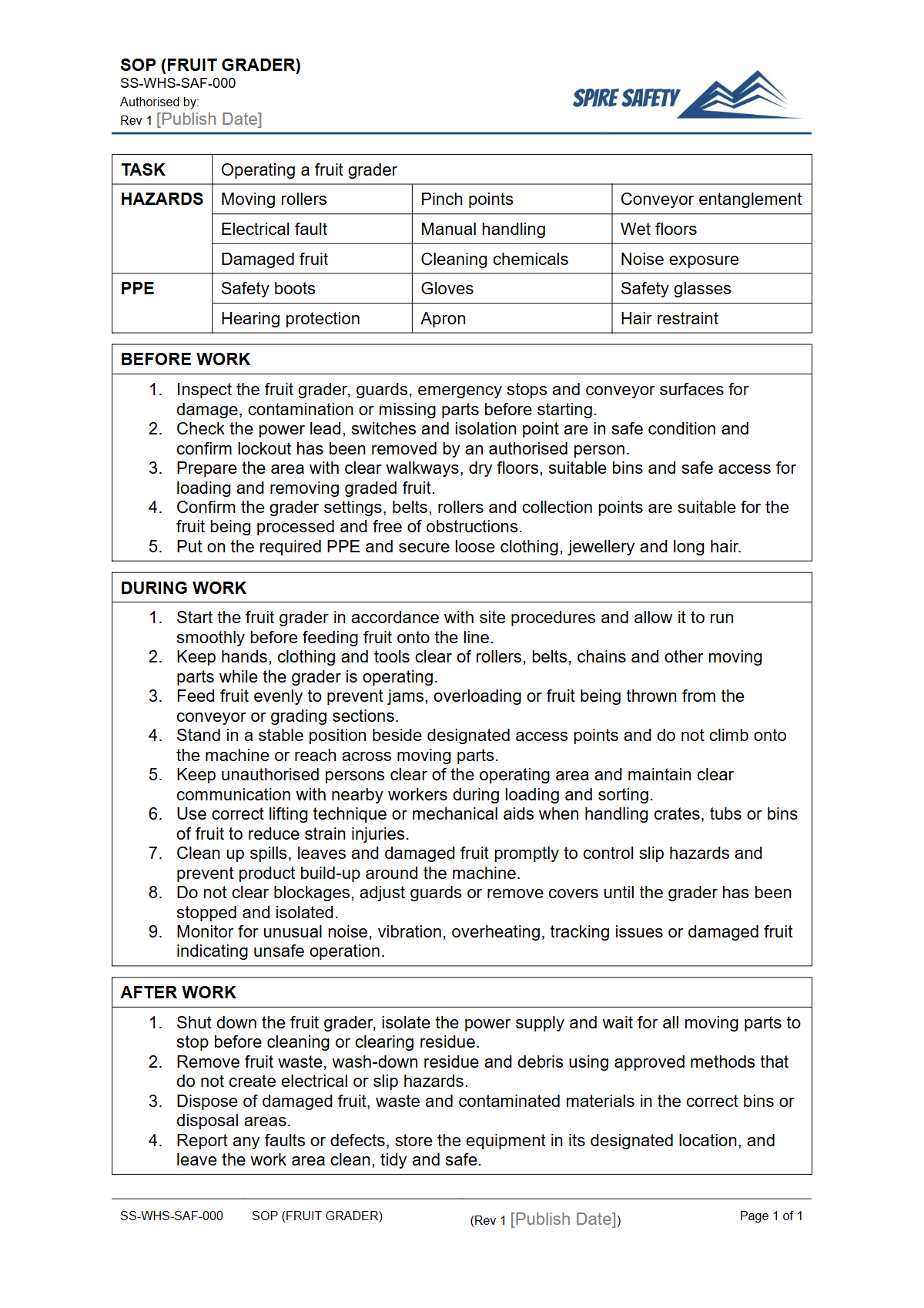
Download our free Safe Operating Procedure for fruit graders.
Free Safe Operating Procedure (Fruit Grader) Template
DOCX • 126 KB + PDF
Updated Oct 2026
No signup required
Purpose of the Free Safe Operating Procedure (Fruit Grader) Template
Operating fruit grading machinery presents significant risks, including entanglement in moving parts, crushing injuries, ergonomic strain from repetitive tasks, and exposure to noise. This free Safe Operating Procedure (Fruit Grader) Template provides a structured framework for documenting the step-by-step process required to operate this equipment safely.
It is designed for Australian workplaces in the agriculture, horticulture, and food processing sectors to help manage hazards and meet their duty of care obligations.
A well-documented Safe Operating Procedure (SOP) is more than just a checklist; it's a critical training tool and a record of the safe systems of work you have established. Implementing clear, specific SOPs across your operations is a foundational element of effective WHS management systems, demonstrating a proactive approach to risk management.
Key Hazards Covered
- Mechanical hazards (conveyors, belts, rollers)
- Ergonomic hazards (repetitive reaching, sorting, and manual handling)
- Electrical hazards during operation and maintenance
- Noise exposure
- Slips, trips, and falls around the work area
Video walkthrough
How to use the Free Safe Operating Procedure (Fruit Grader) Template
This resource is available for download as a customisable DOCX file and a ready-to-print PDF. It is essential to treat this document as a starting point.
We have drafted it to align with the model WHS framework, but you MUST customise it by adding details specific to your workplace, the exact model of your fruit grader, the types of produce being handled, and the outcomes of your own risk assessment.
Before finalising the SOP, consult with the workers who operate the equipment. Their firsthand experience is invaluable for creating a practical and effective procedure that reflects how work is actually performed.
Your SOP should clearly outline pre-start checks, operational steps, shutdown procedures, and emergency responses.
Standardising safety documentation across different types of machinery helps create a consistent safety culture. Many agricultural operations use a variety of equipment, each requiring its own procedure, such as the one detailed in our free Grain Drill SOP.
When to use a Safe Operating Procedure
A Safe Operating Procedure for a fruit grader should be a living document, actively used in daily operations. It is not a file-and-forget document. Key times to use the SOP include:
- Worker Training and Induction: For new employees or workers assigned to operate the grader for the first time.
- Refresher Training: For periodic verification of competency and to reinforce safe work habits.
- Pre-operational Checks: As a guide for operators to ensure the machine is safe to use before starting a shift.
- Incident Investigations: To compare standard procedure against actual practice when a near miss or injury occurs.
The SOP should also be reviewed and updated regularly. A systematic review process, often as part of broader WHS compliance auditing, ensures the procedure remains current with equipment modifications, changes in legislation, or new hazards identified in the workplace.
In any workplace, emergencies can occur unexpectedly. While this SOP covers machine-specific emergencies like jams, it's also part of a wider safety net.
Having clear procedures for medical emergencies is equally important, which is why resources like a Defibrillator Operation Safe Operating Procedure are critical.
Who should use this Safe Operating Procedure
This SOP is intended for several key roles within an organisation to ensure a comprehensive approach to safety.
- Operators: To understand and follow the correct, safe steps for using the fruit grader every day.
- Supervisors: To train workers, monitor compliance, and ensure safety standards are being met on the floor.
- Maintenance Personnel: To understand the correct isolation, lockout/tagout, and shutdown procedures before commencing any maintenance or repair work.
- WHS Managers and Officers: To use as part of the overall risk management framework, for record-keeping, and as a tool for safety audits and continuous improvement.
It's a common mistake to overlook simple equipment, but even seemingly low-risk items can cause serious injury if used incorrectly. That's why formal procedures are vital for all workplace equipment, as demonstrated by our free Step Ladder SOP template.
For businesses facing complex safety challenges or seeking to overhaul their safety documentation, expert guidance can provide clarity and direction. Our general WHS consulting services can help your organisation build robust and practical safety systems tailored to your specific industry and operational needs.
Common mistakes
Common mistakes to avoid
- Using a generic template without customising it with site-specific details and risk controls.
- Failing to adequately train workers on the SOP's contents and verifying their understanding.
- Not reviewing or updating the SOP after an incident, near miss, or change in process.
- Focusing solely on machine hazards and neglecting ergonomic risks like repetitive strain.
Legal references
Legal considerations
The following legal requirements may be relevant to this type of work.
- Work Health and Safety Act (Harmonised) — Provides the primary duties for protecting workers and other people from work health and safety risks.
- Work Health and Safety Regulations (Harmonised) — Sets out requirements supporting the management of workplace hazards and risks.
The following codes may be relevant to this type of work.
- Managing WHS Risks Code of Practice — Provides practical guidance on identifying hazards, assessing risks and applying effective controls.
- Work Health and Safety Consultation, Cooperation and Coordination Code of Practice — Provides practical guidance on consulting workers and coordinating with other duty holders.
- Managing the Work Environment and Facilities Code of Practice — Provides practical guidance on safe work environments, workplace facilities and related controls.
Did you know
Ergonomics in Agriculture
According to Safe Work Australia, the agriculture, forestry, and fishing industry has one of the highest rates of serious claims for musculoskeletal disorders, often stemming from repetitive tasks common in sorting and packing.
FAQ
Frequently asked questions
01What are the main hazards of operating a fruit grader?
02Is a Safe Operating Procedure a legal requirement in Australia?
03How often should we review our Fruit Grader SOP?
04Can I use this template for other types of agricultural sorting equipment?
Share this resource
Free Safe Operating Procedure (Fruit Grader) Template
Browse Categories
How To Use It
- 1Download and open in Word or PDF.
- 2Replace the placeholders with your business details.
- 3Get it reviewed by a WHS specialist before rollout.
Need it customised?
Our WHS consultants can adapt this template to your site, run a gap analysis, or audit what you already have in place.
Book a Free Consultation WHS consulting servicesor call 1300 156 382
Related templates
- Free Safe Operating Procedure (Fruit Picking) Template
- Free Safe Operating Procedure (Fruit Sorting) Template
- Free Safe Operating Procedure (Fuel Dock Operation) Template
- Free Safe Operating Procedure (Fuel Hydrant Cart) Template
- Free Safe Operating Procedure (Fuel Line Disconnect) Template
- Free Safe Operating Procedure (Fuel Spill Mat Setup) Template