
Free Safe Operating Procedure (Funeral Vehicle Cleaning) Template
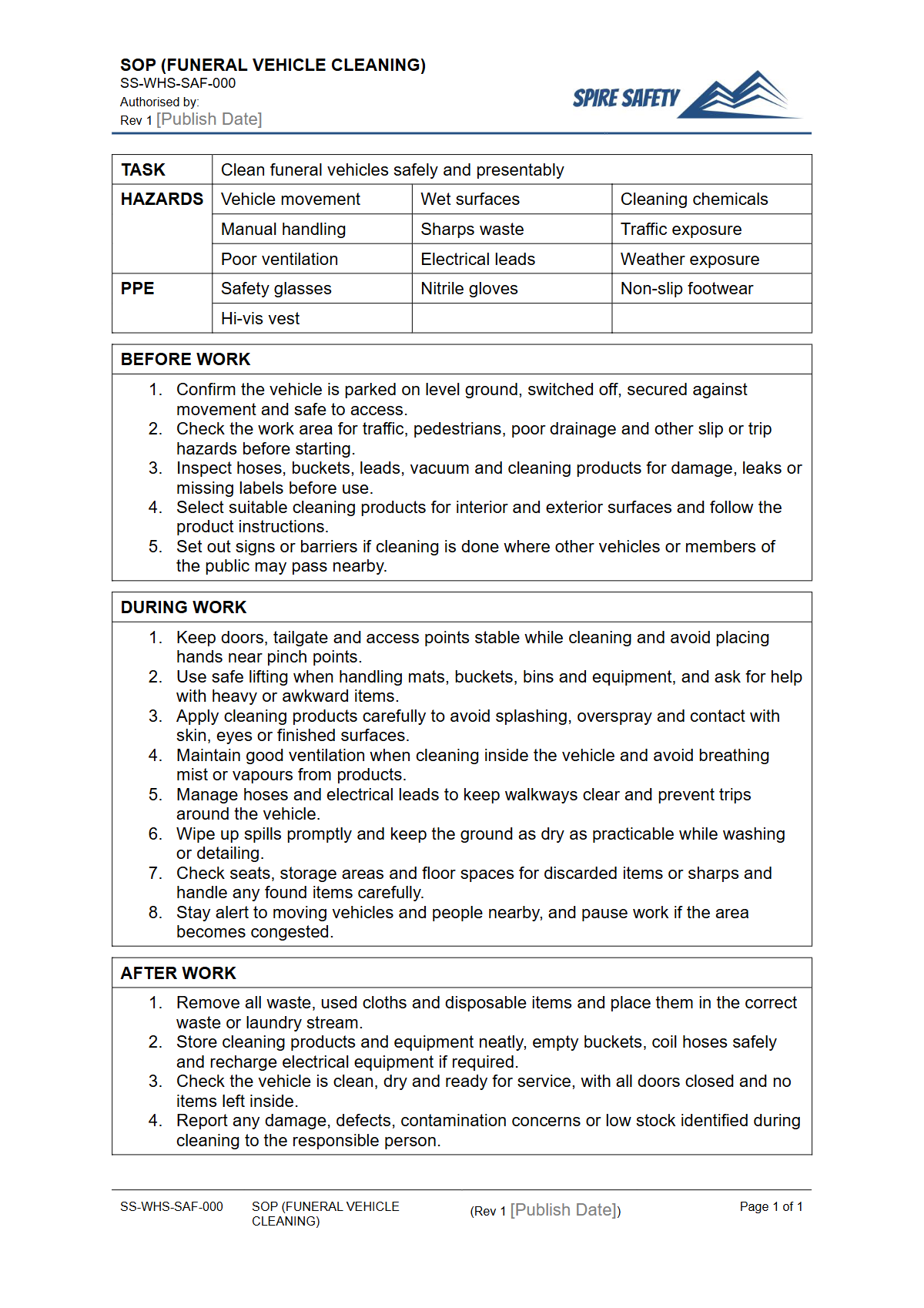
Download our Free Safe Operating Procedure (Funeral Vehicle Cleaning) Template. This customisable DOCX & PDF helps manage biological and chemical risks.
Free Safe Operating Procedure (Funeral Vehicle Cleaning) Template
DOCX • 126 KB + PDF
Updated Oct 2026
No signup required
Purpose of the Free Safe Operating Procedure (Funeral Vehicle Cleaning) Template
This Free Safe Operating Procedure (Funeral Vehicle Cleaning) Template provides a structured framework for outlining the safest and most effective way to clean and decontaminate hearses and other funeral vehicles. The task involves significant risks, including exposure to biological hazards, hazardous chemicals, and ergonomic strains.
Using a documented SOP helps your organisation meet its duty of care by systematically identifying these hazards and implementing robust control measures. It ensures all workers follow a consistent, safe process, reducing the risk of injury, illness, and cross-contamination.
A well-implemented SOP is a fundamental component of effective WHS management systems. It serves as a vital training tool for new employees and a reference point for experienced staff, promoting a proactive safety culture within your funeral service business.
Video walkthrough
How to use the Free Safe Operating Procedure (Funeral Vehicle Cleaning) Template
This document is provided as a customisable template in both DOCX and PDF formats. To use it effectively, you must adapt it to the specific circumstances of your workplace.
This involves detailing the exact cleaning agents you use, the types of vehicles in your fleet, your specific work environment, and the PPE you provide. Review the document section by section and replace the placeholder text with information relevant to your operations.
Important: We have drafted this template to align with the model WHS framework, but it is not a complete safety solution on its own. Your responsibility as a PCBU is to ensure the final document accurately reflects your workplace's risks and control measures.
If you are unsure how to conduct a risk assessment or customise this document, engaging professional support from a WHS consulting firm can provide clarity and ensure your procedures are comprehensive.
When to use this Safe Operating Procedure
A Safe Operating Procedure for funeral vehicle cleaning should be integrated into your daily operations. It is essential to use it in the following situations:
- Worker Training and Induction: Every worker assigned to cleaning tasks must be trained on the SOP before starting the job.
- Pre-Task Reference: Workers should review the SOP as needed to refresh their understanding of the steps and safety requirements.
- Incident Investigations: Following any incident or near miss related to vehicle cleaning, the SOP should be reviewed to identify any gaps or areas for improvement.
- Emergency Preparedness: The SOP should include steps for responding to emergencies, such as chemical spills or first aid events. Your emergency plans might also reference specific procedures like our Free Safe Operating Procedure (Defibrillator Operation) template.
- Process Audits: Use the SOP as a benchmark during safety inspections and audits to verify that safe work practices are being followed consistently.
Who should use this Safe Operating Procedure
This SOP is intended for use by several groups within a funeral service organisation:
- Workers (Funeral Attendants, Detailers): The primary users who will follow the step-by-step instructions to perform their cleaning duties safely.
- Supervisors and Managers: Responsible for training workers on the SOP, ensuring it is followed, and conducting regular reviews and updates.
- Persons Conducting a Business or Undertaking (PCBUs): Business owners and directors who hold the ultimate responsibility for providing a safe work environment and safe systems of work.
The procedure helps ensure everyone understands their responsibilities, from preparing the cleaning area to disposing of waste materials correctly. It also covers the safe use of equipment, such as using appropriate access platforms or ladders for cleaning vehicle roofs, a task which may be guided by a separate document like our FREE Step Ladder SOP Template.
Regularly reviewing your safety documents is a key part of maintaining compliance and ensuring worker safety. A WHS compliance auditing service can help you formally assess the effectiveness of your implemented procedures against legislative requirements.
This template is one of many documents available in our free WHS resources library. Browse our collection for other templates and checklists to help strengthen your safety management system.
Common mistakes
Common mistakes to avoid
- Using the template without customising it for specific workplace chemicals, vehicles, and procedures.
- Failing to provide or enforce the use of the specified Personal Protective Equipment (PPE).
- Inadequate training on the procedure, especially for new or casual staff who may be unfamiliar with the risks.
- Neglecting to include procedures for the safe disposal of contaminated waste, cloths, and PPE.
Legal references
Legal considerations
The following legal requirements may be relevant to this type of work.
- Work Health and Safety Act (Harmonised) — Provides the primary duties for protecting workers and other people from work health and safety risks.
- Work Health and Safety Regulations (Harmonised) — Sets out requirements supporting the management of workplace hazards and risks.
The following codes may be relevant to this type of work.
- Managing WHS Risks Code of Practice — Provides practical guidance on identifying hazards, assessing risks and applying effective controls.
- Work Health and Safety Consultation, Cooperation and Coordination Code of Practice — Provides practical guidance on consulting workers and coordinating with other duty holders.
- Managing the Work Environment and Facilities Code of Practice — Provides practical guidance on safe work environments, workplace facilities and related controls.
Did you know
Infection Control
The Australian Guidelines for the Prevention and Control of Infection in Healthcare recommend routine environmental cleaning as a key strategy to minimise the risk of pathogen transmission.
Chemical Safety
Under WHS regulations, employers must provide workers with information, training, and instruction on the safe use, handling, and storage of hazardous chemicals used in the workplace.
FAQ
Frequently asked questions
01What are the main hazards when cleaning funeral vehicles?
02Is a Safe Operating Procedure a legal requirement in Australia?
03What Personal Protective Equipment (PPE) is needed for this task?
04How often should a funeral vehicle cleaning SOP be reviewed?
Share this resource
Free Safe Operating Procedure (Funeral Vehicle Cleaning) Template
Browse Categories
How To Use It
- 1Download and open in Word or PDF.
- 2Replace the placeholders with your business details.
- 3Get it reviewed by a WHS specialist before rollout.
Need it customised?
Our WHS consultants can adapt this template to your site, run a gap analysis, or audit what you already have in place.
Book a Free Consultation WHS consulting servicesor call 1300 156 382
Related templates
- Free Safe Operating Procedure (Furniture Steam Clean) Template
- Free Safe Operating Procedure (Fuse Puller) Template
- Free Safe Operating Procedure (Galvanising) Template
- Free Safe Operating Procedure (Gang Saw) Template
- Free Safe Operating Procedure (Gangway Inspection) Template
- Free Safe Operating Procedure (Gangway Use) Template