
Free Safe Operating Procedure (Gangway Inspection) Template
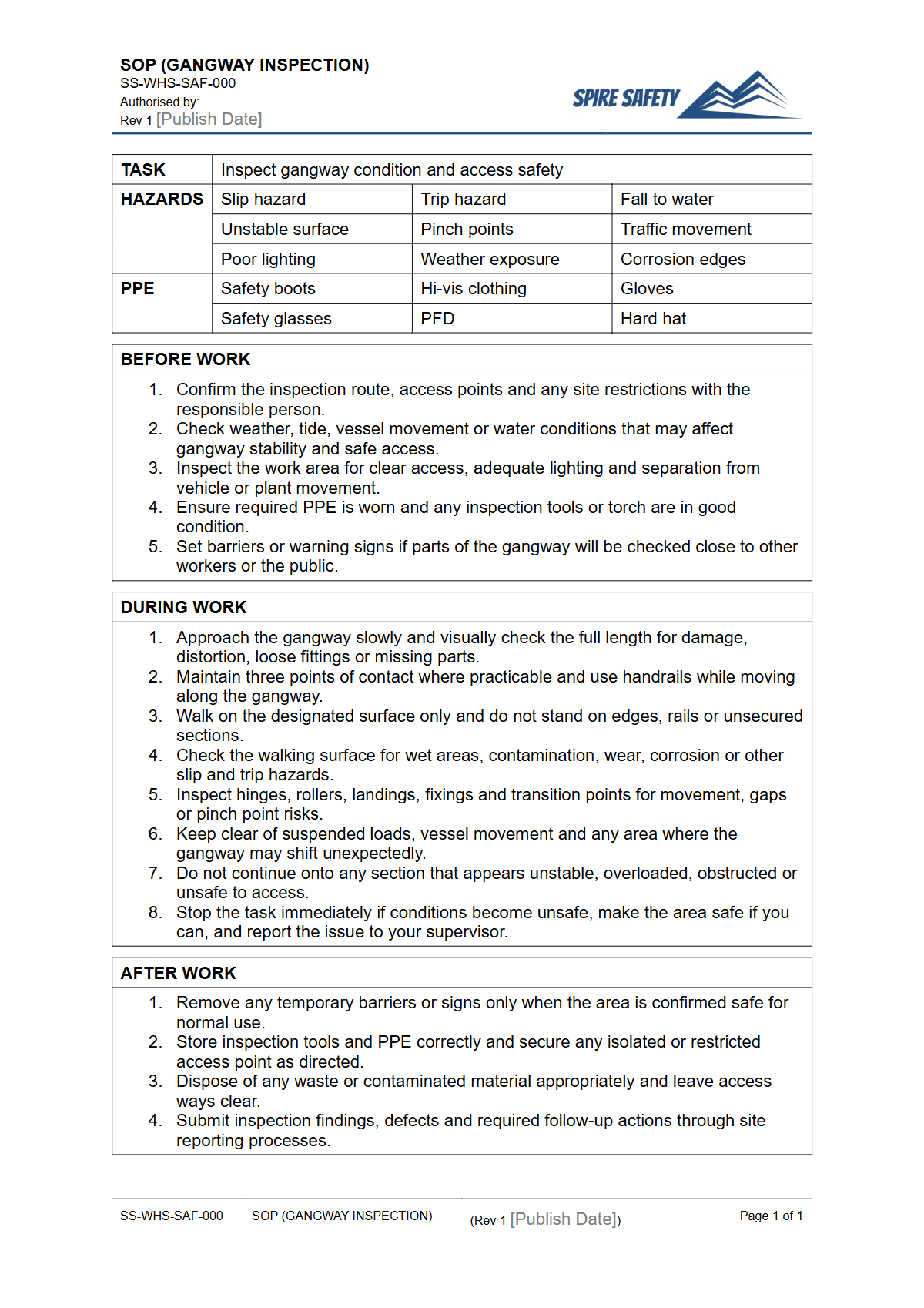
Download our free Safe Operating Procedure (Gangway Inspection) template. This customisable DOCX & PDF helps formalise your routine gangway safety checks.
Free Safe Operating Procedure (Gangway Inspection) Template
DOCX • 126 KB + PDF
Updated Oct 2026
No signup required
Purpose of the Free Safe Operating Procedure (Gangway Inspection) Template
A gangway or accommodation ladder provides critical access between a vessel and the shore, or between different levels on a worksite. Ensuring its structural integrity and safety is paramount to preventing slips, trips, and potentially fatal falls.
This Free Safe Operating Procedure (Gangway Inspection) Template provides a clear, structured framework for documenting the inspection process, helping you systematically identify and control risks before they lead to an incident. A documented SOP is a fundamental component of effective WHS management systems, demonstrating a commitment to proactive safety management.
Using this Safe Operating Procedure helps a Person Conducting a Business or Undertaking (PCBU) meet their primary duty of care. By formalising inspection requirements, you ensure that checks are performed consistently and that any identified hazards are managed appropriately.
Formal procedures also form a crucial part of your site's emergency preparedness plan; preventing a fall is always better than reacting to one, a principle that extends to having other critical procedures like our Defibrillator Operation SOP readily available.
Video walkthrough
How to use the Free Safe Operating Procedure (Gangway Inspection) Template
This document is designed as a comprehensive starting point. After downloading the DOCX or PDF file, you must adapt it to the specific context of your workplace.
A generic procedure is not sufficient; customisation is essential for effectiveness and to properly manage your unique risks.
Important: We provide this template to guide the development of your internal procedures. It is your responsibility to ensure the final document is tailored to the specific gangway model, site conditions, regulatory requirements, and operational risks present at your workplace.
The SOP should be reviewed and approved by a competent person before implementation.
Key sections to customise include:
- Associated Risks and Hazards: Detail specific hazards like potential for movement, pinch points, slippery surfaces due to weather or spills, and lighting conditions.
- Pre-Operational Inspection Checklist: This is the core of the document. Customise this checklist to include checks for structural integrity (welds, corrosion, cracks), handrails and stanchions, decking surface, securing points, rollers or wheels, and safety nets.
- Step-by-Step Procedure: Outline the safe sequence for conducting the inspection, including how to approach the gangway, what to look for, and how to record findings.
- Corrective Actions: Define the process for when a defect is found. This should include tagging the equipment as 'Out of Service' and procedures for reporting and repair.
This process of risk assessment and procedure customisation applies to all workplace equipment. For example, similar principles should be applied when formalising procedures for other access equipment using resources like our free step ladder SOP template.
When to use this Safe Operating Procedure
A gangway inspection SOP should be used to guide regular safety checks. The frequency of these inspections depends on factors like the level of use, the operating environment (e.g., marine conditions), and manufacturer recommendations. A common schedule includes:
- Pre-use checks: A quick visual inspection before each period of use to identify obvious defects.
- Periodic detailed inspections: A thorough, documented inspection conducted at regular intervals (e.g., weekly or monthly).
- Post-maintenance or repair: A full inspection to verify that the gangway is safe to return to service.
- After an incident or near-miss: An inspection to identify any contributing equipment faults.
Who should use it
This Safe Operating Procedure should be used by personnel who are deemed competent and have been assigned responsibility for workplace safety and equipment inspections. This includes roles such as:
- WHS Managers and Safety Officers
- Site Supervisors and Forepersons
- Vessel Masters, Chief Officers, or Duty Officers
- Maintenance Personnel
- Designated and trained workers
Individuals in these roles are often responsible for overseeing a wide range of operational procedures, including those for other high-risk plant. For instance, a site supervisor may need to supports your compliance efforts across multiple SOPs, such as our free Telehandler SOP Template. Having clear, documented procedures is essential for everyone's safety.
Documented SOPs are also a key piece of evidence reviewed during any formal WHS compliance auditing process. If you require assistance in developing a comprehensive safety framework for your organisation, our expert WHS consulting team can provide tailored support.
Explore our complete free WHS resources library for more templates and guides to support your safety management system.
Common mistakes
Common mistakes to avoid
- Using the template 'as-is' without customising it for specific site conditions and gangway types.
- Failing to keep accurate, dated records of inspections and any corrective actions taken.
- Overlooking 'minor' issues like worn non-slip surfaces, minor corrosion, or slightly loose handrails.
- Not providing adequate training to the personnel assigned to conduct the inspections.
Legal references
Legal considerations
The following legal requirements may be relevant to this type of work.
- Work Health and Safety Act (Harmonised) — Provides the primary duties for protecting workers and other people from work health and safety risks.
- Work Health and Safety Regulations (Harmonised) — Sets out requirements supporting the management of workplace hazards and risks.
The following codes may be relevant to this type of work.
- Managing WHS Risks Code of Practice — Provides practical guidance on identifying hazards, assessing risks and applying effective controls.
- Work Health and Safety Consultation, Cooperation and Coordination Code of Practice — Provides practical guidance on consulting workers and coordinating with other duty holders.
- Managing the Work Environment and Facilities Code of Practice — Provides practical guidance on safe work environments, workplace facilities and related controls.
Did you know
Falls are a Major Risk
Slips, trips, and falls are a leading cause of serious workplace injuries in Australia. Even a fall from the relatively low height of a gangway onto a hard surface or into water can result in severe harm or fatality.
FAQ
Frequently asked questions
01What is a gangway inspection Safe Operating Procedure?
02How often should a gangway be inspected in Australia?
03Who is responsible for inspecting a gangway?
04What should be included in a gangway inspection checklist?
Share this resource
Free Safe Operating Procedure (Gangway Inspection) Template
Browse Categories
How To Use It
- 1Download and open in Word or PDF.
- 2Replace the placeholders with your business details.
- 3Get it reviewed by a WHS specialist before rollout.
Need it customised?
Our WHS consultants can adapt this template to your site, run a gap analysis, or audit what you already have in place.
Book a Free Consultation WHS consulting servicesor call 1300 156 382
Related templates
- Free Safe Operating Procedure (Gangway Use) Template
- Free Safe Operating Procedure (Gantry Crane) Template
- Free Safe Operating Procedure (Garage Door Reset) Template
- Free Safe Operating Procedure (Garage Door Service) Template
- Free Safe Operating Procedure (Garden Bed Edging) Template
- Free Safe Operating Procedure (Garden Bed Mulching) Template