
Free Safe Operating Procedure (Hose Flushing) Template
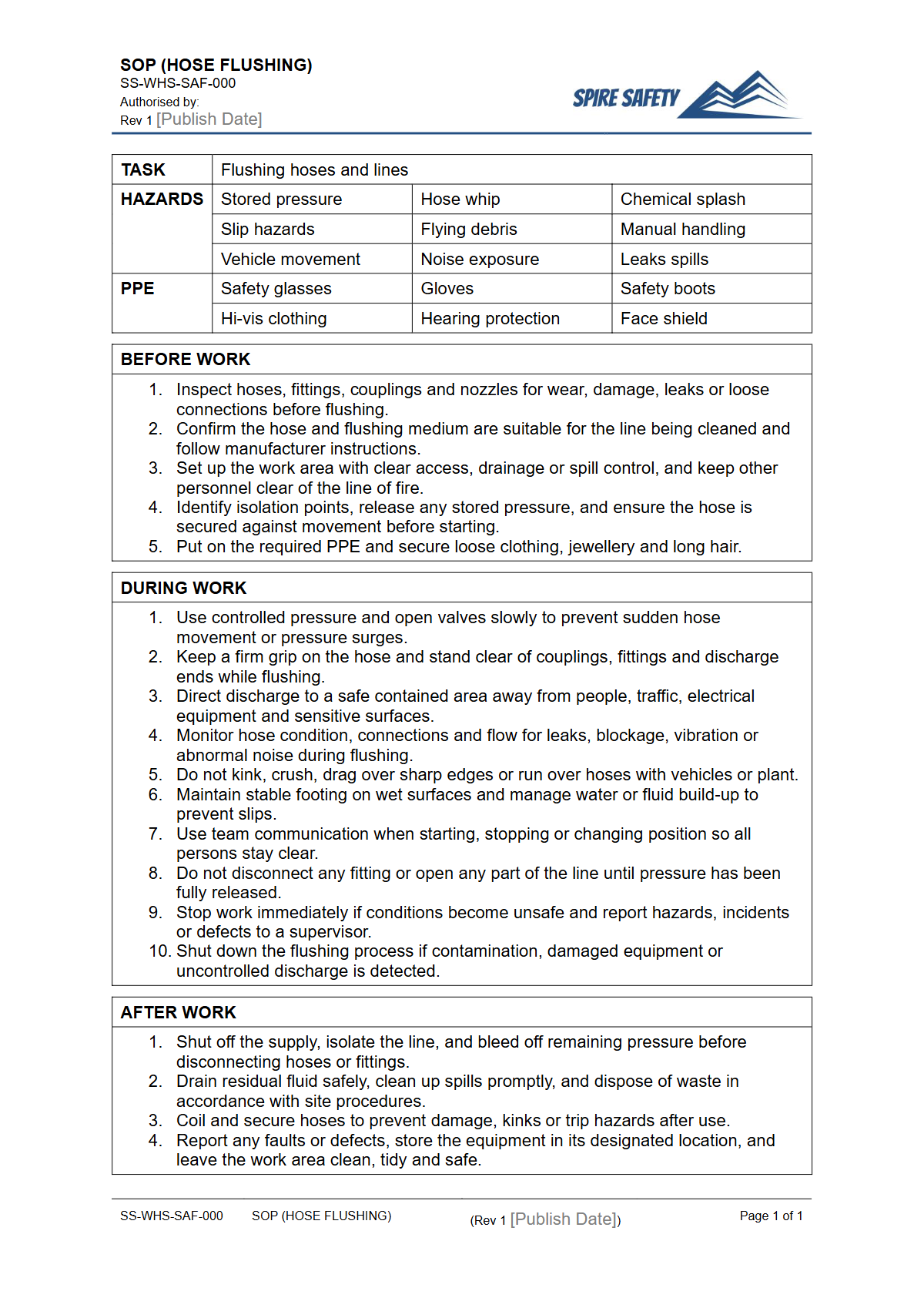
Download our free Safe Operating Procedure (Hose Flushing) Template to document safe work methods for this common but hazardous task.
Free Safe Operating Procedure (Hose Flushing) Template
DOCX • 126 KB + PDF
Updated Oct 2026
No signup required
Purpose of the Free Safe Operating Procedure (Hose Flushing) Template
Hose flushing is a critical maintenance task across many industries, from construction and mining to manufacturing and agriculture. While it may seem straightforward, it involves significant risks, including high-pressure fluid injection, chemical exposure, and environmental contamination.
This free Safe Operating Procedure (Hose Flushing) Template provides a structured framework for documenting the specific steps, hazards, and controls required to perform this task safely. Using a formal SOP helps ensure that every worker follows a consistent, tested method, reducing the likelihood of incidents and injuries.
It standardises the process, aids in training new personnel, and demonstrates a commitment to proactive safety management.
Video walkthrough
How to use the Free Safe Operating Procedure (Hose Flushing) Template
This Safe Operating Procedure is provided as a starting point in both DOCX and PDF formats. Download the file and customise it to reflect the specific equipment, fluids, pressures, and environmental conditions at your workplace.
It is essential to conduct a site-specific risk assessment and incorporate your findings into the final document. The template includes sections for outlining PPE, pre-operational checks, step-by-step procedures, and emergency responses.
Important: This is a template only. It must be customised to suit the unique circumstances of your workplace.
We strongly advise that you consult with operators, maintenance staff, and safety professionals to ensure the final SOP is comprehensive and effective. Integrating these documents is a key part of building robust WHS management systems that protect your team and your business.
When to use it
A hose flushing SOP should be used whenever a hose or its associated system requires internal cleaning. Common triggers for this task include:
- Commissioning new equipment or newly installed hoses.
- After a component failure (like a pump or valve) has introduced debris into the system.
- When changing the type of fluid used in a system (e.g., switching from one hydraulic oil to another).
- As part of a scheduled preventative maintenance program to control contamination levels.
- Before storing hoses for an extended period.
The principles in this SOP can be adapted for various systems, from simple water lines to complex hydraulic circuits or systems using compressed air. For related procedures, consider our Free Air Compressor SOP (Safe Operating Procedure) Template, which also deals with pressurised equipment.
Who should use it
This Safe Operating Procedure is intended for use by any person conducting or supervising hose flushing activities. This typically includes:
- Operators and Maintenance Personnel: The primary users who perform the task and must follow the procedure step-by-step.
- Supervisors and Team Leaders: Responsible for ensuring workers are trained on the SOP and follow it correctly. They also use it for pre-start meetings and job observations.
- Safety Managers and Coordinators: Use the SOP as a tool for risk assessment, training development, and incident investigation.
If you need expert assistance in developing and implementing task-specific procedures for your workplace, our WHS consulting team can provide tailored support.
Key Hazards in Hose Flushing
Before beginning work, all personnel must recognise the potential hazards associated with the task. These include:
- High-Pressure Fluid Injection: Pinhole leaks in pressurised hoses can inject fluid under the skin, causing severe injury.
- Chemical Exposure: Flushing agents or residual system fluids may be hazardous upon skin contact, inhalation, or ingestion.
- Stored Energy: Failure to depressurise the system can lead to violent whipping of hoses or uncontrolled release of fluid.
- Slips, Trips, and Falls: Spilled fluid can create dangerously slippery surfaces.
- Environmental Harm: Improper disposal of waste fluid can contaminate soil and waterways.
Documenting procedures for complex equipment is equally important, as seen in our FREE Trencher SOP Template which addresses a different set of mechanical and operational hazards.
Essential Control Measures
Your customised SOP should detail specific control measures to mitigate the identified hazards. Key controls include:
- Isolation and Depressurisation: Following a formal lockout-tagout (LOTO) procedure to isolate energy sources and safely release all stored pressure before work begins.
- Personal Protective Equipment (PPE): Mandating the use of appropriate PPE, such as impact-rated safety glasses and a face shield, chemical-resistant gloves, and protective overalls.
- Spill Containment: Using drip trays, bunding, and absorbent materials to capture all waste fluid and prevent spills.
- Correct Equipment: Ensuring all fittings, nozzles, and temporary connections are correctly rated for the pressures involved.
- Communication: Clearly marking the work area with signs and barriers to prevent unauthorised personnel from entering.
This template is one of many documents available in our free WHS resources library to help you build a safer workplace.
Common mistakes
Common mistakes to avoid
- Failing to fully depressurise the system and check for stored energy before disconnecting hoses.
- Using an incompatible flushing fluid that can damage hose linings, seals, or other system components.
- Not providing adequate spill containment, leading to environmental contamination and slip hazards.
- Neglecting to inspect hoses, fittings, and connections for wear, cracks, or damage before starting the task.
Legal references
Legal considerations
The following legal requirements may be relevant to this type of work.
- Work Health and Safety Act (Harmonised) — Provides the primary duties for protecting workers and other people from work health and safety risks.
- Work Health and Safety Regulations (Harmonised) — Sets out requirements supporting the management of workplace hazards and risks.
The following codes may be relevant to this type of work.
- Managing WHS Risks Code of Practice — Provides practical guidance on identifying hazards, assessing risks and applying effective controls.
- Work Health and Safety Consultation, Cooperation and Coordination Code of Practice — Provides practical guidance on consulting workers and coordinating with other duty holders.
- Managing the Work Environment and Facilities Code of Practice — Provides practical guidance on safe work environments, workplace facilities and related controls.
Did you know
Fluid Injection Injury
High-pressure fluid from a pinhole leak in a hydraulic hose can inject oil deep into tissue, causing severe injury that requires immediate surgical intervention. The entry wound can be deceptively small.
Contamination Costs
Industry studies estimate that over 75% of hydraulic system failures are attributed to fluid contamination. Proper hose flushing is a critical step in preventing premature component wear and costly equipment failure.
FAQ
Frequently asked questions
01What PPE is required for hose flushing?
02How do I manage hazardous waste fluid from flushing?
03What's the difference between a SOP and a SWMS for hose flushing?
04How often should a hose flushing SOP be reviewed?
Share this resource
Free Safe Operating Procedure (Hose Flushing) Template
Browse Categories
How To Use It
- 1Download and open in Word or PDF.
- 2Replace the placeholders with your business details.
- 3Get it reviewed by a WHS specialist before rollout.
Need it customised?
Our WHS consultants can adapt this template to your site, run a gap analysis, or audit what you already have in place.
Book a Free Consultation WHS consulting servicesor call 1300 156 382
Related templates
- Free Safe Operating Procedure (Hose Reel Use) Template
- Free Safe Operating Procedure (Hose Skiving Machine) Template
- Free Safe Operating Procedure (Hospital Bed Movement) Template
- Free Safe Operating Procedure (Hospital Cot Cleaning) Template
- Free Safe Operating Procedure (Hot Air Welder) Template
- Free Safe Operating Procedure (Hot Display Cabinet) Template