
Free Safe Operating Procedure (Hydration Station Setup) Template
Properly setting up hydration stations is vital for preventing heat-related illnesses at work. Download our customisable Safe Operating Procedure template now.
Free Safe Operating Procedure (Hydration Station Setup) Template
DOCX • 126 KB + PDF
Updated Oct 2026
No signup required
Purpose of the Free Safe Operating Procedure (Hydration Station Setup) Template
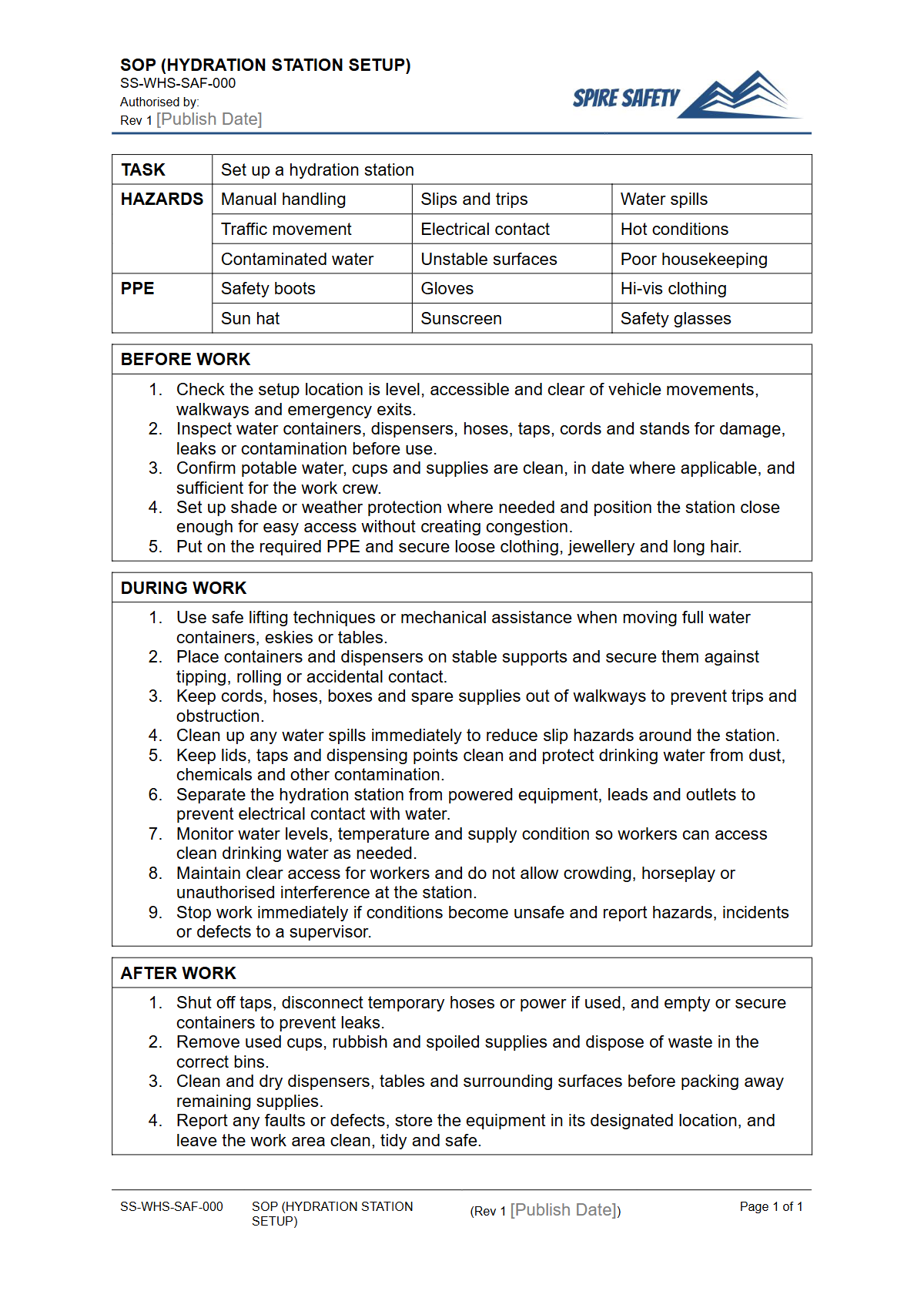
Working in hot conditions or performing physically demanding tasks without adequate hydration poses a significant risk to worker health and safety. This Free Safe Operating Procedure (Hydration Station Setup) Template provides a structured starting point for organisations to document the correct process for establishing, maintaining, and using hydration stations.
Using a formal SOP ensures consistency and helps meet duty of care obligations by actively managing the risks of dehydration, heat stress, and heat-related illnesses. It formalises your commitment to worker welfare, outlining clear steps for providing clean, accessible drinking water.
A documented procedure is a key part of any effective health and safety framework. By clearly defining responsibilities and processes, you reduce ambiguity and create a safer work environment for everyone. This template is designed to be adapted to your specific site conditions, integrating seamlessly into your broader comprehensive WHS management systems.
Video walkthrough
How to use the Free Safe Operating Procedure (Hydration Station Setup) Template
This template is provided in both DOCX and PDF formats to suit your needs. The DOCX file is fully editable, allowing you to tailor the content to the specific requirements of your workplace, including different environmental conditions, types of work performed, and available equipment.
Integrating this procedure might involve referencing other key documents, such as a Safe Operating Procedure for a deep fryer in a hot kitchen environment.
Follow these steps to get the most out of this resource:
- Download: Choose your preferred format (DOCX for editing or PDF for immediate use).
- Customise: This is the most critical step. Review every section and add, remove, or modify details to reflect your site-specific risks, controls, and personnel. We have provided a solid foundation, but you must adapt it to make it your own. Include details like the specific locations for stations, cleaning schedules, and the types of fluids provided (e.g., water, electrolyte drinks).
- Consult: Discuss the draft procedure with workers and their health and safety representatives. Their direct experience is invaluable for creating a practical and effective document.
- Train: Ensure all relevant personnel, including supervisors and workers, are trained on the finalised SOP. They must understand its importance, their responsibilities, and how to access and use the hydration stations correctly.
- Implement & Review: Put the procedure into practice and schedule regular reviews to ensure it remains current and effective, especially after any incidents or changes in the work environment.
When to use it
A hydration station SOP should be activated whenever workers are at an increased risk of dehydration. This is not limited to just outdoor work during summer. Consider implementing this procedure in situations such as:
- Working outdoors in direct sunlight or during periods of high ambient temperature and humidity.
- Performing physically strenuous tasks that induce heavy sweating, regardless of the weather.
- Working in indoor environments with high heat loads, such as foundries, commercial kitchens, laundries, or boiler rooms.
- When workers are required to wear heavy or non-breathable personal protective equipment (PPE) that can increase body temperature.
Proactive implementation before hot weather spells or demanding projects begin is a key part of managing heat-related risks effectively. This can be verified through processes like regular WHS compliance auditing to ensure procedures are followed.
Who should use it
This Safe Operating Procedure is intended for use by several key roles within an organisation:
- Persons Conducting a Business or Undertaking (PCBUs): To ensure they are meeting their primary duty of care to provide a safe work environment and adequate facilities for worker welfare.
- WHS Managers and Safety Officers: For developing, implementing, and monitoring the effectiveness of heat management and hydration programs.
- Supervisors and Team Leaders: To oversee the daily setup and maintenance of hydration stations and to encourage workers to stay hydrated. -
- Workers: To understand the procedures for accessing hydration, recognise the signs of dehydration, and know their responsibilities for maintaining personal hydration levels.
Even tasks that seem less strenuous can increase hydration needs, so it's good practice to have clear procedures for all types of work, similar to having a specific Circular Saw SOP for workshop tasks. For more templates and safety guides, you can browse our complete free WHS resources library.
Common mistakes
Common mistakes to avoid
- Placing hydration stations in inconvenient or hard-to-access locations.
- Failing to regularly clean and sanitise water coolers and containers, leading to contamination.
- Not providing options for electrolyte replacement during high-exertion or long-duration tasks.
- Assuming workers will stay hydrated without regular reminders and formal procedures.
Legal references
Legal considerations
The following legal requirements may be relevant to this type of work.
- Work Health and Safety Act (Harmonised) — Provides the primary duties for protecting workers and other people from work health and safety risks.
- Work Health and Safety Regulations (Harmonised) — Sets out requirements supporting the management of workplace hazards and risks.
The following codes may be relevant to this type of work.
- Managing WHS Risks Code of Practice — Provides practical guidance on identifying hazards, assessing risks and applying effective controls.
- Work Health and Safety Consultation, Cooperation and Coordination Code of Practice — Provides practical guidance on consulting workers and coordinating with other duty holders.
- Managing the Work Environment and Facilities Code of Practice — Provides practical guidance on safe work environments, workplace facilities and related controls.
Did you know
Cognitive Impact
Losing just 2% of your body's water content can lead to a significant decline in concentration, memory, and other cognitive functions, directly impacting safety and productivity.
Water vs. Electrolytes
During prolonged periods of heavy sweating, drinking only water may not be enough. Providing electrolyte replacement drinks helps replenish essential salts and minerals lost through sweat, preventing muscle cramps and other complications.
FAQ
Frequently asked questions
01What information should be included in a hydration station SOP?
02How often should hydration stations be inspected and cleaned?
03Is providing drinking water a legal requirement for Australian employers?
04What are the early signs of dehydration workers should look for?
Share this resource
Free Safe Operating Procedure (Hydration Station Setup) Template
Browse Categories
How To Use It
- 1Download and open in Word or PDF.
- 2Replace the placeholders with your business details.
- 3Get it reviewed by a WHS specialist before rollout.
Need it customised?
Our WHS consultants can adapt this template to your site, run a gap analysis, or audit what you already have in place.
Book a Free Consultation WHS consulting servicesor call 1300 156 382
Related templates
- Free Safe Operating Procedure (Hydraulic Breaker) Template
- Free Safe Operating Procedure (Hydraulic Crimper) Template
- Free Safe Operating Procedure (Hydraulic Grab) Template
- Free Safe Operating Procedure (Hydraulic Hose Testing) Template
- Free Safe Operating Procedure (Hydraulic Isolation) Template
- Free Safe Operating Procedure (Hydraulic Jack) Template