
Free Safe Operating Procedure (Laundry Stain Treatment) Template
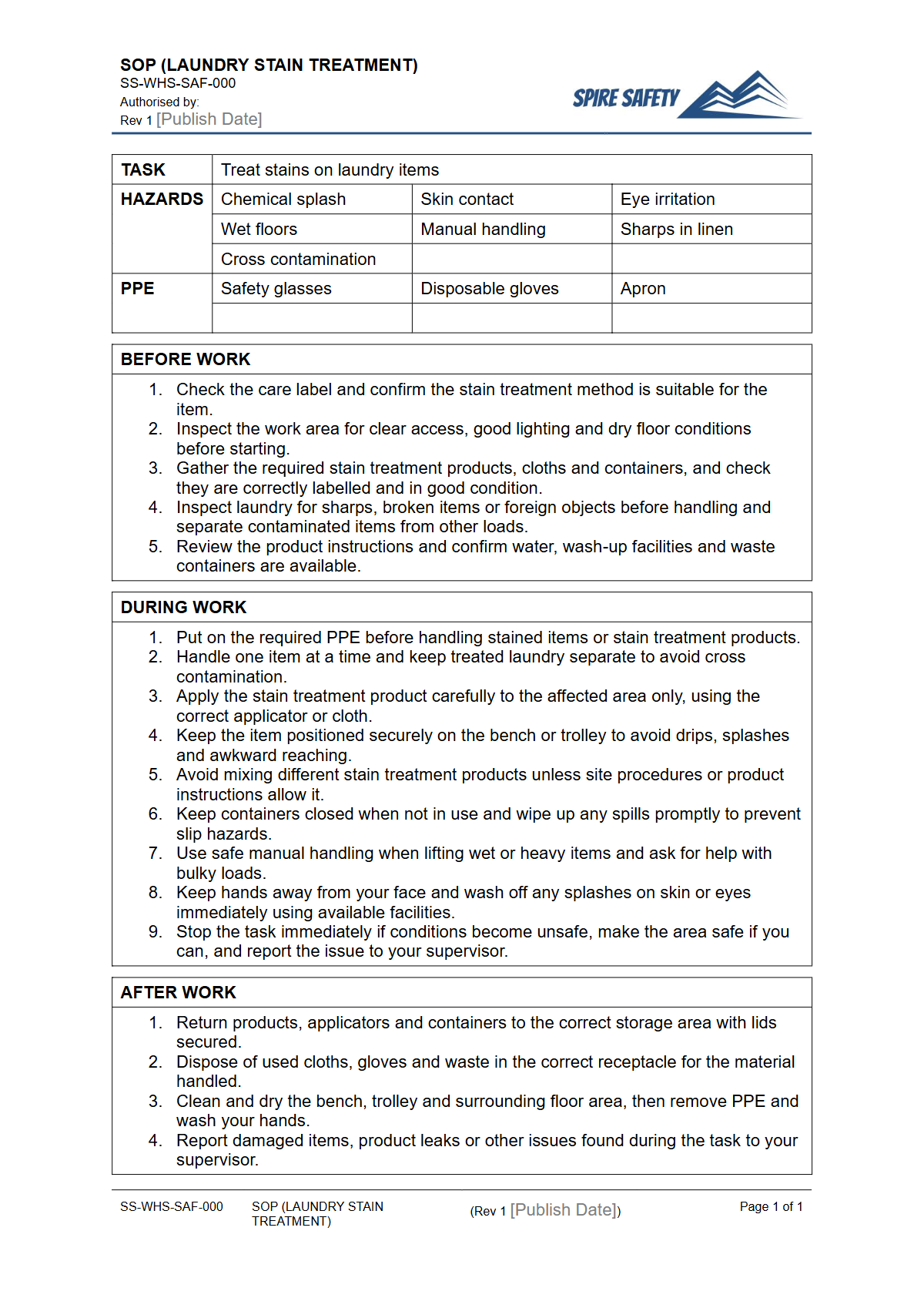
Download our free Safe Operating Procedure (Laundry Stain Treatment) template.
Free Safe Operating Procedure (Laundry Stain Treatment) Template
DOCX • 126 KB + PDF
Updated Oct 2026
No signup required
Purpose of the Free Safe Operating Procedure (Laundry Stain Treatment) Template
Effectively managing laundry operations, particularly stain treatment, involves handling various chemicals that can pose significant health and safety risks. Our Free Safe Operating Procedure (Laundry Stain Treatment) Template provides a structured framework for outlining the required steps to perform this task safely.
It is designed to help your organisation control hazards associated with chemical handling, such as skin irritation, respiratory issues, and eye damage. By documenting a clear process, you can standardise safe work practices, reduce the likelihood of incidents, and demonstrate a commitment to workplace safety.
This template serves as a critical component within broader comprehensive WHS management systems, helping to formalise procedures and ensure workers are aware of risks and control measures. It prompts consideration for hazard identification, personal protective equipment (PPE) requirements, spill response, and first aid measures.
Using this SOP helps standardise your approach to chemical safety, ensuring consistency across all staff and shifts.
Video walkthrough
How to use the Free Safe Operating Procedure (Laundry Stain Treatment) Template
This document is a starting point designed to be adapted to your specific operational needs. To use this free template, download the DOCX file and fill in the details relevant to your workplace.
This includes identifying the specific stain treatment chemicals used, detailing the exact step-by-step process, listing the required PPE, and outlining emergency procedures tailored to your environment. It is crucial to conduct a site-specific risk assessment to ensure all potential hazards are identified and controlled.
Important: This is a template only. We have provided a solid foundation based on Australian WHS principles, but you must customise this document with your site-specific information, including the types of chemicals, machinery, and unique environmental factors of your workplace.
Consultation with your workers is a key part of this customisation process.
For complex operations or if you require assistance in tailoring safety documents, engaging professional WHS consulting services can provide expert guidance. This ensures your procedures are robust and effectively manage the specific risks present in your workplace.
Beyond chemical handling, it's also important to document procedures for other common tasks, such as those covered in our step ladder Safe Operating Procedure, which is often relevant in storage and laundry areas.
When to use a Laundry Stain Treatment SOP
A Safe Operating Procedure for laundry stain treatment should be used whenever employees are required to handle and apply chemical agents to remove stains from fabrics. This is particularly critical in commercial settings such as hotels, hospitals, aged care facilities, and industrial laundries where a wide range of potent chemicals may be in use.
The SOP should be a primary training document for new employees and used for refresher training for existing staff. It should also be readily accessible in the work area for quick reference.
In the event of a medical emergency related to chemical exposure or any other incident, having clear procedures is vital. Your emergency planning should include immediate response actions, like those outlined in a Safe Operating Procedure for defibrillator operation, to ensure a swift and effective reaction.
Who should use this Safe Operating Procedure
This SOP is intended for all personnel involved in laundry tasks, including laundry attendants, housekeeping staff, and maintenance workers who may handle these chemicals. Supervisors and managers are responsible for ensuring the SOP is implemented, understood, and followed by all relevant staff.
They must also provide the necessary training and resources, including appropriate PPE. WHS managers and safety officers should use this document as a tool for risk management, training development, and incident investigation.
Regular review and updates to the SOP are essential to maintain its relevance and effectiveness. This process can be integrated into your schedule of regular WHS compliance audits to verify that the documented procedures align with actual work practices. You can find more templates to support your safety system in our free WHS resources library.
Common mistakes
Common mistakes to avoid
- Failing to read the Safety Data Sheet (SDS) before using a new chemical.
- Not wearing the correct PPE, especially safety glasses and appropriate gloves.
- Using chemicals in a poorly ventilated area, leading to inhalation risks.
- Mixing cleaning chemicals, which can create dangerous chemical reactions and toxic gases.
Legal references
Legal considerations
The following legal requirements may be relevant to this type of work.
- Work Health and Safety Act (Harmonised) — Provides the primary duties for protecting workers and other people from work health and safety risks.
- Work Health and Safety Regulations (Harmonised) — Sets out requirements supporting the management of workplace hazards and risks.
The following codes may be relevant to this type of work.
- Managing WHS Risks Code of Practice — Provides practical guidance on identifying hazards, assessing risks and applying effective controls.
- Work Health and Safety Consultation, Cooperation and Coordination Code of Practice — Provides practical guidance on consulting workers and coordinating with other duty holders.
- Managing the Work Environment and Facilities Code of Practice — Provides practical guidance on safe work environments, workplace facilities and related controls.
Did you know
Safety Data Sheets (SDS)
Under Australian WHS law, manufacturers and importers of hazardous chemicals must provide a Safety Data Sheet (SDS). An SDS contains critical information on a chemical's properties, health hazards, and safety precautions for handling, storage, and disposal.
Ventilation is Key
Many laundry chemicals release vapours that can be harmful if inhaled. Adequate ventilation, whether through mechanical systems or natural airflow, is a critical control measure to prevent the buildup of hazardous fumes in the workplace.
FAQ
Frequently asked questions
01What are the main hazards when performing laundry stain treatment?
02How often should a Safe Operating Procedure for laundry chemicals be reviewed?
03What PPE is typically required for laundry stain treatment?
04Is this laundry stain treatment SOP suitable for small businesses?
Share this resource
Free Safe Operating Procedure (Laundry Stain Treatment) Template
Browse Categories
How To Use It
- 1Download and open in Word or PDF.
- 2Replace the placeholders with your business details.
- 3Get it reviewed by a WHS specialist before rollout.
Need it customised?
Our WHS consultants can adapt this template to your site, run a gap analysis, or audit what you already have in place.
Book a Free Consultation WHS consulting servicesor call 1300 156 382
Related templates
- Free Safe Operating Procedure (Laundry Trolley Clean) Template
- Free Safe Operating Procedure (Laundry Washer) Template
- Free Safe Operating Procedure (Lavatory Service Cart) Template
- Free Safe Operating Procedure (Lawn Aeration) Template
- Free Safe Operating Procedure (Lawn Fertilising) Template
- Free Safe Operating Procedure (Lawn Hand Edging) Template