
Free Safe Operating Procedure (Leachate Area Check) Template
Download our free Safe Operating Procedure (Leachate Area Check) template.
Free Safe Operating Procedure (Leachate Area Check) Template
DOCX • 126 KB + PDF
Updated Oct 2026
No signup required
Purpose of the Free Safe Operating Procedure (Leachate Area Check) Template
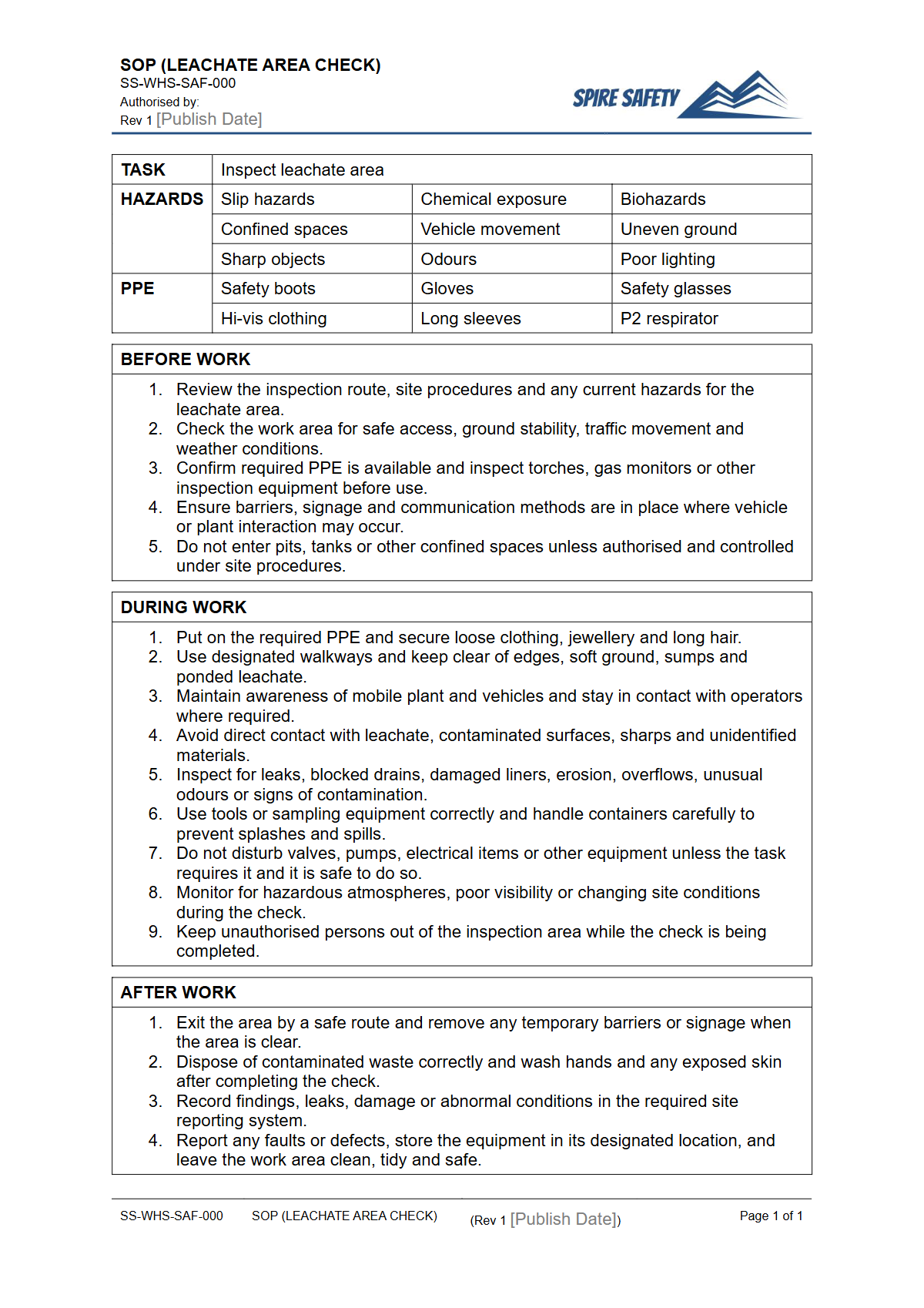
Managing landfill and waste disposal sites involves significant risks, particularly in leachate collection and treatment areas. This Free Safe Operating Procedure (Leachate Area Check) Template provides a structured framework for outlining the required safety steps for personnel conducting these critical inspections.
The primary purpose of this SOP is to provide a clear, step-by-step guide for safely performing checks of leachate ponds, sumps, pumps, and related infrastructure. It helps organisations meet their duty of care by controlling risks associated with hazardous substances, hazardous atmospheres, and physical hazards like slips, trips, and falls.
A well-implemented SOP is a fundamental component of effective WHS management systems, ensuring consistent and safe work practices are communicated and followed. This template acts as a starting point, aligned with Australian WHS principles, to formalise your procedures for this high-risk task.
Video walkthrough
How to use the Free Safe Operating Procedure (Leachate Area Check) Template
This document is a template and must be adapted for your specific site. Start by downloading the DOCX file and adding your company logo and details.
Next, a competent person must conduct a site-specific risk assessment and customise the procedure to reflect your unique environment, equipment, leachate composition, and control measures. This includes specifying the exact PPE required, emergency contacts, and atmospheric testing parameters.
The procedure should be comprehensive. For example, if maintenance involves digging new drainage channels, you might need to cross-reference your FREE Trencher SOP Template. Please note: We are not WHS consultants and this is a template only; it must be customised by a competent person to suit your workplace, plant, and specific risks before implementation.
When to use it
This Safe Operating Procedure should be used before any planned inspection or maintenance activity within a designated leachate management area. It is not just for major works; it should be applied consistently for all entries into the area. Common triggers for using the SOP include:
- Routine daily, weekly, or monthly checks of sumps, pumps, and pipework.
- Non-routine inspections required after significant rainfall events.
- Responding to equipment failures or system alarms.
- Collecting samples for environmental testing.
- Performing scheduled or breakdown maintenance on leachate infrastructure.
Who should use it
This procedure is intended for all personnel authorised to enter and work in or near leachate containment and processing areas. This typically includes, but is not limited to, the following roles:
- Environmental Officers
- Site Supervisors and Managers
- Landfill Operators
- Maintenance Fitters and Electricians
- Specialist Contractors
All users must be trained on the contents of the final, site-specific SOP and be deemed competent to perform the task safely. This includes training on hazard identification, the correct use of PPE, and emergency response actions.
Key Hazards and Controls
Leachate areas present a complex mix of hazards that must be managed. The SOP helps document controls for chemical exposure (toxic and corrosive substances), biological pathogens, and hazardous atmospheres like hydrogen sulphide (H2S) and methane, which can cause asphyxiation or explosions.
Essential control measures include pre-entry atmospheric testing, ventilation, and clear emergency response plans. In the event of a medical emergency, having clear protocols, such as those in a defibrillator operation Safe Operating Procedure, can be lifesaving.
Review and Consultation
Developing and refining this SOP should be a consultative process involving the workers who perform the task. For complex sites, engaging external expertise can provide valuable insight and ensure all risks are adequately addressed.
Spire Safety offers professional WHS consulting to help businesses develop robust safety frameworks for hazardous environments. Regular review, at least annually or after any incident, ensures the SOP remains current and effective.
By customising and implementing this procedure, you create a safer working environment and a clear standard for all personnel. For more templates and safety guides to support your operations, browse our complete free WHS resources library.
Common mistakes
Common mistakes to avoid
- Assuming PPE for general tasks is sufficient for specific chemical hazards.
- Entering a sump or tank without conducting confined space entry procedures and atmospheric testing.
- Failing to document inspection findings, actions taken, and equipment maintenance.
- Not reviewing and updating the SOP after a near miss, incident, or change in process.
Legal references
Legal considerations
The following legal requirements may be relevant to this type of work.
- Work Health and Safety Act (Harmonised) — Provides the primary duties for protecting workers and other people from work health and safety risks.
- Work Health and Safety Regulations (Harmonised) — Sets out requirements supporting the management of workplace hazards and risks.
The following codes may be relevant to this type of work.
- Managing WHS Risks Code of Practice — Provides practical guidance on identifying hazards, assessing risks and applying effective controls.
- Work Health and Safety Consultation, Cooperation and Coordination Code of Practice — Provides practical guidance on consulting workers and coordinating with other duty holders.
- Managing the Work Environment and Facilities Code of Practice — Provides practical guidance on safe work environments, workplace facilities and related controls.
Did you know
Leachate Composition
The chemical makeup of leachate can vary dramatically depending on the age of the landfill and the type of waste it contains, ranging from acidic in newer landfills to more neutral in older ones.
FAQ
Frequently asked questions
01What is leachate and why is it hazardous?
02How often should leachate area checks be conducted?
03What PPE is required for a leachate area check?
04Can this SOP be used for any landfill site?
Share this resource
Free Safe Operating Procedure (Leachate Area Check) Template
Browse Categories
How To Use It
- 1Download and open in Word or PDF.
- 2Replace the placeholders with your business details.
- 3Get it reviewed by a WHS specialist before rollout.
Need it customised?
Our WHS consultants can adapt this template to your site, run a gap analysis, or audit what you already have in place.
Book a Free Consultation WHS consulting servicesor call 1300 156 382
Related templates
- Free Safe Operating Procedure (Leachate Spill Cleanup) Template
- Free Safe Operating Procedure (Lead Acid Battery Work) Template
- Free Safe Operating Procedure (Lead Paint Removal) Template
- Free Safe Operating Procedure (Leaf Blower) Template
- Free Safe Operating Procedure (Leaf Collection) Template
- Free Safe Operating Procedure (Leaf Litter Removal) Template