
Free Safe Operating Procedure (Leaf Litter Removal) Template
Download our free Safe Operating Procedure (Leaf Litter Removal) Template. This customisable DOCX and PDF helps formalise your safety processes.
Free Safe Operating Procedure (Leaf Litter Removal) Template
DOCX • 126 KB + PDF
Updated Oct 2026
No signup required
Purpose of the Free Safe Operating Procedure (Leaf Litter Removal) Template
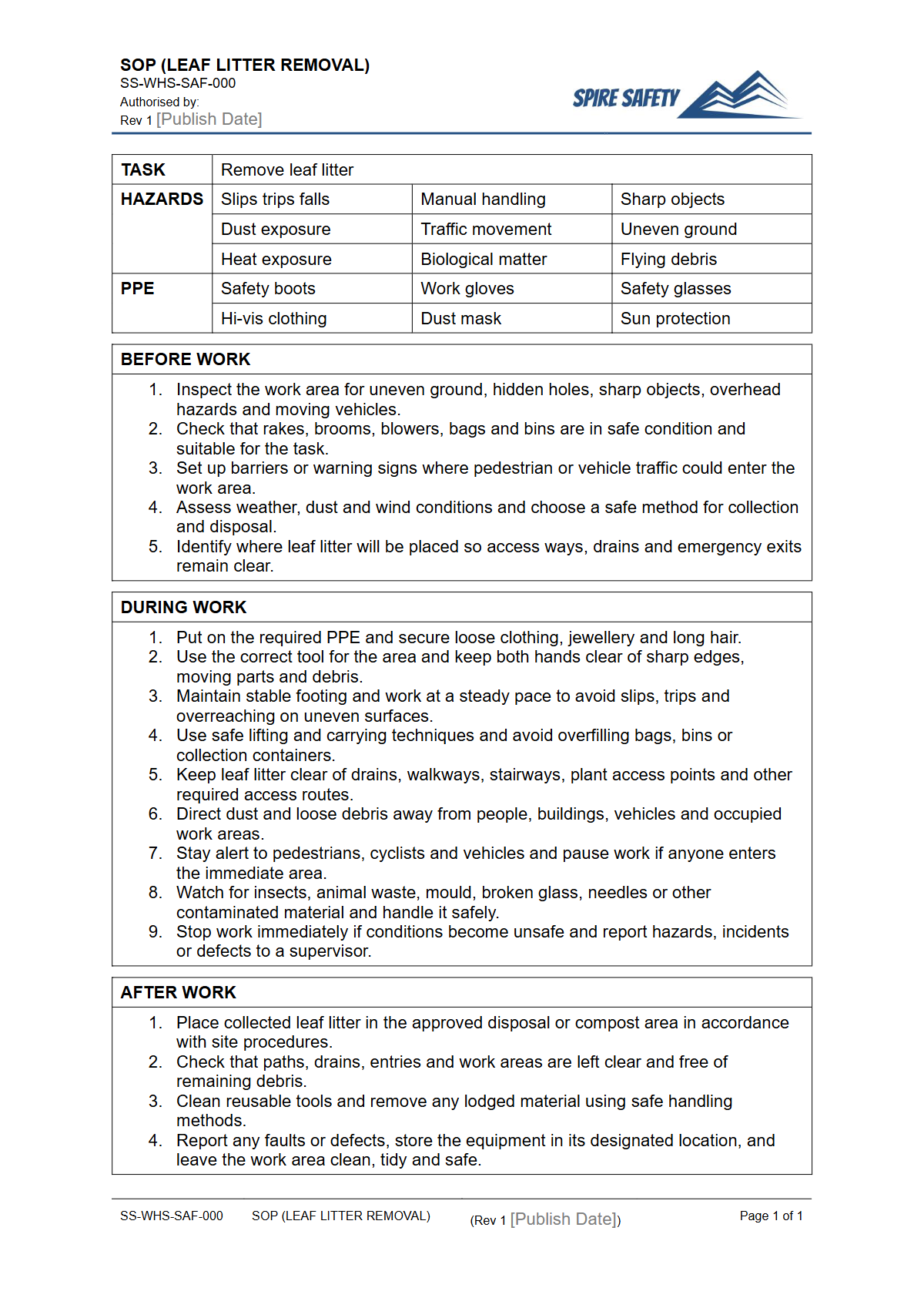
Managing grounds and outdoor spaces involves routine tasks that carry significant risks if not properly controlled. This free Safe Operating Procedure (Leaf Litter Removal) Template provides a structured framework for documenting the hazards and control measures associated with clearing leaves and organic debris.
While it may seem like a simple task, leaf removal presents risks such as slips, trips, and falls on wet leaves, musculoskeletal injuries from manual handling, and exposure to noise, dust, and hidden pests. In many parts of Australia, accumulated leaf litter also poses a serious fire hazard.
Using this SOP helps your organisation establish a consistent, safe method for the task. It serves as an essential tool for training workers, conducting risk assessments, and demonstrating due diligence in managing workplace hazards.
By formalising your process, you can ensure everyone understands the required steps, the necessary personal protective equipment (PPE), and the emergency procedures. This document is a critical component for integrating specific job-safety instructions into your broader WHS management systems.
Video walkthrough
How to use the Free Safe Operating Procedure (Leaf Litter Removal) Template
This Safe Operating Procedure for leaf litter removal is provided as a fully editable DOCX file, along with a PDF version for easy printing and distribution. It is designed as a comprehensive starting point, aligned with Australian WHS principles, which you can adapt to the unique context of your workplace.
IMPORTANT: This is a template only. We have provided a structured starting point based on common practice, but you must customise this document with your site-specific information.
This includes adding details about your specific equipment (e.g., make and model of leaf blowers), identifying unique hazards at your location (e.g., steep slopes, public access areas), listing your designated first aid officers, and specifying the exact PPE required by your risk assessment. A generic procedure is not sufficient to ensure safety.
Once customised, the SOP should be used for worker training and toolbox talks. Its effectiveness should be regularly reviewed to ensure it remains current and practical.
Periodically conducting a WHS compliance audit can help verify that the procedures outlined in the SOP are being consistently followed in practice.
When to use it
A formal procedure for leaf removal is essential in various commercial and residential settings. It should be implemented as part of regular operations and in response to specific environmental conditions. Key times to use this SOP include:
- Seasonal Clean-ups: Particularly during autumn when leaf fall is at its peak, requiring coordinated efforts to keep pathways, drains, and car parks clear.
- Pre-Fire Season Preparation: For properties in or near bushfire-prone areas, clearing leaf litter from grounds, roofs, and gutters is a critical fire mitigation activity. This can involve working at heights, a task that requires its own set of controls as detailed in our free Step Ladder SOP template.
- Routine Grounds Maintenance: As part of a daily, weekly, or monthly maintenance schedule to prevent accumulation and maintain a safe, tidy property.
- Post-Storm Clean-up: After high winds or heavy rain, which can deposit large amounts of debris and create immediate slip and trip hazards.
Who should use it
This SOP is intended for all personnel involved in planning, executing, and supervising leaf litter removal tasks. This includes:
- Groundskeepers and Maintenance Staff: The primary users who will follow the step-by-step procedure to perform the task safely.
- Gardeners and Landscapers: Whether employed directly or as contractors, they should be inducted on the procedure before starting work.
- Supervisors and Team Leaders: Responsible for ensuring the SOP is followed, providing the necessary resources (like PPE), and monitoring work.
- WHS Managers and Officers: Responsible for developing, reviewing, and updating the SOP as part of the overall safety management system, and ensuring it addresses all identified risks.
The SOP should also detail emergency response actions, including first aid for injuries like sprains, strains, or heat stress. Having clear instructions and trained personnel is vital, as is ensuring equipment like first aid kits are readily available. In the event of a serious incident like a fall or cardiac event, having a documented plan and accessible equipment is critical, which is why many sites also maintain a Safe Operating Procedure for defibrillator operation.
After the task is complete, proper tool maintenance is essential for safety and longevity. This includes cleaning equipment of dust and debris, which may involve using specific tools.
For instance, cleaning filters or casings might be done using brushes or controlled bursts of air, a process that shares principles with the safe use of workshop tools covered in our free Air Compressor SOP. Having a system for tool clean-down and storage prevents premature wear and ensures equipment is safe for its next use. Find more helpful documents like this in our free WHS resources library.
Common mistakes
Common mistakes to avoid
- Attempting to use a leaf blower on wet, heavy leaves, causing musculoskeletal strain.
- Failing to check for hidden pests like snakes, spiders, or wasps before clearing piles by hand.
- Creating large dust clouds that affect nearby workers or members of the public without adequate controls.
- Leaving collected piles of leaves in locations where they still pose a fire, trip, or pest hazard.
Legal references
Legal considerations
The following legal requirements may be relevant to this type of work.
- Work Health and Safety Act (Harmonised) — Provides the primary duties for protecting workers and other people from work health and safety risks.
- Work Health and Safety Regulations (Harmonised) — Sets out requirements supporting the management of workplace hazards and risks.
The following codes may be relevant to this type of work.
- Managing WHS Risks Code of Practice — Provides practical guidance on identifying hazards, assessing risks and applying effective controls.
- Work Health and Safety Consultation, Cooperation and Coordination Code of Practice — Provides practical guidance on consulting workers and coordinating with other duty holders.
- Managing the Work Environment and Facilities Code of Practice — Provides practical guidance on safe work environments, workplace facilities and related controls.
Did you know
Fire Hazard
Dry leaf litter is a major fuel source that can dramatically increase the intensity and spread of bushfires, particularly during ember attacks. Clearing it from within 10 metres of a building is a key part of property preparation.
Hidden Dangers
Piles of damp leaves can conceal hazards like uneven ground, potholes, broken glass, or sharp objects, increasing the risk of unexpected trips, falls, and injuries for both workers and pedestrians.
FAQ
Frequently asked questions
01What are the main hazards associated with leaf litter removal?
02Is a Safe Operating Procedure legally required for removing leaves in Australia?
03What PPE is typically required for leaf litter removal?
04How often should a leaf litter removal SOP be reviewed?
Share this resource
Free Safe Operating Procedure (Leaf Litter Removal) Template
Browse Categories
How To Use It
- 1Download and open in Word or PDF.
- 2Replace the placeholders with your business details.
- 3Get it reviewed by a WHS specialist before rollout.
Need it customised?
Our WHS consultants can adapt this template to your site, run a gap analysis, or audit what you already have in place.
Book a Free Consultation WHS consulting servicesor call 1300 156 382
Related templates
- Free Safe Operating Procedure (Leak Detection Spray) Template
- Free Safe Operating Procedure (Leather Cutter) Template
- Free Safe Operating Procedure (Leather Skiver) Template
- Free Safe Operating Procedure (Level Transmitter Test) Template
- Free Safe Operating Procedure (Life Raft Handling) Template
- Free Safe Operating Procedure (Lifebuoy Inspection) Template