
Free Safe Operating Procedure (Lifebuoy Inspection) Template
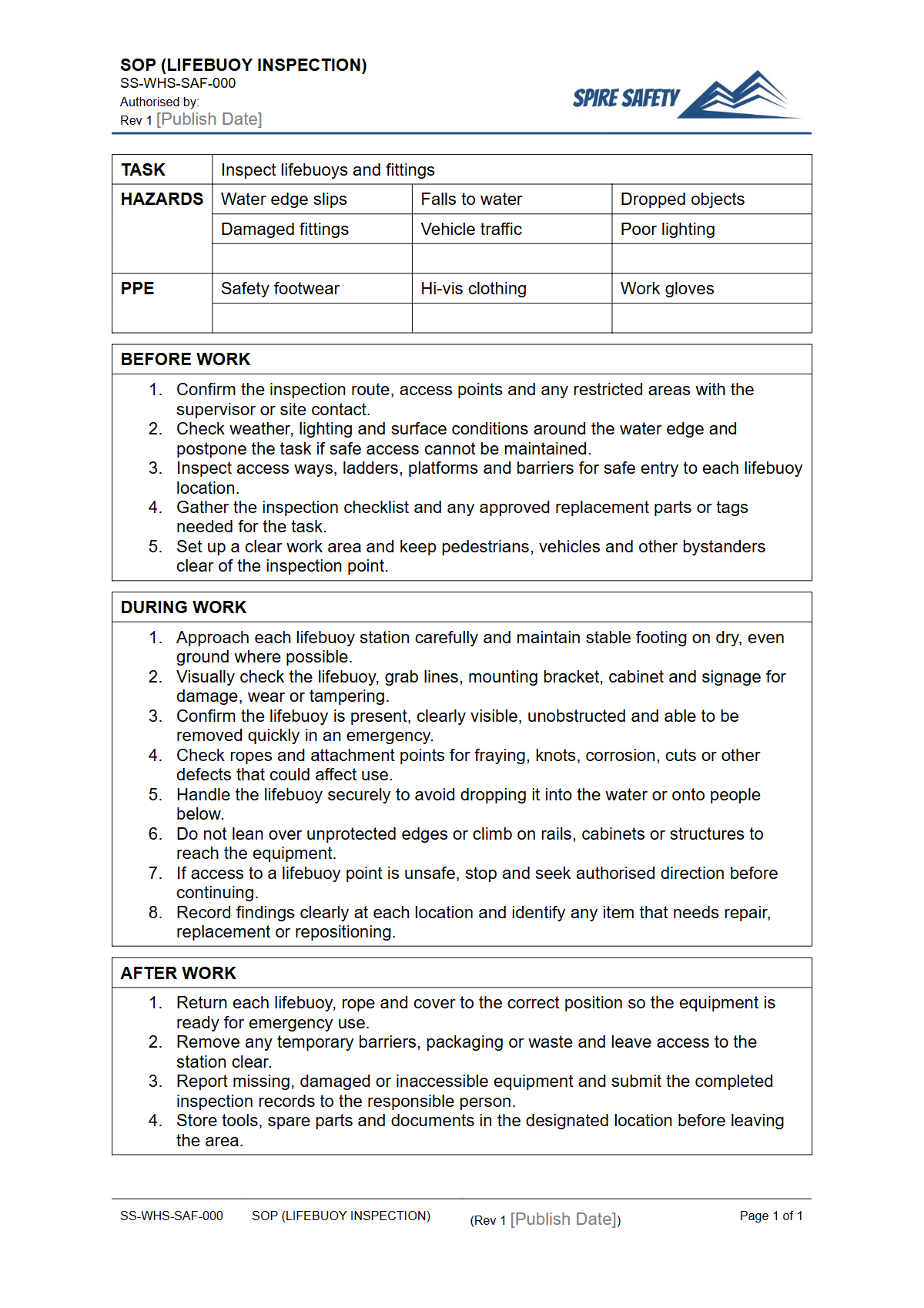
Download our free Safe Operating Procedure (Lifebuoy Inspection) template.
Free Safe Operating Procedure (Lifebuoy Inspection) Template
DOCX • 126 KB + PDF
Updated Oct 2026
No signup required
Purpose of the Free Safe Operating Procedure (Lifebuoy Inspection) Template
Effectively managing workplace safety involves ensuring all emergency equipment is ready for use at a moment's notice. This free Safe Operating Procedure (Lifebuoy Inspection) template provides a structured framework for conducting and recording regular inspections of lifebuoys, also known as life rings or personal flotation devices.
Using a formal SOP helps standardise the inspection process across all personnel and locations, ensuring no steps are missed. It establishes clear criteria for what constitutes a safe and functional device, identifies potential defects before they become critical failures, and creates a verifiable record of due diligence.
This promotes accountability and supports a proactive safety culture by treating life-saving equipment with the seriousness it deserves. By documenting the procedure, you create a reliable system that helps meet your health and safety obligations.
Video walkthrough
How to use the Free Safe Operating Procedure (Lifebuoy Inspection) Template
This resource is available for download in both DOCX and PDF formats. The DOCX file is fully editable, allowing you to tailor the content to your specific operational context.
It is crucial to adapt the template to reflect the unique aspects of your workplace, including the types of lifebuoys used, their specific locations, environmental factors like saltwater or high UV exposure, and your organisation's emergency response protocols.
Important: This document is a template and must be customised to suit the specific requirements of your workplace. We recommend a competent person reviews and approves the final document before it is implemented. This customisation ensures the SOP is a practical tool that integrates seamlessly into your broader WHS management system.
Key Customisation Steps
- Site and Equipment Details: Fill in the specific locations of each lifebuoy, asset numbers, and manufacturer details if available.
- Risk Assessment Findings: Incorporate any specific risks identified for your environment, such as risks of vandalism, rapid UV degradation, or obstruction.
- Inspection Criteria: Adjust the checklist to match the specific model of lifebuoy and its components (e.g., type of rope, reflective tape specifications).
- Personal Protective Equipment (PPE): List any PPE required for personnel accessing the lifebuoy locations for inspection, such as non-slip footwear near water edges.
- Emergency Procedures: Ensure the SOP references your site-specific emergency contact numbers and response plans.
When to use it
A Safe Operating Procedure for lifebuoy inspection should be used to establish a routine preventative maintenance schedule. The frequency of these formal inspections will be determined by your risk assessment but typically occurs on a monthly or quarterly basis.
It should also be used for ad-hoc inspections following a significant weather event, after the equipment has been used (or tampered with), or when a potential issue has been reported. This SOP formalises the process beyond a simple glance, ensuring a consistent and thorough check is performed every time.
Following a documented procedure is particularly important in high-risk environments like ports, marinas, construction sites near water, and public pools. It can also be paired with procedures for other critical rescue equipment, such as an SOP for defibrillator operation.
Who should use it
This SOP is designed for any person or role tasked with responsibility for workplace safety equipment. This can include safety officers, maintenance personnel, facility managers, team leaders, and designated safety representatives.
Using the SOP ensures that anyone performing the inspection, regardless of their primary role, follows the same approved, step-by-step process. It also serves as an effective training document for new employees, familiarising them with the equipment and the organisation's safety standards.
The records generated from these inspections are valuable inputs for WHS compliance audits, demonstrating a systematic approach to safety management.
If you are unsure about the specific risks, regulatory requirements, or inspection criteria for your environment, seeking professional advice is recommended. Expert WHS consulting can help you develop and tailor safety documents that are robust and fit for purpose.
The principles of documenting inspections for safety equipment apply to a wide range of items in the workplace. For example, similar documented checks are essential for access equipment, as detailed in our step ladder SOP. Building a culture of regular, formalised checks is a cornerstone of a safe workplace.
You can explore our comprehensive library of free WHS resources for more templates to support your safety systems.
Common mistakes
Common mistakes to avoid
- Forgetting to check the condition and length of the attached life-line or throwing rope.
- Ignoring minor cracks or sun damage (UV degradation), which can lead to catastrophic failure under load.
- Failing to document the inspection, leaving no auditable record of equipment checks.
- Placing the lifebuoy back in a location where it is obstructed or difficult to access in an emergency.
Legal references
Legal considerations
The following legal requirements may be relevant to this type of work.
- Work Health and Safety Act (Harmonised) — Provides the primary duties for protecting workers and other people from work health and safety risks.
- Work Health and Safety Regulations (Harmonised) — Sets out requirements supporting the management of workplace hazards and risks.
The following codes may be relevant to this type of work.
- Managing WHS Risks Code of Practice — Provides practical guidance on identifying hazards, assessing risks and applying effective controls.
- Work Health and Safety Consultation, Cooperation and Coordination Code of Practice — Provides practical guidance on consulting workers and coordinating with other duty holders.
- Managing the Work Environment and Facilities Code of Practice — Provides practical guidance on safe work environments, workplace facilities and related controls.
Did you know
Visibility by Design
The bright orange or red colour of lifebuoys is chosen for its high visibility against water in various light and weather conditions, making it easier to spot during an emergency rescue.
SOLAS Standards
Under the International Convention for the Safety of Life at Sea (SOLAS), lifebuoys on many vessels must meet strict standards, including having a mass of at least 2.5 kg to ensure a good throwing distance and trajectory.
FAQ
Frequently asked questions
01How often should a lifebuoy be inspected?
02What makes a lifebuoy unsafe or non-functional?
03Do I need a formal SOP for inspecting a simple item like a lifebuoy?
04Is this template suitable for commercial vessels in Australia?
Share this resource
Free Safe Operating Procedure (Lifebuoy Inspection) Template
Browse Categories
How To Use It
- 1Download and open in Word or PDF.
- 2Replace the placeholders with your business details.
- 3Get it reviewed by a WHS specialist before rollout.
Need it customised?
Our WHS consultants can adapt this template to your site, run a gap analysis, or audit what you already have in place.
Book a Free Consultation WHS consulting servicesor call 1300 156 382
Related templates
- Free Safe Operating Procedure (Lift Car Cleaning) Template
- Free Safe Operating Procedure (Lift Door Cleaning) Template
- Free Safe Operating Procedure (Lift Isolation) Template
- Free Safe Operating Procedure (Lift Lobby Cleaning) Template
- Free Safe Operating Procedure (Lift Pit Cleaning) Template
- Free Safe Operating Procedure (Lifting Beam) Template