
Free Safe Operating Procedure (Lift Door Cleaning) Template
Download our free Safe Operating Procedure (Lift Door Cleaning) Template.
Free Safe Operating Procedure (Lift Door Cleaning) Template
DOCX • 126 KB + PDF
Updated Oct 2026
No signup required
Purpose of the Free Safe Operating Procedure (Lift Door Cleaning) Template
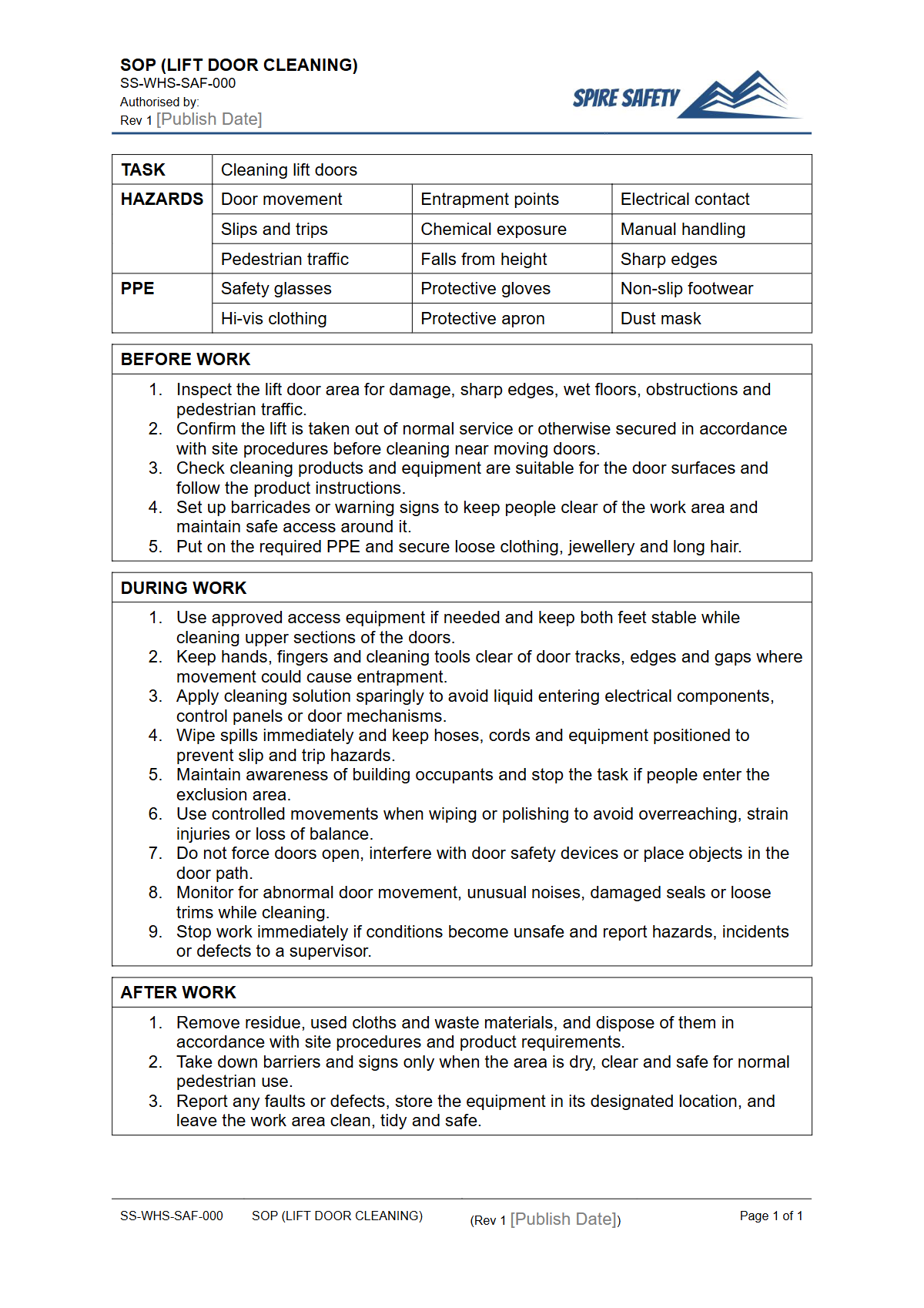
Cleaning lift doors may seem like a straightforward task, but it involves several potential hazards that must be managed. This Free Safe Operating Procedure (Lift Door Cleaning) Template provides a structured framework for documenting a safe system of work.
Using a standardised SOP helps to manage risks associated with chemical handling, slips and trips, public interaction, and potential electrical hazards. Documenting your process ensures that all workers perform the task consistently and safely, minimising the risk of injury and property damage.
A well-defined SOP is a fundamental part of demonstrating due diligence and forms a critical element within your overall safety framework. It acts as both a guide for workers and a record of the risk controls you have implemented.
Integrating this procedure into your broader safety program helps build a culture of safety and operational excellence. It also provides a solid foundation for your overall WHS management systems, ensuring that routine tasks are given the same level of safety consideration as high-risk activities.
Video walkthrough
How to use the Free Safe Operating Procedure (Lift Door Cleaning) Template
This template is provided in both DOCX and PDF formats for your convenience. To use it effectively, download the document and adapt it to the specific requirements of your workplace, equipment, and cleaning agents.
You should review and incorporate information from the Safety Data Sheets (SDS) for all cleaning chemicals used, detail the specific types of lifts on your site, and outline your workplace's procedures for isolating work areas and communicating with building occupants.
Please note: This document is a template and must be customised to your specific workplace. We cannot guarantee its suitability for your unique operations without a thorough understanding of your site-specific hazards and control measures.
Once customised, the SOP should be used to train workers and be made readily available in the work area. Regular reviews and updates are crucial, especially if processes or chemicals change, and can be verified through internal or external WHS compliance auditing.
What this Safe Operating Procedure covers:
- Required Personal Protective Equipment (PPE)
- Pre-operational checks and area setup
- Step-by-step instructions for the cleaning process
- Risk identification and associated control measures
- Post-task cleanup and emergency procedures
When to use it
This Safe Operating Procedure should be used every time lift doors are cleaned, whether as part of a scheduled routine or for ad-hoc cleaning tasks. It is an essential tool for inducting and training new cleaning staff or contractors, ensuring they understand the required safety protocols from their first day.
The SOP should be reviewed with the relevant workers before they begin the task to refresh their understanding of the risks and controls.
It also serves as a vital reference document in the event of an incident or emergency. Having clear, documented procedures helps ensure a coordinated and effective response.
For overall site preparedness, it's wise to ensure other critical procedures, such as a Safe Operating Procedure for defibrillator operation, are also clearly documented and accessible to all staff.
Who should use it
This SOP is primarily intended for use by cleaning and maintenance personnel responsible for the upkeep of building facilities. It is also a critical resource for their direct supervisors, who are responsible for ensuring work is performed safely and in accordance with established procedures.
Facilities managers, property managers, and Persons Conducting a Business or Undertaking (PCBU) can use this template to fulfil their duty of care by providing safe work instructions to their teams.
WHS managers and safety professionals can integrate this document into their organisation's safety management system as part of a broader library of safe work procedures. For complex sites with unique challenges, engaging external WHS consulting services can provide expert assistance in tailoring procedures effectively. Where the task involves working at height, even on a low platform, additional documents like a Step Ladder SOP template may also be necessary to address specific fall-related hazards. Explore our complete free WHS resources library for more templates to support your safety program.
Common mistakes
Common mistakes to avoid
- Using incorrect or incompatible cleaning chemicals that can damage lift door surfaces or sensors.
- Failing to use 'Cleaning in Progress' signs, creating a slip hazard for building occupants.
- Neglecting to wear appropriate PPE, such as gloves and safety glasses, leading to skin or eye irritation.
- Propping lift doors open with unapproved objects, which can interfere with the lift's mechanism.
Legal references
Legal considerations
The following legal requirements may be relevant to this type of work.
- Work Health and Safety Act (Harmonised) — Provides the primary duties for protecting workers and other people from work health and safety risks.
- Work Health and Safety Regulations (Harmonised) — Sets out requirements supporting the management of workplace hazards and risks.
The following codes may be relevant to this type of work.
- Managing WHS Risks Code of Practice — Provides practical guidance on identifying hazards, assessing risks and applying effective controls.
- Work Health and Safety Consultation, Cooperation and Coordination Code of Practice — Provides practical guidance on consulting workers and coordinating with other duty holders.
- Managing the Work Environment and Facilities Code of Practice — Provides practical guidance on safe work environments, workplace facilities and related controls.
Did you know
Slips, Trips, and Falls
Slips, trips, and falls are a leading cause of workplace injuries in Australia, with slips on contaminated floors being a major contributor. Using warning signs and managing spills immediately are critical controls.
Chemical Safety
Under WHS regulations, businesses must have a Safety Data Sheet (SDS) for any hazardous chemical used in the workplace. The SDS provides essential information on handling, storage, and first aid measures.
FAQ
Frequently asked questions
01What are the main hazards when cleaning lift doors?
02How often should an SOP for lift door cleaning be reviewed?
03Is training required to follow this Safe Operating Procedure?
04Can this template be used for cleaning other parts of a lift?
Share this resource
Free Safe Operating Procedure (Lift Door Cleaning) Template
Browse Categories
How To Use It
- 1Download and open in Word or PDF.
- 2Replace the placeholders with your business details.
- 3Get it reviewed by a WHS specialist before rollout.
Need it customised?
Our WHS consultants can adapt this template to your site, run a gap analysis, or audit what you already have in place.
Book a Free Consultation WHS consulting servicesor call 1300 156 382
Related templates
- Free Safe Operating Procedure (Lift Isolation) Template
- Free Safe Operating Procedure (Lift Lobby Cleaning) Template
- Free Safe Operating Procedure (Lift Pit Cleaning) Template
- Free Safe Operating Procedure (Lifting Beam) Template
- Free Safe Operating Procedure (Lifting Magnet) Template
- Free Safe Operating Procedure (Lifting Sling Cleaning) Template