
Free Safe Operating Procedure (Lift Pit Cleaning) Template
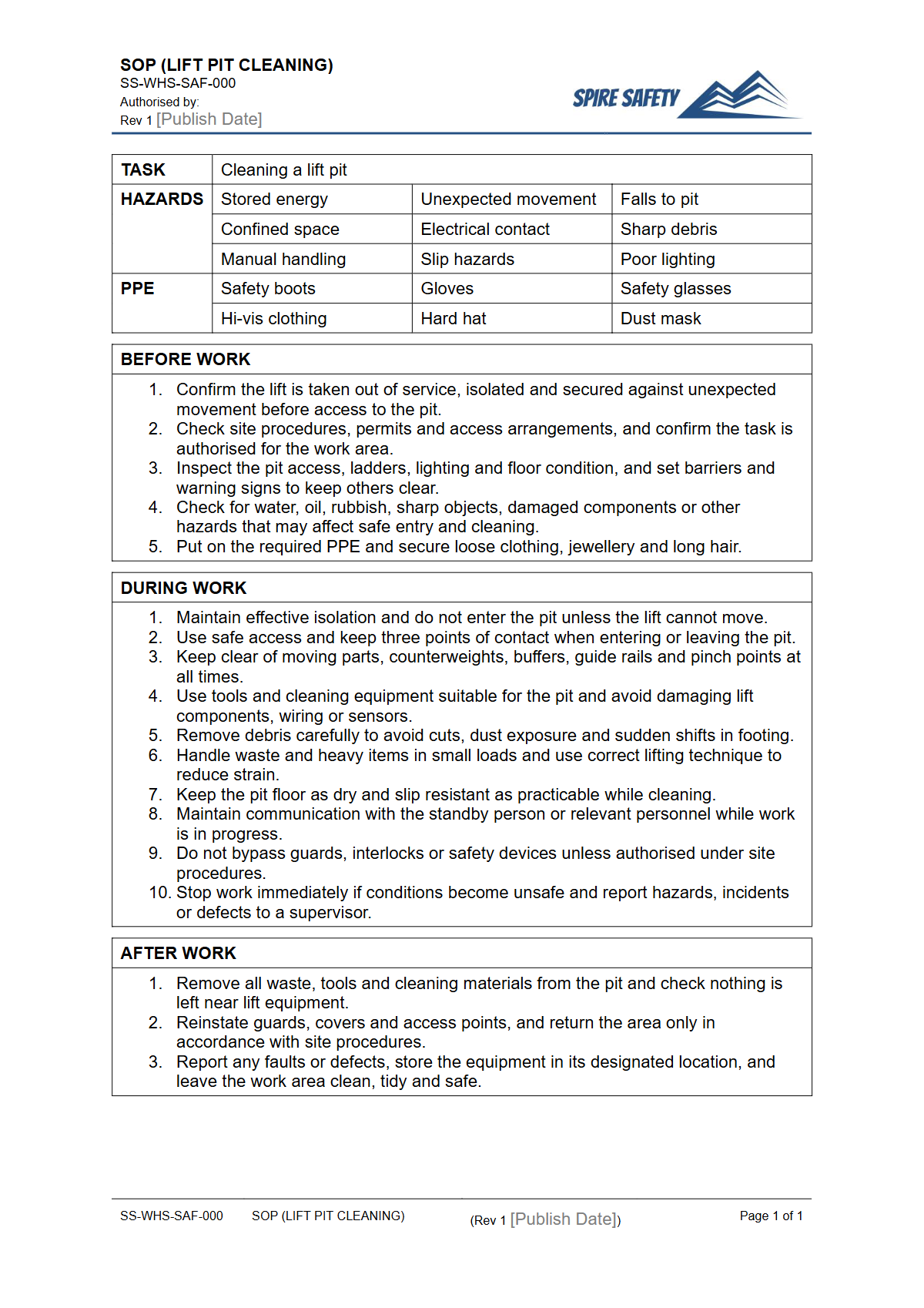
Download our free Safe Operating Procedure (Lift Pit Cleaning) template. This customisable DOCX & PDF provides a clear framework for this high-risk task.
Free Safe Operating Procedure (Lift Pit Cleaning) Template
DOCX • 126 KB + PDF
Updated Oct 2026
No signup required
Purpose of the Free Safe Operating Procedure (Lift Pit Cleaning) Template
Cleaning a lift pit is a high-risk activity involving potential exposure to serious hazards, including confined spaces, electrical risks, and biological contaminants. This Free Safe Operating Procedure (Lift Pit Cleaning) Template provides a structured framework for documenting the required safety controls and step-by-step processes to manage these risks effectively.
An SOP is a fundamental tool that standardises a task to ensure it is performed safely and consistently every time. It serves as a guide for workers and a record for the organisation, demonstrating a commitment to proactive risk management.
By formally documenting the process, you can ensure all necessary precautions, such as electrical isolation, atmospheric testing, and emergency procedures, are clearly defined and understood. This document forms a critical component of broader WHS management systems, helping your business meet its duty of care.
A well-drafted SOP is also an essential training resource for new employees or contractors tasked with this specific maintenance job.
Video walkthrough
How to use the Free Safe Operating Procedure (Lift Pit Cleaning) Template
This Safe Operating Procedure for lift pit cleaning is provided as a fully editable DOCX file, allowing for complete customisation to your specific site requirements. A PDF version is also included for easy distribution and viewing.
To use the template effectively, you must conduct a thorough risk assessment of the lift pit cleaning task at your workplace. This involves identifying all potential hazards associated with your specific lift model, the cleaning agents used, the access methods, and the environment.
Once you have identified the hazards and determined the appropriate control measures, you can edit the template to reflect these site-specific details. This includes specifying the exact lockout/tagout (LOTO) procedures, required Personal Protective Equipment (PPE), and emergency response actions.
Many tasks associated with maintenance require specific procedures, such as those outlined in our step ladder SOP if a ladder is used for access.
Please note: this document is a template. We are not WHS lawyers, and you must customise this resource to the specific equipment, chemicals, risks, and control measures unique to your workplace.
When to use this Safe Operating Procedure
A lift pit cleaning SOP should be consulted and followed every time the task is performed. It is not just for routine scheduled maintenance. It should be used during:
- Regularly scheduled cleaning and servicing to remove accumulated debris and water.
- Unscheduled cleaning following a spill, leak, or flood event in the pit.
- Maintenance activities that require a clean and clear pit area for other work to proceed safely.
- Pre-audit checks or preparation for WHS compliance audits to ensure procedures are being followed correctly.
The SOP also serves as a key reference document during incident investigations or when reviewing and improving your safety processes.
Who should use this Safe Operating Procedure
This document is intended for use by all personnel involved in the lift pit cleaning process. This ensures a consistent and safe approach across your organisation. Key users include:
- Maintenance Technicians and Staff: The primary users who will follow the step-by-step instructions to perform the cleaning task safely.
- Cleaning Contractors: Any third-party contractors must be inducted on-site and be required to follow this SOP or an equivalent, approved procedure.
- WHS Managers and Officers: Responsible for developing, reviewing, and authorising the SOP, as well as ensuring it aligns with current WHS legislation and organisational policies. This may also involve preparing related procedures, such as an air compressor SOP if one is used for blowing out dust.
- Facility and Building Managers: Accountable for ensuring that safe work procedures are in place for all maintenance activities within the properties they manage.
Find more templates like this one to support your team in our complete free WHS resources library.
Common mistakes
Common mistakes to avoid
- Failing to correctly isolate and apply a personal lock and tag to the lift's power source.
- Entering the pit without a designated standby person monitoring the work from outside.
- Neglecting atmospheric testing for toxic gases or oxygen deficiency before entry.
- Using makeshift or damaged ladders for access and egress instead of appropriate, inspected equipment.
Legal references
Legal considerations
The following legal requirements may be relevant to this type of work.
- Work Health and Safety Act (Harmonised) — Provides the primary duties for protecting workers and other people from work health and safety risks.
- Work Health and Safety Regulations (Harmonised) — Sets out requirements supporting the management of workplace hazards and risks.
The following codes may be relevant to this type of work.
- Managing WHS Risks Code of Practice — Provides practical guidance on identifying hazards, assessing risks and applying effective controls.
- Work Health and Safety Consultation, Cooperation and Coordination Code of Practice — Provides practical guidance on consulting workers and coordinating with other duty holders.
- Managing the Work Environment and Facilities Code of Practice — Provides practical guidance on safe work environments, workplace facilities and related controls.
Did you know
Confined Space Classification
Under Australian model WHS Regulations, a lift pit is almost always classified as a confined space. This triggers specific legal requirements for entry permits, risk assessments, and emergency procedures.
Unexpected Finds
Maintenance workers have found everything from phones, wallets, and keys to construction debris and rubbish in lift pits. This accumulated waste can become a significant fire hazard or obstruct safety mechanisms.
FAQ
Frequently asked questions
01What are the main hazards when cleaning a lift pit?
02Does a lift need to be electrically isolated before cleaning the pit?
03Who is responsible for developing a lift pit cleaning SOP?
04How often should a Safe Operating Procedure for lift pit cleaning be reviewed?
Share this resource
Free Safe Operating Procedure (Lift Pit Cleaning) Template
Browse Categories
How To Use It
- 1Download and open in Word or PDF.
- 2Replace the placeholders with your business details.
- 3Get it reviewed by a WHS specialist before rollout.
Need it customised?
Our WHS consultants can adapt this template to your site, run a gap analysis, or audit what you already have in place.
Book a Free Consultation WHS consulting servicesor call 1300 156 382
Related templates
- Free Safe Operating Procedure (Lifting Beam) Template
- Free Safe Operating Procedure (Lifting Magnet) Template
- Free Safe Operating Procedure (Lifting Sling Cleaning) Template
- Free Safe Operating Procedure (Lighting Circuit Test) Template
- Free Safe Operating Procedure (Line Marking) Template
- Free Safe Operating Procedure (Linen Cupboard Restock) Template