
Free Safe Operating Procedure (Lifting Sling Cleaning) Template
Download our free Safe Operating Procedure (Lifting Sling Cleaning) template.
Free Safe Operating Procedure (Lifting Sling Cleaning) Template
DOCX • 126 KB + PDF
Updated Oct 2026
No signup required
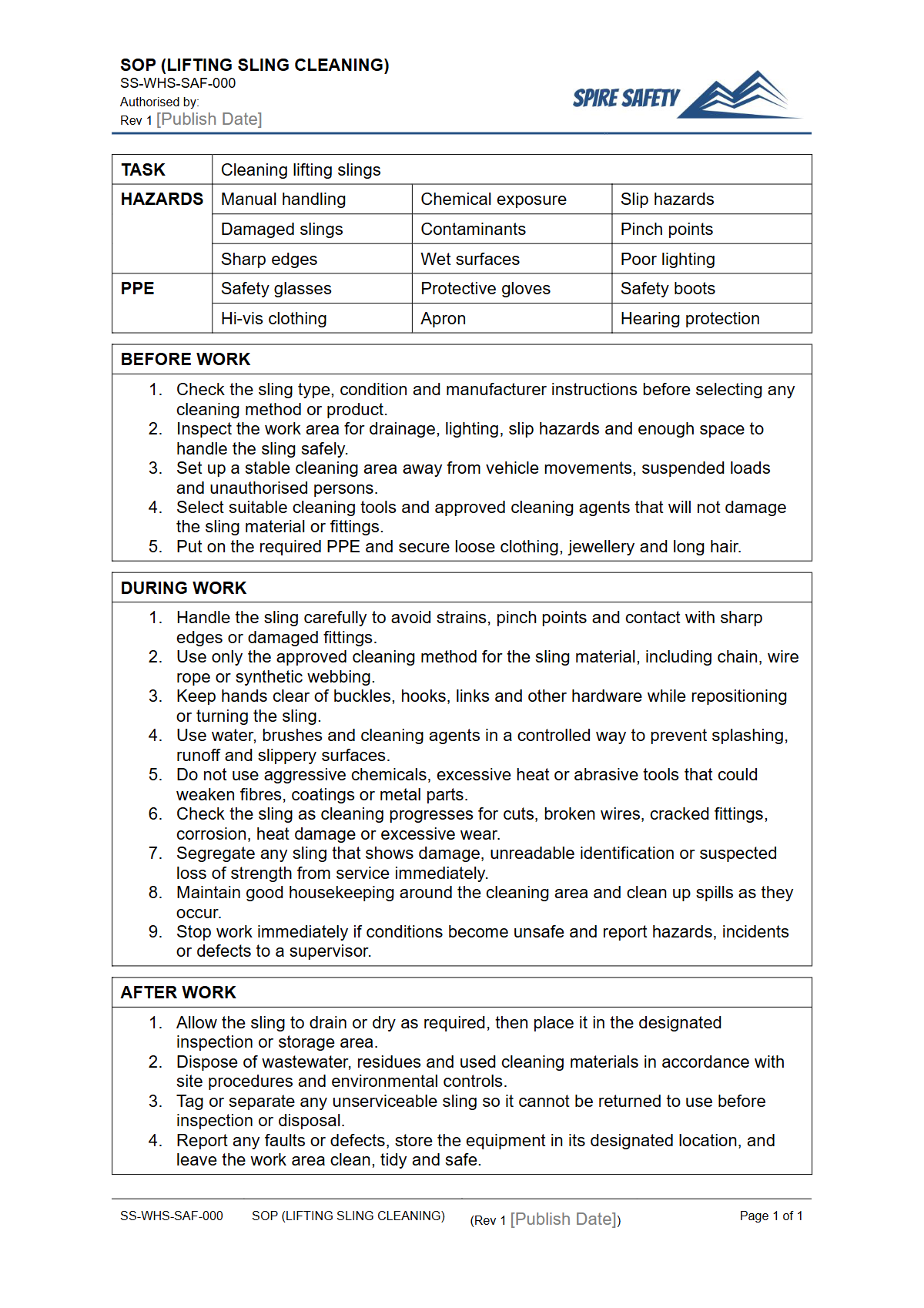
Purpose of the Free Safe Operating Procedure (Lifting Sling Cleaning) Template
Proper maintenance of lifting equipment is a critical component of workplace safety. This Free Safe Operating Procedure (Lifting Sling Cleaning) Template provides a structured framework for ensuring that lifting slings are cleaned correctly and safely.
Regular, proper cleaning does more than just improve the appearance of equipment; it is a crucial safety function. A clean sling allows for more effective visual inspections, making it easier to identify cuts, abrasions, chemical damage, UV degradation, and other defects that could lead to catastrophic failure under load.
Implementing a standardised procedure helps to prevent damage to the slings caused by improper cleaning methods, such as using harsh chemicals or high-pressure water jets. By defining the correct steps, tools, and cleaning agents, this SOP helps prolong the usable life of your assets and, most importantly, protects workers from the risks associated with faulty lifting gear.
This document serves as a foundational element within a robust WHS management system, demonstrating a commitment to proactive risk management.
Video walkthrough
How to use the Free Safe Operating Procedure (Lifting Sling Cleaning) Template
This Safe Operating Procedure template is provided in both DOCX and PDF formats for your convenience. To use it effectively, download the DOCX file and adapt it to the specific requirements of your workplace.
You should incorporate details about the types of lifting slings your organisation uses (e.g., synthetic web, round, chain, wire rope), the specific cleaning agents approved for use, and the location of cleaning stations and required Personal Protective Equipment (PPE). This SOP for sling cleaning is a single component of a larger safety framework, which often includes equipment-specific guides like our free Telehandler SOP template.
Important: This is a template only. We are not WHS consultants, and this document must be customised to suit the unique hazards, equipment, and operational context of your worksite.
You must consult with equipment operators, maintenance personnel, and supervisors to ensure the final procedure is practical, comprehensive, and clearly understood by all relevant workers. Finalised SOPs should be used as part of worker training and induction processes.
When to use this Safe Operating Procedure
This SOP should be followed whenever lifting slings require cleaning. The frequency will depend on the working environment and usage patterns. Key times to implement this procedure include:
- As part of a routine preventative maintenance schedule.
- After slings have been used in particularly dirty, muddy, or greasy conditions.
- Before a sling is scheduled for a periodic thorough inspection by a competent person.
- Whenever a build-up of foreign material obscures the sling's surfaces, hindering an effective pre-use visual check.
For certain tasks, like using compressed air to remove loose debris from a sling's surface, it's essential to ensure all related activities are covered by their own procedures. Always follow the specific Air Compressor SOP to prevent injury from high-pressure air.
Who should use this Safe Operating Procedure
This procedure is intended for use by all personnel involved in the handling, maintenance, and inspection of lifting slings. This typically includes:
- Maintenance Staff: Workers responsible for the scheduled cleaning and upkeep of workplace equipment.
- Riggers and Doggers: Operators who handle slings daily and are responsible for pre-use inspections.
- Workshop Personnel: Any worker who may be tasked with cleaning equipment as part of their duties.
- Supervisors and Team Leaders: Individuals responsible for ensuring that safe work practices are followed and that workers are trained in this SOP.
Adherence to this procedure should be monitored by supervisors and can be formally verified through regular WHS compliance audits to ensure consistent application. Slings used with heavy machinery may require more intensive cleaning protocols, complementing operational guides like a Dozer SOP.
For assistance developing and implementing safety documents tailored to your specific operational needs, our WHS consulting services can provide expert support. You can also explore our full free WHS resources library for more templates to support your safety management system.
Common mistakes
Common mistakes to avoid
- Using a high-pressure washer, which can force grit and dirt deeper into the sling's weave.
- Cleaning with unauthorised solvents, bleach, acids, or alkalis that chemically damage sling fibres.
- Storing slings while they are still damp, which promotes the growth of mould and mildew.
- Failing to consult the manufacturer's specific instructions, which provide the most accurate cleaning advice for that product.
Legal references
Legal considerations
The following legal requirements may be relevant to this type of work.
- Work Health and Safety Act (Harmonised) — Provides the primary duties for protecting workers and other people from work health and safety risks.
- Work Health and Safety Regulations (Harmonised) — Sets out requirements supporting the management of workplace hazards and risks.
The following codes may be relevant to this type of work.
- Managing WHS Risks Code of Practice — Provides practical guidance on identifying hazards, assessing risks and applying effective controls.
- Work Health and Safety Consultation, Cooperation and Coordination Code of Practice — Provides practical guidance on consulting workers and coordinating with other duty holders.
- Managing the Work Environment and Facilities Code of Practice — Provides practical guidance on safe work environments, workplace facilities and related controls.
Did you know
Hidden Hazards
A build-up of dirt and grime on a lifting sling can act like an abrasive, accelerating wear on the fibres every time the sling is flexed under load. It can also hide critical damage like cuts or burns.
Colour Coding
Polyester and Nylon, two common synthetic sling materials, react differently to chemicals. Polyester has good resistance to acids but is damaged by alkalis, while Nylon is the opposite, which is why manufacturer cleaning advice is critical.
FAQ
Frequently asked questions
01Why can't I use harsh chemicals to clean synthetic lifting slings?
02How often should lifting slings be cleaned?
03Does cleaning a lifting sling replace the need for a formal inspection?
04What is the best way to dry a lifting sling after cleaning?
Share this resource
Free Safe Operating Procedure (Lifting Sling Cleaning) Template
Browse Categories
How To Use It
- 1Download and open in Word or PDF.
- 2Replace the placeholders with your business details.
- 3Get it reviewed by a WHS specialist before rollout.
Need it customised?
Our WHS consultants can adapt this template to your site, run a gap analysis, or audit what you already have in place.
Book a Free Consultation WHS consulting servicesor call 1300 156 382
Related templates
- Free Safe Operating Procedure (Lighting Circuit Test) Template
- Free Safe Operating Procedure (Line Marking) Template
- Free Safe Operating Procedure (Linen Cupboard Restock) Template
- Free Safe Operating Procedure (Linen Trolley) Template
- Free Safe Operating Procedure (Liquid Nitrogen Use) Template
- Free Safe Operating Procedure (Litter Trap Cleaning) Template