
Free Safe Operating Procedure (Lift Car Cleaning) Template
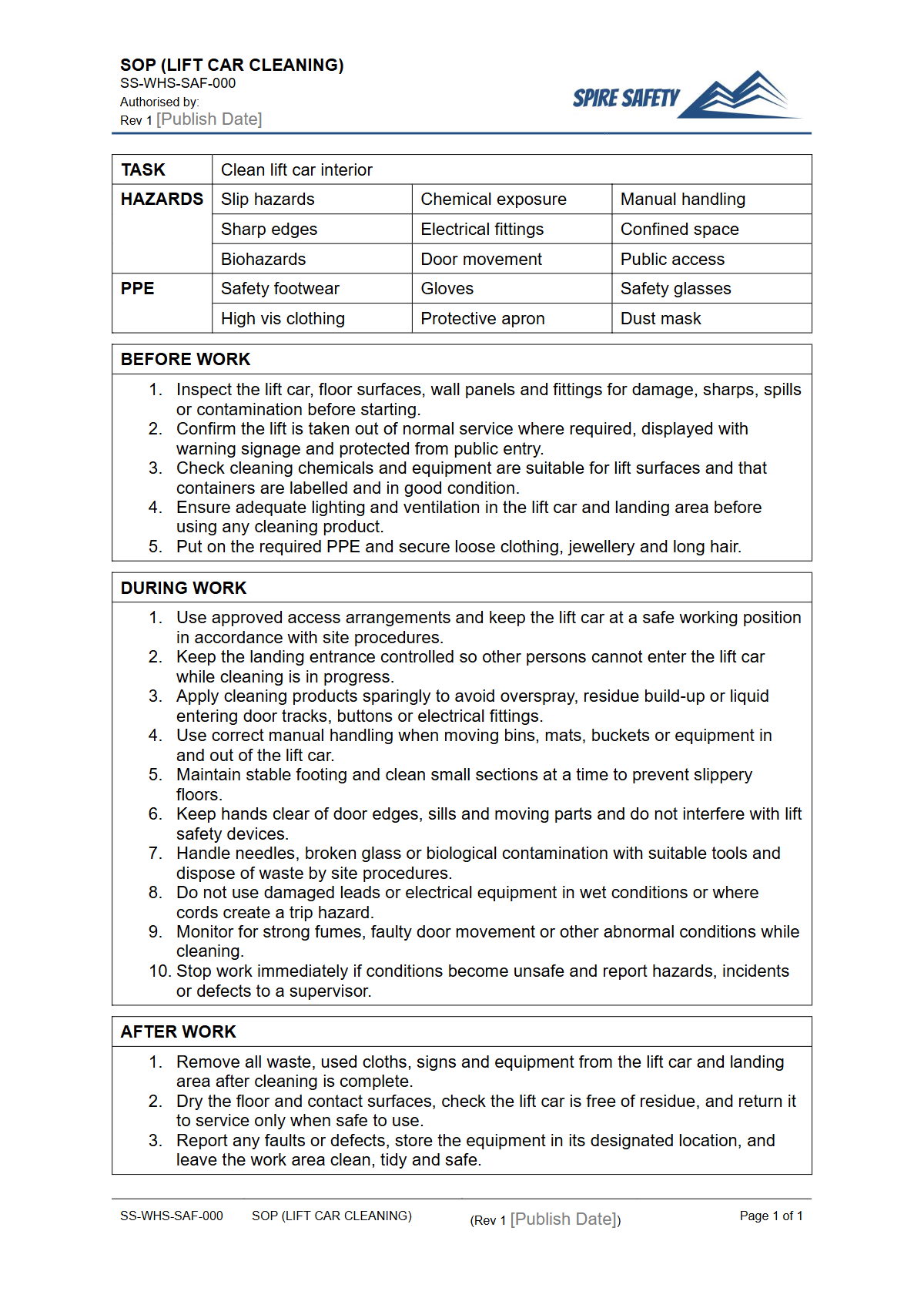
Download our free Safe Operating Procedure (Lift Car Cleaning) template. This customisable DOCX & PDF helps you outline safe work steps for cleaning elevators.
Free Safe Operating Procedure (Lift Car Cleaning) Template
DOCX • 126 KB + PDF
Updated Oct 2026
No signup required
Purpose of the Free Safe Operating Procedure (Lift Car Cleaning) Template
A Safe Operating Procedure (SOP) is a critical document for ensuring routine but potentially hazardous tasks are performed safely and consistently. This Free Safe Operating Procedure (Lift Car Cleaning) Template provides a structured framework for documenting the specific steps, hazards, and controls associated with cleaning the interior of lift cars.
By clearly defining the process, you can reduce the risk of injuries and formalise your safety commitments.
Cleaning a lift car introduces several WHS risks that must be managed. These include:
- Chemical Hazards: Exposure to cleaning agents through inhalation or skin contact in a small, enclosed space.
- Slips, Trips, and Falls: Wet floors, cleaning equipment, and entry/exit from the car create significant slip and trip hazards.
- Manual Handling: Lifting buckets, moving equipment, and awkward postures can lead to musculoskeletal injuries.
- Electrical Hazards: Proximity to control panels and lighting fixtures requires caution to prevent electric shock.
- Entrapment: The potential for the lift to move unexpectedly while a cleaner is working inside.
Using this template helps your organisation systematically address these risks, provide clear instructions for workers, and ensure consistent training standards. Documented procedures are also a key focus during a WHS compliance audit, demonstrating proactive risk management.
Video walkthrough
How to use the Free Safe Operating Procedure (Lift Car Cleaning) Template
This document is a comprehensive starting point, designed for easy customisation. After downloading the DOCX file, you should adapt it to reflect the specific conditions of your workplace.
Effective customisation involves several key steps.
Customisation Steps:
- Site-Specific Details: Add your company name, the specific location or building, and the date of review.
- Task Breakdown: Detail the step-by-step process for cleaning, from pre-start checks to finishing the job. This must include your site's procedure for isolating or locking out the lift to prevent movement.
- Hazard Identification: Use the pre-filled hazard list as a guide, but conduct your own risk assessment to add or remove items relevant to your operation. Consider the specific lift model, building traffic, and environment.
- Control Measures: Specify the exact control measures your workplace uses. For example, name the approved cleaning chemicals and refer to their Safety Data Sheets (SDS). List the required Personal Protective Equipment (PPE), such as specific types of gloves, safety glasses, or non-slip footwear.
- Emergency Procedures: Outline the steps to take in case of an emergency, including contact details for first aid officers and building management. Your plan should cover chemical spills, injuries, or entrapment.
For tasks that require reaching high surfaces inside the car, your procedure should incorporate instructions from documents like a FREE Step Ladder SOP Template to ensure height safety is also managed.
Important: This document is a template and is not a complete Safe Operating Procedure. We have created it as a starting point.
You must customise it with your specific workplace details, equipment, chemicals, and processes. We recommend consulting with your team and a qualified safety professional to ensure it is suitable and sufficient for your operations.
When to use it
An SOP for lift car cleaning should be used as a foundational document for safety and training. It is most effective when integrated into your daily operations. Key times to use this SOP include:
- Worker Training: Use it as the primary document for inducting and training new cleaning staff or contractors.
- Pre-Task Reference: Workers should have easy access to the SOP to review the required steps and safety controls before starting work.
- Incident Investigation: The SOP serves as a benchmark for expected performance when investigating why an incident or near miss occurred.
- Process Review and Audits: Use the document as a baseline during periodic safety reviews or when new cleaning products or equipment are introduced.
A well-drafted SOP forms a vital part of your organisation's overall WHS management system, providing clear, actionable instructions for workers and a clear standard for supervisors to monitor.
Who should use it
This Safe Operating Procedure template is intended for a range of personnel within organisations responsible for property maintenance and cleaning.
- Facility Managers and Property Managers: To establish and formalise a safe and consistent cleaning standard across the properties they manage.
- WHS Managers and Safety Officers: To integrate the task into the broader safety framework, ensure risks are properly assessed, and facilitate training.
- Cleaning Supervisors: To train their teams, supervise the work being performed, and supports your compliance efforts with the documented procedure.
- Cleaning Workers: As a direct guide on how to perform their job safely, including what PPE to wear and what to do in an emergency.
It is also crucial that your procedures include emergency responses, such as those outlined in our free Safe Operating Procedure for Defibrillator Operation, particularly in large commercial or residential buildings. This template is just one of many documents available in our free WHS resources library to help you build a safer workplace.
Common mistakes
Common mistakes to avoid
- Using the template without customising it for specific site conditions and approved chemicals.
- Failing to provide adequate training on the finalised procedure to all relevant workers.
- Neglecting to include a clear procedure for isolating and locking out the lift before work begins.
- Not specifying the correct Personal Protective Equipment (PPE) for the cleaning agents being used.
Legal references
Legal considerations
The following legal requirements may be relevant to this type of work.
- Work Health and Safety Act (Harmonised) — Provides the primary duties for protecting workers and other people from work health and safety risks.
- Work Health and Safety Regulations (Harmonised) — Sets out requirements supporting the management of workplace hazards and risks.
The following codes may be relevant to this type of work.
- Managing WHS Risks Code of Practice — Provides practical guidance on identifying hazards, assessing risks and applying effective controls.
- Work Health and Safety Consultation, Cooperation and Coordination Code of Practice — Provides practical guidance on consulting workers and coordinating with other duty holders.
- Managing the Work Environment and Facilities Code of Practice — Provides practical guidance on safe work environments, workplace facilities and related controls.
Did you know
Chemical Safety
Many common cleaning products can release hazardous vapours in a small, enclosed space like a lift car. Proper ventilation during and after cleaning is essential to prevent unsafe fume build-up.
Slip Risk
Slips, trips, and falls are a leading cause of workplace injury in Australia. Wet floors during cleaning are a primary contributor, making compliant safety signage and non-slip practices vital.
FAQ
Frequently asked questions
01What key hazards should an SOP for lift car cleaning cover?
02Is a Safe Operating Procedure a legal requirement in Australia?
03How often should a lift car cleaning SOP be reviewed?
04Can this template be used for cleaning the lift shaft or motor room?
Share this resource
Free Safe Operating Procedure (Lift Car Cleaning) Template
Browse Categories
How To Use It
- 1Download and open in Word or PDF.
- 2Replace the placeholders with your business details.
- 3Get it reviewed by a WHS specialist before rollout.
Need it customised?
Our WHS consultants can adapt this template to your site, run a gap analysis, or audit what you already have in place.
Book a Free Consultation WHS consulting servicesor call 1300 156 382
Related templates
- Free Safe Operating Procedure (Lift Door Cleaning) Template
- Free Safe Operating Procedure (Lift Isolation) Template
- Free Safe Operating Procedure (Lift Lobby Cleaning) Template
- Free Safe Operating Procedure (Lift Pit Cleaning) Template
- Free Safe Operating Procedure (Lifting Beam) Template
- Free Safe Operating Procedure (Lifting Magnet) Template