
Free Safe Operating Procedure (Livestock Gate Handling) Template
Download our free Safe Operating Procedure (Livestock Gate Handling) Template. This customisable DOCX and PDF helps formalise safe work practices on your farm.
Free Safe Operating Procedure (Livestock Gate Handling) Template
DOCX • 126 KB + PDF
Updated Oct 2026
No signup required
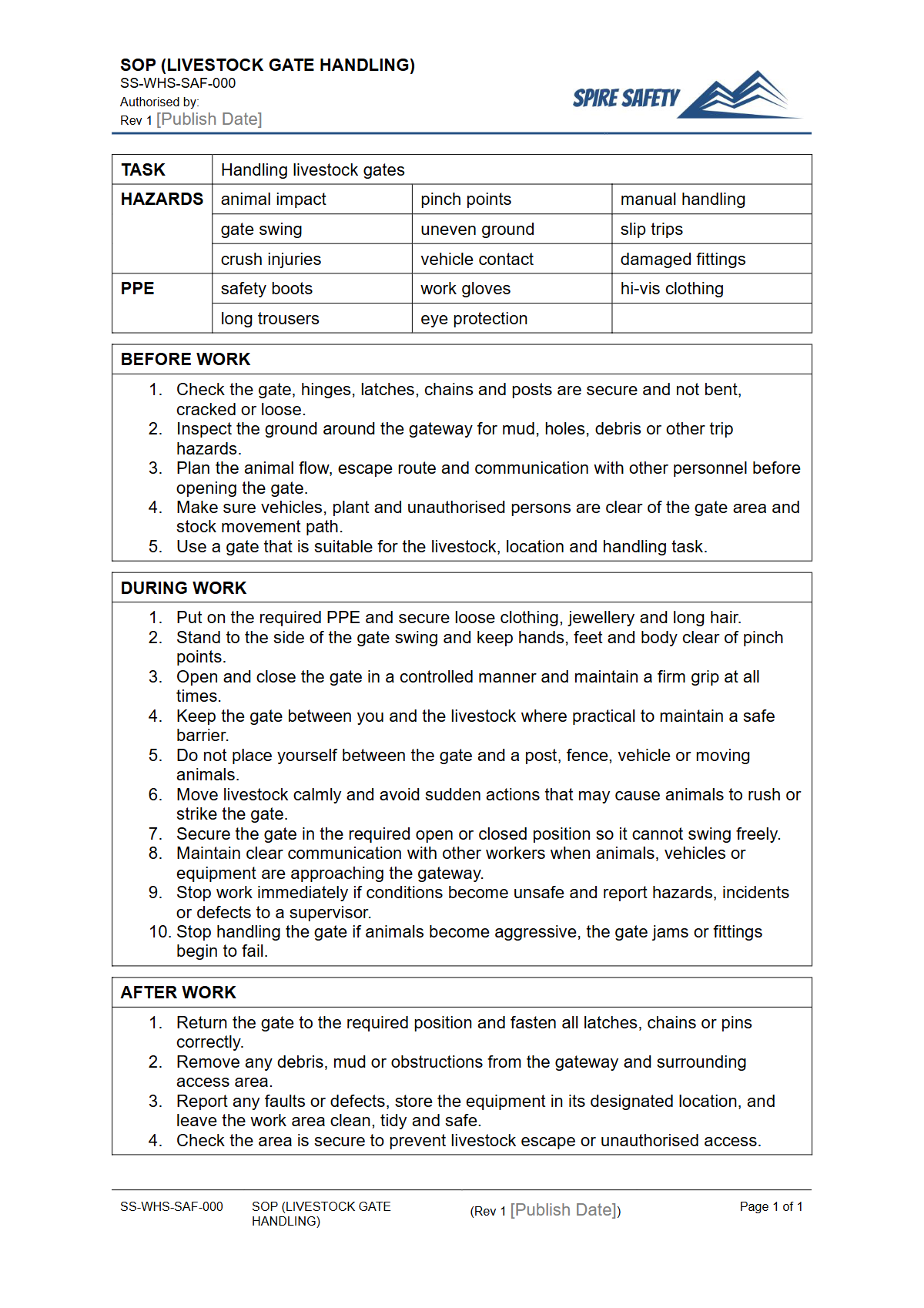
Purpose of the Free Safe Operating Procedure (Livestock Gate Handling) Template
Working with livestock involves numerous hazards, and even seemingly simple tasks like handling gates can lead to serious injuries if not performed correctly. This free Safe Operating Procedure (Livestock Gate Handling) Template provides a structured starting point for documenting the safest way to open, close, secure, and maintain gates on your property.
Using a standardised SOP helps to manage risks associated with manual handling, crush injuries, and unexpected livestock movement.
Formalising this process ensures all workers, from new hands to seasoned operators, follow a consistent, safe method every time. It's a critical component of a proactive approach to farm safety, demonstrating a commitment to identifying and controlling workplace risks.
Implementing clear SOPs is a foundational element in developing robust WHS management systems, helping to reduce incidents and improve operational efficiency.
Video walkthrough
How to use the Free Safe Operating Procedure (Livestock Gate Handling) Template
This document is a template, not a finished procedure. You must adapt it to the specific types of gates, terrain, and livestock handling practices at your workplace.
Download the DOCX file and customise it by adding details specific to your site, including emergency contacts, required Personal Protective Equipment (PPE), and details about your specific gate mechanisms.
To effectively use this Safe Operating Procedure template:
- Review and Customise: Walk through the task on-site. Identify the specific gates used, their condition, and the environment. Add, remove, or modify steps to reflect your actual processes.
- Consult Your Team: Involve the workers who actually handle the gates. Their practical experience is invaluable for creating a procedure that is both safe and workable. Consultation is a key part of managing WHS risks.
- Train All Workers: Once finalised, use the SOP as a training tool for all relevant personnel. Ensure everyone understands the steps, the reasons behind them, and the associated hazards.
- Schedule Regular Reviews: Your workplace changes over time. Review the SOP annually, or after any incident, to ensure it remains current and effective. Just as you would have specific procedures for complex machinery, a free Grain Drill SOP can guide safe operation for other critical farm tasks.
A Note on Customisation
This template is provided as a guide only. It is your responsibility to ensure the final document is tailored to the unique risks and conditions of your workplace.
We are not liable for any incidents that may occur from the use or misuse of this document. It is essential to conduct your own risk assessment.
When to use it
A livestock gate handling SOP should be used as the standard procedure for any task involving the operation of gates in yards, laneways, and paddocks. It should be referenced during worker induction and onboarding, used for refresher training, and consulted before performing non-routine tasks involving damaged or difficult gates.
This procedure is particularly important in situations with increased risk, such as when handling large numbers of animals, working alone, or operating gates in poor light or adverse weather conditions. Similar to how you'd reference a procedure for other common but hazardous tasks, like using a ladder, having a documented process is key.
A step ladder SOP ensures even basic equipment is used safely and consistently.
Who should use it
This Safe Operating Procedure should be used by all individuals involved in livestock handling on a rural or agricultural property. This includes:
- Farm owners and managers (Persons Conducting a Business or Undertaking - PCBUs)
- Livestock handlers and farmhands
- Contractors and visitors who may need to operate gates
- New and young workers undergoing training
Managers and supervisors are responsible for ensuring the SOP is implemented, understood, and followed by all workers. Developing these critical safety documents can be complex, and sometimes seeking external advice from WHS consulting specialists can help ensure your procedures are practical and aligned with industry best practice.
Whether you're operating a telehandler or simply opening a gate, documented procedures are vital. For more complex equipment, you might need something like a FREE Telehandler SOP Template.
Explore our complete free WHS resources library for more templates, checklists, and guides to support your safety management system.
Common mistakes
Common mistakes to avoid
- Using feet or shoulders to force a stuck or heavy gate, leading to strain or injury.
- Failing to properly latch or secure a gate, allowing it to swing freely or for livestock to escape.
- Not assessing the swing path for other people, animals, or equipment before opening a gate.
- Neglecting regular maintenance on gate hinges, latches, and posts, making them difficult and dangerous to operate.
Legal references
Legal considerations
The following legal requirements may be relevant to this type of work.
- Work Health and Safety Act (Harmonised) — Provides the primary duties for protecting workers and other people from work health and safety risks.
- Work Health and Safety Regulations (Harmonised) — Sets out requirements supporting the management of workplace hazards and risks.
The following codes may be relevant to this type of work.
- Managing WHS Risks Code of Practice — Provides practical guidance on identifying hazards, assessing risks and applying effective controls.
- Work Health and Safety Consultation, Cooperation and Coordination Code of Practice — Provides practical guidance on consulting workers and coordinating with other duty holders.
- Managing the Work Environment and Facilities Code of Practice — Provides practical guidance on safe work environments, workplace facilities and related controls.
Did you know
A Hidden Hazard
Musculoskeletal disorders, often caused by hazardous manual tasks like forcing heavy or poorly maintained gates, are a leading cause of serious injury claims in the Australian agriculture industry.
FAQ
Frequently asked questions
01What are the main hazards when handling livestock gates?
02Is a Safe Operating Procedure legally required for handling gates in Australia?
03How often should we review our livestock gate handling SOP?
04What should be included in training for livestock gate handling?
Share this resource
Free Safe Operating Procedure (Livestock Gate Handling) Template
Browse Categories
How To Use It
- 1Download and open in Word or PDF.
- 2Replace the placeholders with your business details.
- 3Get it reviewed by a WHS specialist before rollout.
Need it customised?
Our WHS consultants can adapt this template to your site, run a gap analysis, or audit what you already have in place.
Book a Free Consultation WHS consulting servicesor call 1300 156 382
Related templates
- Free Safe Operating Procedure (Livestock Yard Cleaning) Template
- Free Safe Operating Procedure (LNG Refuelling) Template
- Free Safe Operating Procedure (Load Bay Allocation) Template
- Free Safe Operating Procedure (Load Cell Use) Template
- Free Safe Operating Procedure (Load Damage Inspection) Template
- Free Safe Operating Procedure (Load Distribution Check) Template