
Free Safe Operating Procedure (Load Damage Inspection) Template
Download our free Safe Operating Procedure (Load Damage Inspection) Template.
Free Safe Operating Procedure (Load Damage Inspection) Template
DOCX • 126 KB + PDF
Updated Oct 2026
No signup required
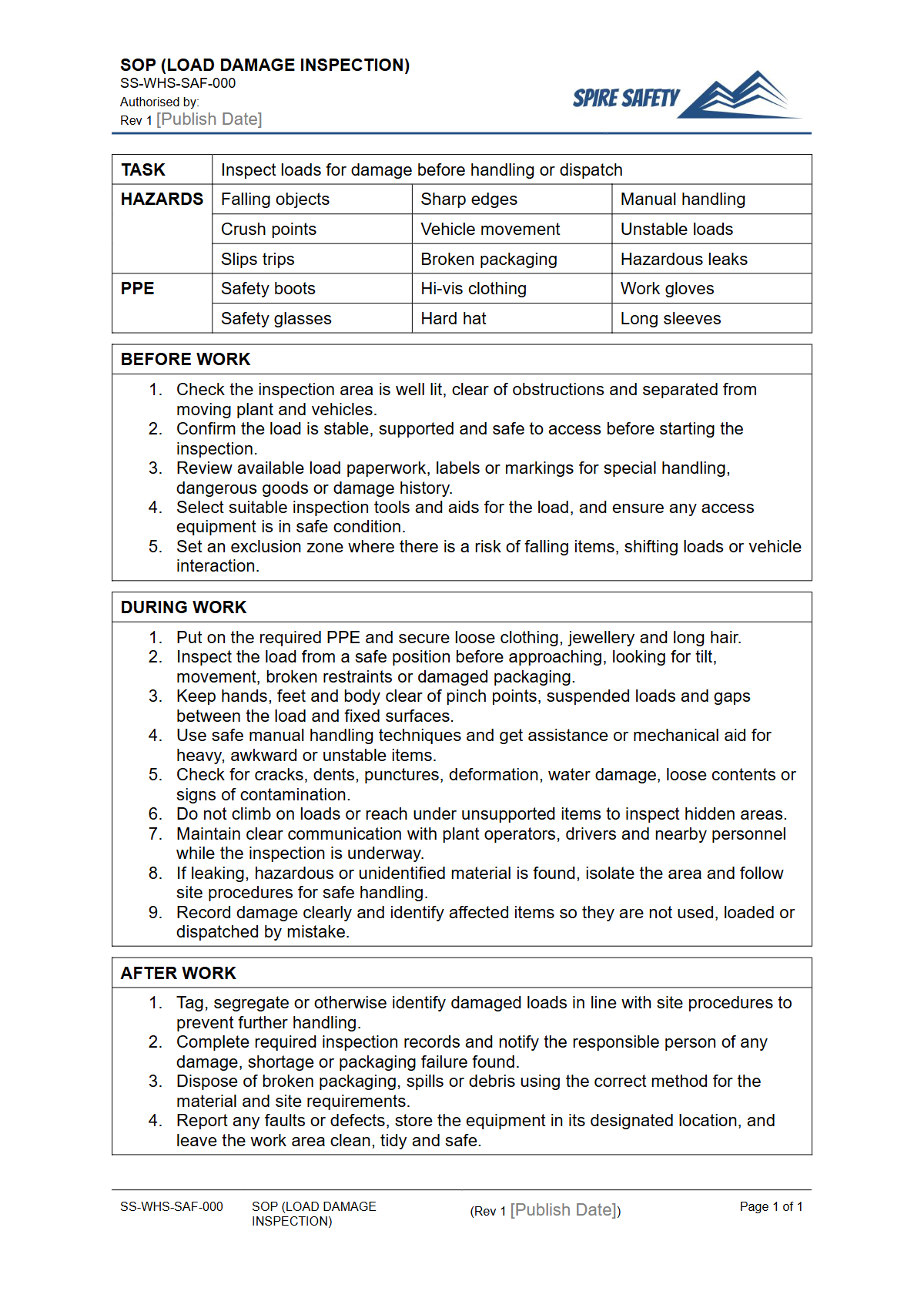
Purpose of the Free Safe Operating Procedure (Load Damage Inspection) Template
Effectively managing goods in a warehouse, transport, or logistics setting involves more than just moving items from A to B. Identifying and handling damaged loads is a critical safety and operational task.
This Free Safe Operating Procedure (Load Damage Inspection) Template provides a structured framework for your workers to follow when they encounter potentially compromised goods. Using a formal SOP helps prevent injuries from unstable or hazardous loads, minimises further product loss, and clarifies the steps for reporting and quarantine.
It forms a key part of a systematic approach to workplace safety, ensuring all team members handle these situations consistently and safely.
Video walkthrough
How to use the Free Safe Operating Procedure (Load Damage Inspection) Template
Our template is designed as a foundational document for your organisation. It outlines the essential steps, from initial identification of damage to final documentation and disposal.
To use it, simply download the DOCX or PDF file and integrate it into your existing safety documentation. It is crucial to remember that this document is a template.
We are not your PCBU. You MUST customise it to reflect the specific load types, handling equipment (like forklifts or pallet jacks), storage systems, and unique hazards present in your workplace.
This process should involve consultation with your workers to ensure the procedure is practical and effective. A well-developed SOP is a cornerstone of effective WHS management systems.
What is a Safe Operating Procedure?
A Safe Operating Procedure (SOP) is a set of written, step-by-step instructions that describe how to perform a task safely and correctly. Unlike a Safe Work Method Statement (SWMS) which is used for high-risk construction work, an SOP is used for routine operational tasks to standardise procedures and reduce risk.
An SOP for load damage inspection ensures every worker knows exactly what to look for and what to do, eliminating guesswork and unsafe behaviour.
When to conduct a load damage inspection
A load damage inspection should be a routine part of your materials handling process. This SOP should be triggered at several key points in the supply chain to ensure safety and accountability:
- Receiving Goods: Before accepting any delivery, inspect pallets and goods for signs of damage that may have occurred in transit.
- Before Dispatch: Conduct a final check to ensure loads are secure and intact before they leave your facility.
- During Storage: If an incident occurs in the warehouse, such as a forklift impact or items falling, any potentially affected loads must be inspected.
- Routine Warehouse Checks: Regular inspections of racked or stored goods can help identify slow-onset damage, such as crushing from improper stacking or environmental effects.
Operators of specific machinery, such as those covered in our free Telehandler SOP template, must be trained to perform these checks as part of their daily duties.
Who should use this SOP?
This Safe Operating Procedure is intended for any worker involved in the handling, movement, or storage of goods. Key personnel include:
- Warehouse and stores personnel
- Forklift and other mobile plant operators
- Truck drivers and delivery personnel
- Logistics and dispatch coordinators
- Workplace supervisors and managers
Ensuring these individuals are trained and competent in the procedure is essential for its success. When inspecting tall loads or goods on high racking, workers must use appropriate equipment safely, as detailed in resources like our FREE Step Ladder SOP Template. Regular reviews and audits can verify that procedures are being correctly followed by all relevant staff.
Engaging external experts for WHS compliance auditing can provide an objective assessment of your system's effectiveness. In the event of a serious incident, clear procedures can be life-saving, which is why even emergency response plans like our Safe Operating Procedure for Defibrillator Operation are so important. You can find more helpful documents in our complete free WHS resources library.
Common mistakes
Common mistakes to avoid
- Failing to quarantine or clearly label damaged goods, allowing them to be handled or used by mistake.
- Assuming packaging damage is only cosmetic without checking for structural instability or damage to the contents.
- Incomplete documentation, making it difficult to identify trends or hold third parties accountable.
- Neglecting to train workers on the procedure or verify their understanding and competence.
Legal references
Legal considerations
The following legal requirements may be relevant to this type of work.
- Work Health and Safety Act (Harmonised) — Provides the primary duties for protecting workers and other people from work health and safety risks.
- Work Health and Safety Regulations (Harmonised) — Sets out requirements supporting the management of workplace hazards and risks.
The following codes may be relevant to this type of work.
- Managing WHS Risks Code of Practice — Provides practical guidance on identifying hazards, assessing risks and applying effective controls.
- Work Health and Safety Consultation, Cooperation and Coordination Code of Practice — Provides practical guidance on consulting workers and coordinating with other duty holders.
- Managing the Work Environment and Facilities Code of Practice — Provides practical guidance on safe work environments, workplace facilities and related controls.
Did you know
Cost of Damage
It's estimated that damaged goods in transit cost the global supply chain billions of dollars annually. Many of these incidents are preventable with better handling procedures and load security.
Falling Objects
According to Safe Work Australia, being hit by falling objects is a leading cause of workplace injury and fatality. Proper inspection of damaged loads is a key control measure to prevent items from falling from pallets or racking.
FAQ
Frequently asked questions
01What is the difference between an SOP and a SWMS?
02Who is responsible for inspecting damaged loads?
03What should I do if I find a potentially hazardous damaged load?
04How often should our Load Damage Inspection SOP be reviewed?
Share this resource
Free Safe Operating Procedure (Load Damage Inspection) Template
Browse Categories
How To Use It
- 1Download and open in Word or PDF.
- 2Replace the placeholders with your business details.
- 3Get it reviewed by a WHS specialist before rollout.
Need it customised?
Our WHS consultants can adapt this template to your site, run a gap analysis, or audit what you already have in place.
Book a Free Consultation WHS consulting servicesor call 1300 156 382
Related templates
- Free Safe Operating Procedure (Load Distribution Check) Template
- Free Safe Operating Procedure (Load Guiding) Template
- Free Safe Operating Procedure (Load Indicator Test) Template
- Free Safe Operating Procedure (Load Landing) Template
- Free Safe Operating Procedure (Load Manifest Check) Template
- Free Safe Operating Procedure (Load Test Setup) Template