
Free Safe Operating Procedure (Loading Dock Handover) Template
Manage high-risk loading dock activities with our free Safe Operating Procedure. This template helps formalise communication and safety checks during handovers.
Free Safe Operating Procedure (Loading Dock Handover) Template
DOCX • 126 KB + PDF
Updated Oct 2026
No signup required
Purpose of the Free Safe Operating Procedure (Loading Dock Handover) Template
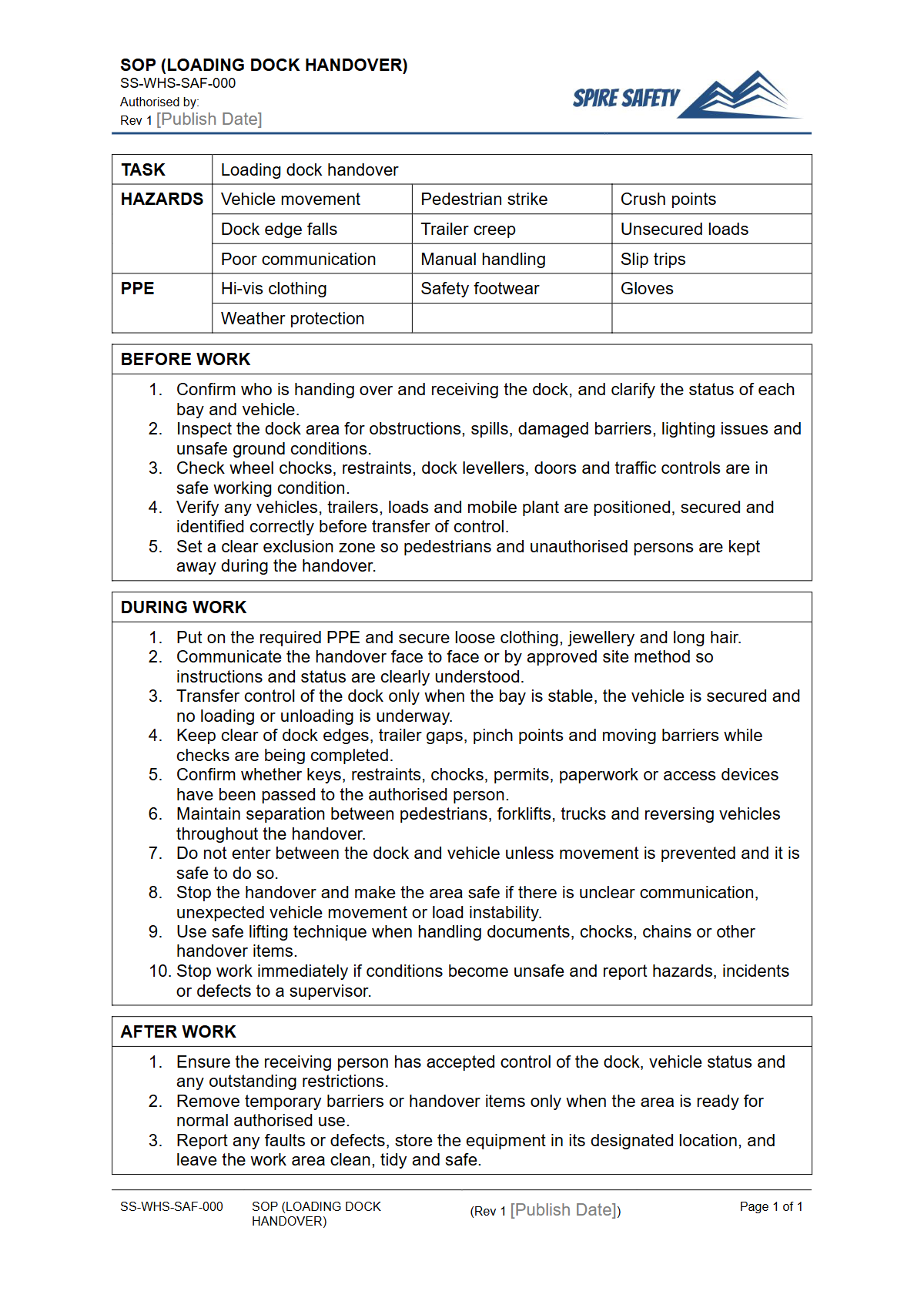
Loading docks are one of the most hazardous areas in any workplace, acting as a busy interface between warehouse operations and external transport providers. This free Safe Operating Procedure (Loading Dock Handover) template provides a structured framework for managing the critical handover process between site staff and vehicle drivers.
A formal procedure is essential for controlling risks associated with vehicle movement, securing loads, preventing falls from height, and ensuring clear communication protocols are followed by everyone entering the area. By defining clear steps and responsibilities, this SOP helps organisations establish a safer, more predictable system of work.
The primary goal is to prevent incidents caused by misunderstandings or procedural gaps. It covers key safety checks, communication signals, and responsibilities for both the driver and the loading dock operator.
Implementing a robust handover procedure is a key part of an organisation's overall safety framework, demonstrating a commitment to managing high-risk tasks proactively. This document serves as an excellent starting point for developing site-specific controls that are practical and effective. Effective safety procedures are a cornerstone of robust WHS management systems.
Video walkthrough
How to use the Free Safe Operating Procedure (Loading Dock Handover) Template
This downloadable document is provided in both DOCX and PDF formats. The DOCX file is fully editable, allowing you to tailor the content to your specific operational needs.
To use this template effectively, you should review each section with your team, including loading dock personnel, supervisors, and relevant health and safety representatives.
The procedure should be customised to reflect your specific site layout, types of vehicles and freight handled, docking equipment (such as levellers, restraints, and dock doors), and internal communication systems. For example, if your team uses specific mobile plant, you may need to integrate procedures from your Telehandler SOP or other relevant equipment guides.
Important Customisation Note
This document is a template and not a complete safety solution. To be effective, you must adapt it to the unique hazards and operational context of your workplace.
We recommend a thorough risk assessment of your loading dock area to ensure all relevant controls are included in your final Safe Operating Procedure.
When to use a Loading Dock Handover SOP
A Safe Operating Procedure for loading dock handovers should be used every time a vehicle arrives for loading or unloading. It is not just for new drivers or infrequent visitors; it should be the standard process for all vehicle movements at the dock.
This consistency is crucial for building a strong safety culture and ensuring that no steps are missed, even during busy periods.
The procedure should also be a central part of induction and training for all new employees who will work in or around the loading dock. Furthermore, it should be reviewed and referenced during toolbox talks, safety meetings, and after any incident or near miss involving loading dock operations.
Regular reviews ensure the procedure remains relevant and effective as operations evolve. To verify its ongoing effectiveness, consider including it within the scope of your WHS compliance auditing program.
Who should use this Safe Operating Procedure
This SOP is intended for a range of personnel within an organisation:
- Loading Dock Staff/Operators: The primary users who will follow the step-by-step procedure during their daily tasks.
- Vehicle Drivers: While employed by external companies, drivers must be made aware of and comply with the site's handover protocol. The SOP provides a clear guide for what is expected of them upon arrival.
- Warehouse and Logistics Managers: Responsible for implementing, enforcing, and reviewing the procedure to ensure it meets operational and safety objectives.
- WHS Managers and Safety Officers: Use the SOP as a tool for risk management, training, and incident investigation.
The document is also a useful resource for developing training materials and competency assessments for workers. It’s important to remember that safety documents for simple equipment, like a step ladder SOP, and complex processes like this both require clear communication to all users.
Find more templates like this in our free WHS resources library to support your safety management efforts.
Common mistakes
Common mistakes to avoid
- Assuming visiting drivers are familiar with site-specific safety rules.
- Failing to physically verify that vehicle restraints and dock levellers are correctly engaged.
- Relying on informal signals (like a head nod) instead of clear, agreed-upon communication methods.
- Not securing trailer doors or checking for load shift before opening them.
Legal references
Legal considerations
The following legal requirements may be relevant to this type of work.
- Work Health and Safety Act (Harmonised) — Provides the primary duties for protecting workers and other people from work health and safety risks.
- Work Health and Safety Regulations (Harmonised) — Sets out requirements supporting the management of workplace hazards and risks.
The following codes may be relevant to this type of work.
- Managing WHS Risks Code of Practice — Provides practical guidance on identifying hazards, assessing risks and applying effective controls.
- Work Health and Safety Consultation, Cooperation and Coordination Code of Practice — Provides practical guidance on consulting workers and coordinating with other duty holders.
- Managing the Work Environment and Facilities Code of Practice — Provides practical guidance on safe work environments, workplace facilities and related controls.
Did you know
Transport Industry Risks
The transport, postal, and warehousing industry has one of the highest rates of serious workers' compensation claims in Australia. Collisions with moving objects and falls from height are leading causes of injury.
Drive-Away Incidents
A significant number of loading dock incidents, often called 'drive-aways' or 'creeps', occur when a truck unexpectedly moves away from the dock while a forklift is still inside the trailer, creating a dangerous gap.
FAQ
Frequently asked questions
01What is a loading dock handover?
02Why is a formal handover procedure important for loading docks?
03Who is responsible for safety in a loading dock?
04Does this SOP template cover traffic management?
Share this resource
Free Safe Operating Procedure (Loading Dock Handover) Template
Browse Categories
How To Use It
- 1Download and open in Word or PDF.
- 2Replace the placeholders with your business details.
- 3Get it reviewed by a WHS specialist before rollout.
Need it customised?
Our WHS consultants can adapt this template to your site, run a gap analysis, or audit what you already have in place.
Book a Free Consultation WHS consulting servicesor call 1300 156 382
Related templates
- Free Safe Operating Procedure (Loading Zone Control) Template
- Free Safe Operating Procedure (Lobby Floor Cleaning) Template
- Free Safe Operating Procedure (Lock and Key Control) Template
- Free Safe Operating Procedure (Locker Room Cleaning) Template
- Free Safe Operating Procedure (Lockformer Machine) Template
- Free Safe Operating Procedure (Lockout Tagout) Template