
Free Safe Operating Procedure (Manhole Cover Lifting) Template
Download our free Safe Operating Procedure (Manhole Cover Lifting) template. This customisable DOCX & PDF helps you document safe work practices.
Free Safe Operating Procedure (Manhole Cover Lifting) Template
DOCX • 126 KB + PDF
Updated Oct 2026
No signup required
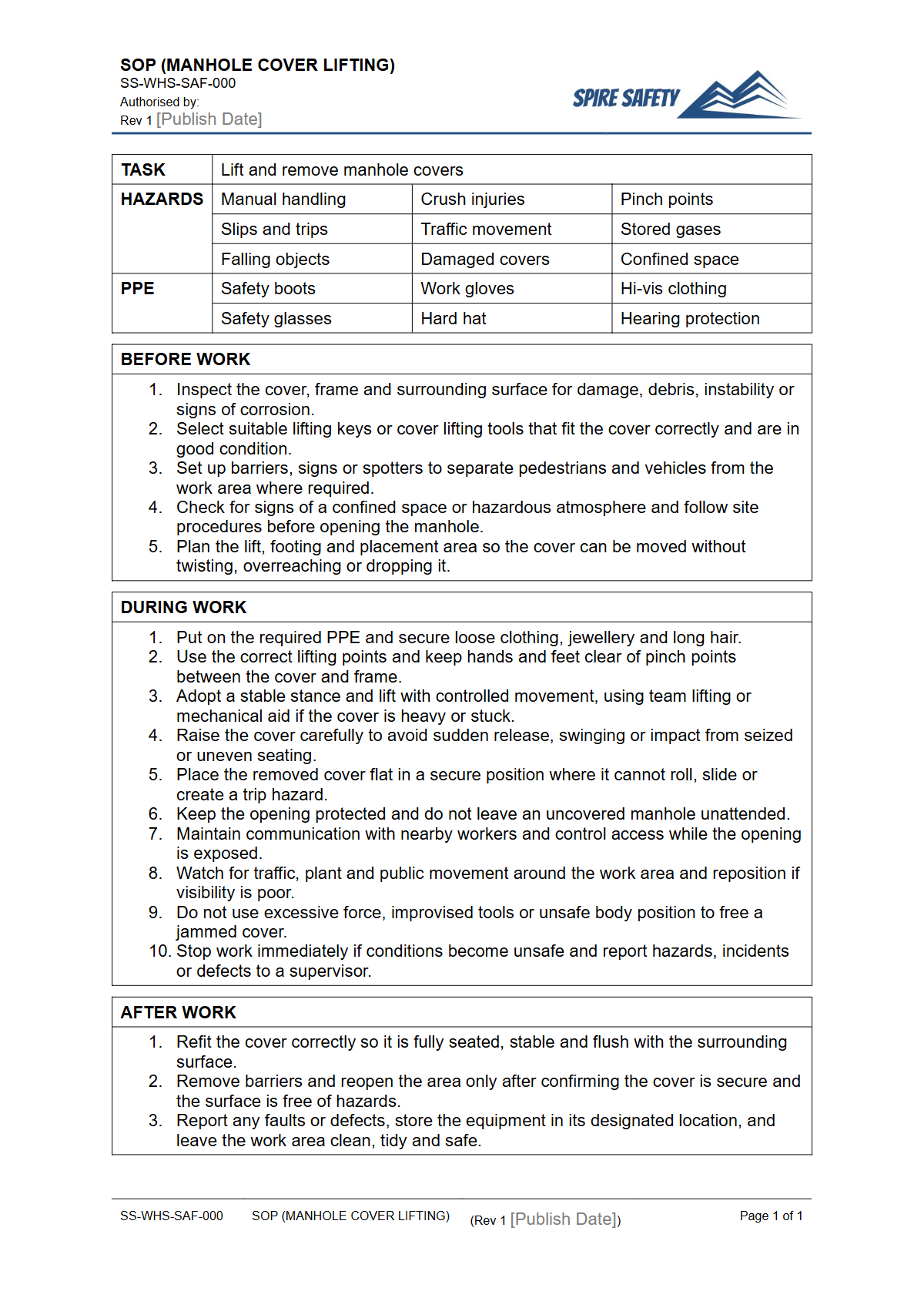
Purpose of the Free Safe Operating Procedure (Manhole Cover Lifting) Template
Lifting manhole covers is a common but high-risk task involving hazardous manual tasks and potential exposure to confined space hazards. Our Free Safe Operating Procedure (Manhole Cover Lifting) Template provides a structured framework for documenting the step-by-step process required to perform this activity safely.
This customisable DOCX and PDF document is aligned with Australian WHS principles, helping you manage risks like musculoskeletal injuries, falls, and atmospheric hazards associated with underground access points.
A documented SOP is a critical tool for ensuring tasks are performed consistently and safely by all personnel. It formalises the identification of hazards, the assessment of risks, and the implementation of control measures such as using correct lifting equipment, establishing exclusion zones, and checking for atmospheric contaminants.
Integrating this procedure into your broader WHS management systems demonstrates a proactive approach to workplace safety and helps fulfil your duty of care obligations.
What is this Safe Operating Procedure for Manhole Cover Lifting?
This template is a comprehensive starting point for your organisation. It includes sections for detailing the required personal protective equipment (PPE), pre-start operational checks, a logical sequence for performing the lift, and post-task clean-up and reporting.
By clearly outlining these steps, you reduce ambiguity and empower workers to follow a safe and repeatable process. The procedure also helps in training new employees and serves as a reference for toolbox talks before work commences.
Video walkthrough
How to use the Free Safe Operating Procedure (Manhole Cover Lifting) Template
To get the most value from this Free Safe Operating Procedure (Manhole Cover Lifting) Template, you must customise it to reflect the specific equipment, environment, and personnel at your worksite. We've provided a solid foundation based on recognised safety practices, but it is your responsibility to adapt the content.
This includes adding details about the specific types of manhole covers and lifting tools used, site-specific emergency contacts, and any unique environmental hazards present.
Review each section and consult with the workers who actually perform the task. Their direct experience is invaluable for identifying practical challenges and effective controls.
If you require expert assistance in developing your site-specific procedures or implementing a complete safety framework, our WHS consulting services can provide tailored support.
Once customised, the SOP should be formally approved, and all relevant workers must be trained on its contents. Regular reviews are essential to ensure the procedure remains current and effective.
A periodic WHS compliance audit can help verify that this and other procedures are being correctly implemented in practice.
When to use it
This Safe Operating Procedure should be consulted before any manhole cover lifting activity. It is a critical planning tool for supervisors and a practical guide for operators. Use it as a central document for:
- Inducting and training new workers on the correct procedure.
- Conducting pre-start risk assessments or Take 5s.
- Leading toolbox talks to refresh knowledge before work begins.
- Investigating incidents or near misses to identify procedural gaps.
The SOP should also be referenced when planning works that may be adjacent to or affected by manhole access. For example, procedures for using a trencher near underground services must account for the safe management of all access points, including manholes.
Who should use it
This document is intended for multiple roles within an organisation:
- Workers and Operators: To understand and follow the approved safe work method for lifting manhole covers.
- Supervisors and Team Leaders: To oversee the task, supports your compliance efforts with the SOP, and deliver relevant training.
- WHS Managers and Officers: To integrate the procedure into the overall safety management system and use it as a basis for risk assessments and audits.
It is also a vital resource for first aid officers and emergency responders, who need to understand the potential hazards involved in the task. Having clear procedures for emergencies, such as a defibrillator operation SOP, complements your task-specific documentation and enhances overall site preparedness. This SOP is one of many tools available to help you build a safer workplace. Explore our complete free WHS resources library for more templates, checklists, and guides to support your safety efforts.
Common mistakes
Common mistakes to avoid
- Using incorrect manual lifting techniques (e.g., bending the back), leading to severe strain injuries.
- Failing to adequately barricade the open manhole, creating a serious fall hazard for others.
- Not testing the atmosphere for toxic or flammable gases immediately after lifting the cover.
- Using damaged or inappropriate tools like screwdrivers or pry bars instead of proper manhole keys.
Legal references
Legal considerations
The following legal requirements may be relevant to this type of work.
- Work Health and Safety Act (Harmonised) — Provides the primary duties for protecting workers and other people from work health and safety risks.
- Work Health and Safety Regulations (Harmonised) — Sets out requirements supporting the management of workplace hazards and risks.
The following codes may be relevant to this type of work.
- Managing WHS Risks Code of Practice — Provides practical guidance on identifying hazards, assessing risks and applying effective controls.
- Work Health and Safety Consultation, Cooperation and Coordination Code of Practice — Provides practical guidance on consulting workers and coordinating with other duty holders.
- Managing the Work Environment and Facilities Code of Practice — Provides practical guidance on safe work environments, workplace facilities and related controls.
Did you know
Cover Weight
The weight of a manhole cover can vary significantly, from around 30 kg for a light-duty pedestrian cover to over 150 kg for a heavy-duty road access cover, making mechanical assistance essential for heavier types.
Shape Matters
Most manhole covers are round to prevent them from accidentally falling into the opening. A circular lid, at any orientation, cannot fall through its own smaller circular frame.
FAQ
Frequently asked questions
01What are the biggest risks when lifting a manhole cover?
02Is a special tool required to lift a manhole cover?
03Do I need a confined space permit to lift a manhole cover?
04How often should a Manhole Lifting SOP be reviewed?
Share this resource
Free Safe Operating Procedure (Manhole Cover Lifting) Template
Browse Categories
How To Use It
- 1Download and open in Word or PDF.
- 2Replace the placeholders with your business details.
- 3Get it reviewed by a WHS specialist before rollout.
Need it customised?
Our WHS consultants can adapt this template to your site, run a gap analysis, or audit what you already have in place.
Book a Free Consultation WHS consulting servicesor call 1300 156 382
Related templates
- Free Safe Operating Procedure (Manifest Reconciliation) Template
- Free Safe Operating Procedure (Mannequin Handling) Template
- Free Safe Operating Procedure (Manometer) Template
- Free Safe Operating Procedure (Manual Order Picking) Template
- Free Safe Operating Procedure (Manual Weed Removal) Template
- Free Safe Operating Procedure (Manure Handling) Template