
Free Safe Operating Procedure (Manometer) Template
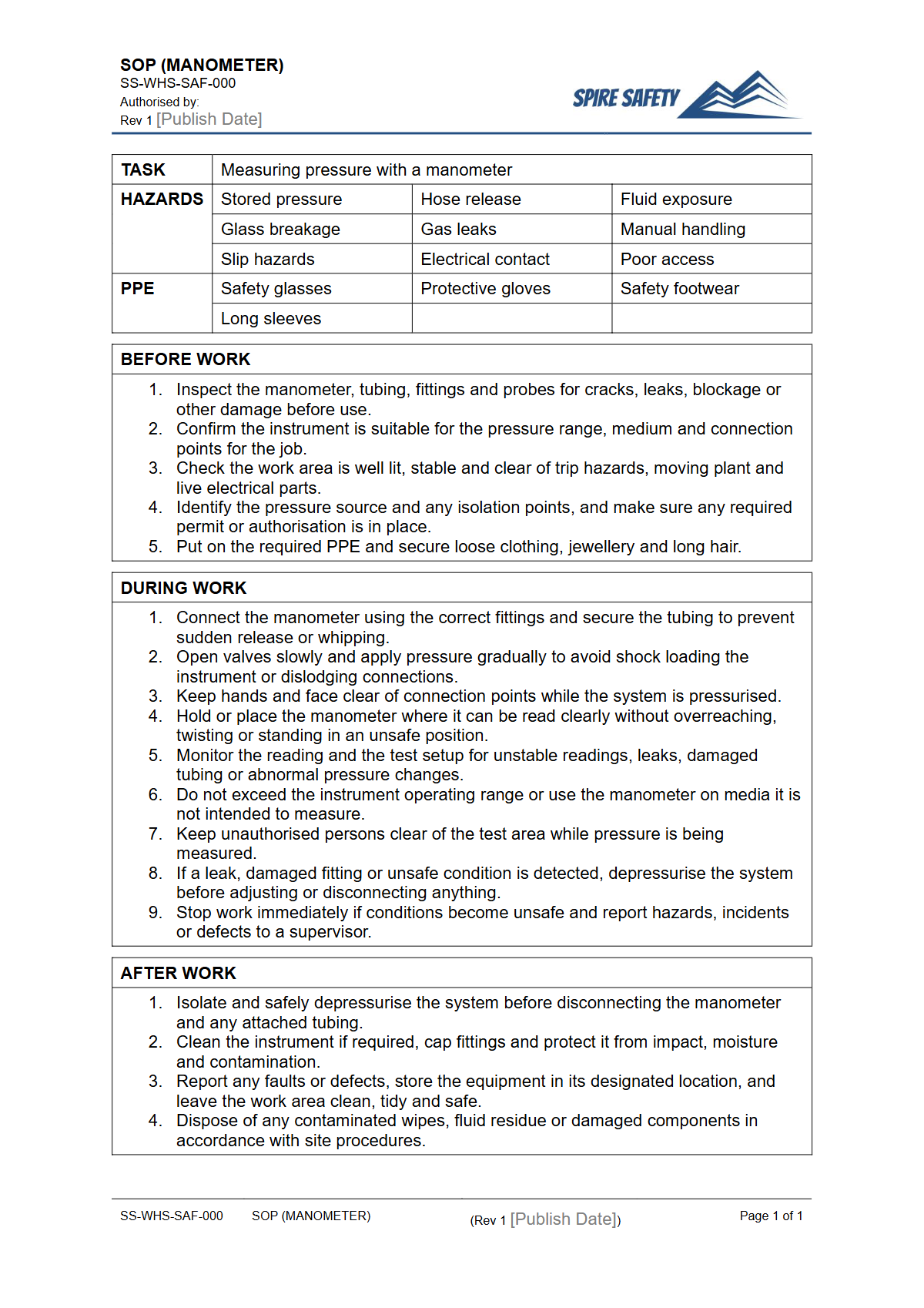
Download our free Safe Operating Procedure (Manometer) Template. This customisable DOCX and PDF provides a structured framework for safe manometer use.
Free Safe Operating Procedure (Manometer) Template
DOCX • 126 KB + PDF
Updated Oct 2026
No signup required
Purpose of the Free Safe Operating Procedure (Manometer) Template
This Free Safe Operating Procedure (Manometer) Template provides a clear, structured framework for documenting the safe use of manometers in your workplace. A manometer is a precision instrument used to measure and indicate pressure, and its incorrect use can lead to equipment damage, inaccurate readings, or exposure to hazardous materials.
This SOP guides operators through the necessary steps to perform tasks safely, outlining potential hazards and the control measures required to mitigate them. Implementing a formal procedure helps organisations meet their duty of care obligations and is a fundamental component of robust WHS management systems.
Video walkthrough
How to use the Free Safe Operating Procedure (Manometer) Template
To effectively implement this Free Safe Operating Procedure (Manometer) Template, you must customise it to reflect the specific context of your workplace. Download the DOCX file and adapt the content to align with your specific manometer models, the systems they are used on (e.g., gas lines, HVAC systems), required Personal Protective Equipment (PPE), and unique site emergency procedures.
It is critical to consult with the workers who will be using the equipment during this process to ensure the procedure is practical and comprehensive. For other equipment-specific procedures, you might find our free Air Compressor SOP template a useful reference.
Important: We have developed this document as a foundational template. To make it your own, you need to add your company name, logo, and specific details about the hazards, risks, and controls relevant to your operations.
The final SOP must be reviewed and approved by a competent person within your organisation before it is issued.
When to use a Manometer Safe Operating Procedure
A Safe Operating Procedure for a manometer should be used as a primary reference tool in several key situations. It is essential for training new employees or contractors on the correct and safe method of operating the device.
It should also be readily available to all operators as a day-to-day guide to reinforce safe work practices. Furthermore, the SOP serves as a critical document during incident investigations and should be regularly reviewed as part of a scheduled WHS audit program to ensure it remains current and effective.
Who should use this procedure
This SOP is intended for any person required to use a manometer as part of their work. This includes technicians, maintenance personnel, engineers, gasfitters, plumbers, and HVAC specialists.
Supervisors and managers also have a responsibility to ensure these procedures are understood and followed, making the document a vital tool for them in overseeing work and confirming competency. For businesses needing support in defining roles and responsibilities for WHS tasks, our WHS consulting services can provide expert guidance.
Key Elements of a Manometer SOP
A comprehensive SOP for manometer use should cover several critical areas to be effective. The provided template includes sections for:
- Pre-Operational Checks: Detailing visual inspections of the device, tubing, and fittings for damage or defects.
- Step-by-Step Guide: A logical sequence of actions for connecting, operating, and disconnecting the manometer safely.
- Potential Hazards: Identifying risks such as exposure to pressurised fluids or gases, electrical hazards (for digital models), and ergonomic strains.
- Control Measures: Specifying the use of correct PPE, isolation procedures, and safe handling techniques.
- Emergency Procedures: Outlining immediate actions in case of a leak, spillage, or personal injury. This should include contact details for first aid and emergency services, and may reference other documents like a Defibrillator Operation procedure if relevant to your site's emergency plan.
Continual Improvement of Your SOP
A Safe Operating Procedure is not a static document. It should be reviewed and updated regularly, typically every one to two years, or whenever there is a change in equipment, processes, or relevant regulations.
Post-incident reviews may also highlight the need for amendments. Regular reviews, often conducted as part of a formal WHS compliance auditing program, ensure your procedures remain effective and help foster a proactive safety culture within your organisation. Find more templates and tools in our complete free WHS resources library.
Common mistakes
Common mistakes to avoid
- Failing to zero the device before taking a pressure reading.
- Using a manometer with a pressure range unsuitable for the system being tested.
- Not inspecting tubing for cracks, kinks, or blockages before use.
- Ignoring the manufacturer's specific instructions for calibration and maintenance.
Legal references
Legal considerations
The following legal requirements may be relevant to this type of work.
- Work Health and Safety Act (Harmonised) — Provides the primary duties for protecting workers and other people from work health and safety risks.
- Work Health and Safety Regulations (Harmonised) — Sets out requirements supporting the management of workplace hazards and risks.
The following codes may be relevant to this type of work.
- Managing WHS Risks Code of Practice — Provides practical guidance on identifying hazards, assessing risks and applying effective controls.
- Work Health and Safety Consultation, Cooperation and Coordination Code of Practice — Provides practical guidance on consulting workers and coordinating with other duty holders.
- Managing the Work Environment and Facilities Code of Practice — Provides practical guidance on safe work environments, workplace facilities and related controls.
Did you know
Historical Roots
The manometer's invention is credited to Evangelista Torricelli in 1643, stemming from his work on the barometer and the nature of atmospheric pressure.
Digital vs. Analogue
While digital manometers offer higher precision and data logging capabilities, traditional U-tube manometers are still valued for their simplicity, reliability, and not requiring a power source.
FAQ
Frequently asked questions
01What is a Safe Operating Procedure for a manometer?
02Who is responsible for writing a manometer SOP?
03Does using this manometer SOP template guarantee WHS compliance?
04How often should a manometer SOP be reviewed?
Share this resource
Free Safe Operating Procedure (Manometer) Template
Browse Categories
How To Use It
- 1Download and open in Word or PDF.
- 2Replace the placeholders with your business details.
- 3Get it reviewed by a WHS specialist before rollout.
Need it customised?
Our WHS consultants can adapt this template to your site, run a gap analysis, or audit what you already have in place.
Book a Free Consultation WHS consulting servicesor call 1300 156 382
Related templates
- Free Safe Operating Procedure (Manual Order Picking) Template
- Free Safe Operating Procedure (Manual Weed Removal) Template
- Free Safe Operating Procedure (Manure Handling) Template
- Free Safe Operating Procedure (Marina Bin Collection) Template
- Free Safe Operating Procedure (Marina Pontoon Cleaning) Template
- Free Safe Operating Procedure (Marina Waste Handling) Template