
Free Safe Operating Procedure (Marina Pontoon Cleaning) Template
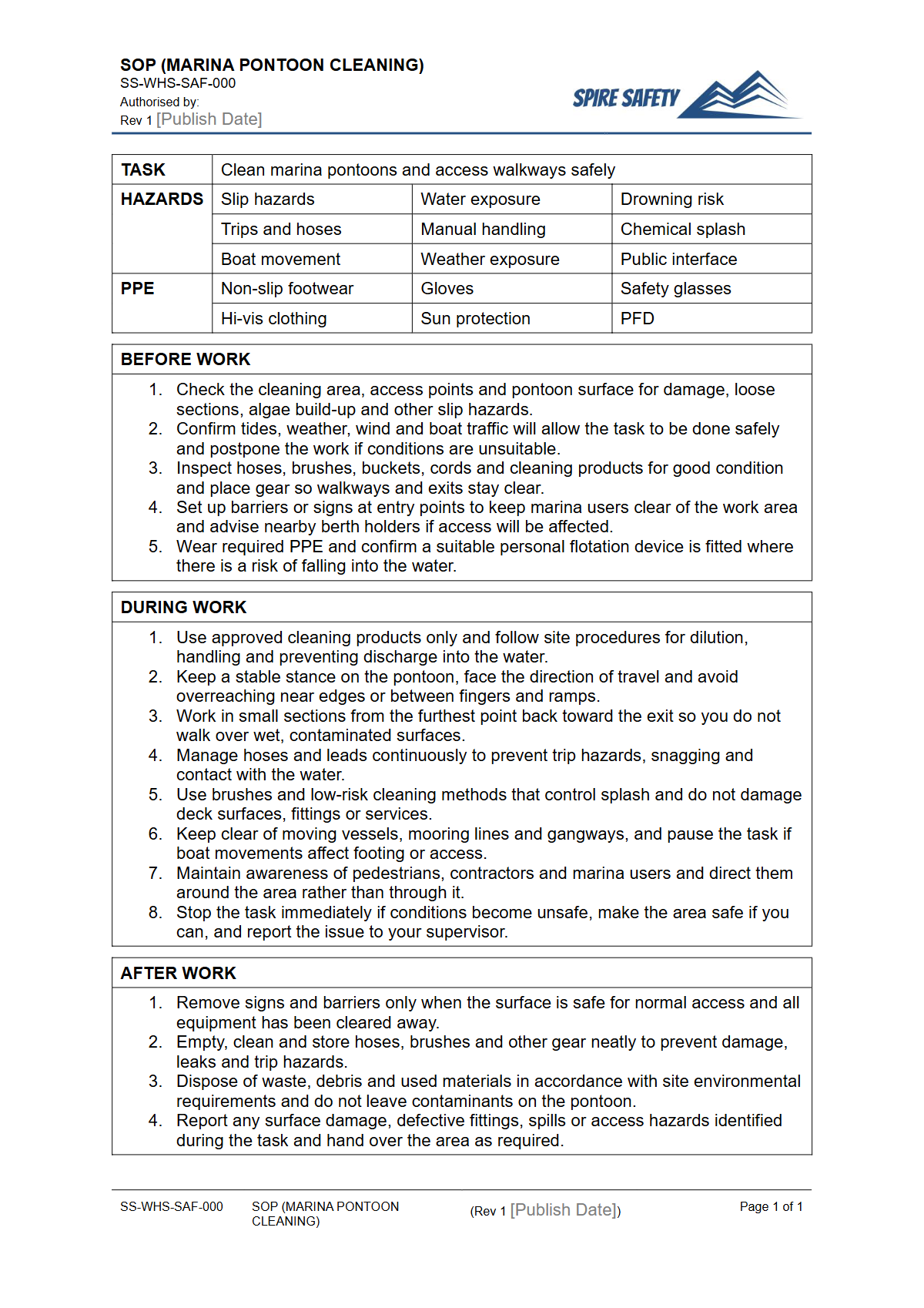
Download our Free Safe Operating Procedure (Marina Pontoon Cleaning) Template. This customisable DOCX and PDF helps outline controls for high-pressure cleaning.
Free Safe Operating Procedure (Marina Pontoon Cleaning) Template
DOCX • 126 KB + PDF
Updated Oct 2026
No signup required
Purpose of the Free Safe Operating Procedure (Marina Pontoon Cleaning) Template
This Safe Operating Procedure (SOP) template provides a structured starting point for developing a workplace-specific procedure for cleaning marina pontoons. Using this free resource helps your organisation document the step-by-step process, identify associated hazards, and implement effective risk controls.
A documented SOP is a critical tool for training workers, ensuring tasks are performed consistently and safely, and demonstrating a commitment to managing health and safety risks. It addresses common hazards such as slips on wet surfaces, falls into water, manual handling injuries, and risks from using high-pressure water cleaners or chemicals.
A robust SOP is a fundamental component of an effective safety framework. Integrating task-specific procedures like this one into your overarching WHS management systems ensures a systematic approach to safety across all operations.
This document helps meet the primary duty of care obligations under Australian WHS legislation by providing a clear, documented process for managing risks associated with pontoon cleaning.
Video walkthrough
How to use the Free Safe Operating Procedure (Marina Pontoon Cleaning) Template
This template is provided in both DOCX and PDF formats for your convenience. To use it effectively, download the DOCX file and systematically work through each section, adding details specific to your site, equipment, and personnel.
This includes identifying the specific models of pressure washers used, the types of cleaning agents approved for use, site-specific emergency contacts, and the personal protective equipment (PPE) required. The document outlines a logical sequence from pre-operational checks and site preparation to the cleaning process and post-task clean-up.
Important: This is a template only. It must be customised to reflect the unique conditions and risks of your workplace.
We strongly recommend consulting with workers who perform the task, as well as supervisors and WHS professionals, during the customisation process. Once adapted, the SOP should be used as a basis for training and competency assessments.
Regular reviews are essential to ensure the procedure remains current and effective.
When to use a Pontoon Cleaning SOP
A Safe Operating Procedure for marina pontoon cleaning should be used every time the task is undertaken. It is particularly important for new or inexperienced workers who require clear, step-by-step guidance.
The SOP also serves as a critical reference for toolbox talks or pre-start meetings before work commences, reminding all personnel of the key hazards and controls. It should be readily accessible in the work area for quick reference during the task.
Additionally, it forms an essential part of your emergency planning, as it should detail responses to incidents like falls into water, which may require the use of specific rescue equipment or our Free Safe Operating Procedure (Defibrillator Operation) template for first aid response.
Who should use it
This SOP should be used by anyone involved in the marina pontoon cleaning process. This includes:
- Workers and Contractors: The primary users who perform the cleaning task. They must be trained on the final, site-specific SOP and follow it diligently.
- Supervisors and Managers: Responsible for ensuring workers are trained, competent, and adhere to the documented procedure. They use the SOP to monitor work practices and enforce safety standards.
- WHS and Safety Officers: Responsible for developing, implementing, and reviewing safety procedures. They use the template as a foundation and can use the final document during regular workplace inspections or WHS compliance auditing to verify that safe work practices are being followed.
Safe access to different areas or levels of the pontoon is a key consideration. If temporary platforms or ladders are needed, it's vital to have procedures for their safe use, such as those outlined in our FREE Step Ladder SOP Template.
Using pressurised equipment like water blasters introduces specific risks. The principles of pre-start checks, pressure management, and safe handling are universal for such equipment, similar to the protocols found in a Free Air Compressor SOP (Safe Operating Procedure) Template.
By customising and implementing this SOP, your organisation creates a safer work environment for everyone. For more templates and safety documents, browse our complete free WHS resources library.
Common mistakes
Common mistakes to avoid
- Failing to cordon off the work area to protect the public and other workers.
- Neglecting to check weather forecasts and tide charts before starting work.
- Forgetting environmental controls, allowing contaminated water to run directly into the marina.
- Using incorrect pressure settings on water blasters, which can damage the pontoon surface or cause injury.
Legal references
Legal considerations
The following legal requirements may be relevant to this type of work.
- Work Health and Safety Act (Harmonised) — Provides the primary duties for protecting workers and other people from work health and safety risks.
- Work Health and Safety Regulations (Harmonised) — Sets out requirements supporting the management of workplace hazards and risks.
The following codes may be relevant to this type of work.
- Managing WHS Risks Code of Practice — Provides practical guidance on identifying hazards, assessing risks and applying effective controls.
- Work Health and Safety Consultation, Cooperation and Coordination Code of Practice — Provides practical guidance on consulting workers and coordinating with other duty holders.
- Managing the Work Environment and Facilities Code of Practice — Provides practical guidance on safe work environments, workplace facilities and related controls.
Did you know
Slips, Trips and Falls
According to Safe Work Australia, slips, trips and falls are the second leading cause of serious workers' compensation claims, making documented procedures for wet areas like pontoons critically important.
FAQ
Frequently asked questions
01What are the main hazards when cleaning marina pontoons?
02How often should a pontoon cleaning SOP be reviewed?
03Is specific PPE required for cleaning marina pontoons?
04What training is needed before performing pontoon cleaning?
Share this resource
Free Safe Operating Procedure (Marina Pontoon Cleaning) Template
Browse Categories
How To Use It
- 1Download and open in Word or PDF.
- 2Replace the placeholders with your business details.
- 3Get it reviewed by a WHS specialist before rollout.
Need it customised?
Our WHS consultants can adapt this template to your site, run a gap analysis, or audit what you already have in place.
Book a Free Consultation WHS consulting servicesor call 1300 156 382
Related templates
- Free Safe Operating Procedure (Marina Waste Handling) Template
- Free Safe Operating Procedure (Marine Battery Change) Template
- Free Safe Operating Procedure (Marine Deck Inspection) Template
- Free Safe Operating Procedure (Marine Hose Handling) Template
- Free Safe Operating Procedure (Marine VHF Radio) Template
- Free Safe Operating Procedure (Marine Waste Segregation) Template